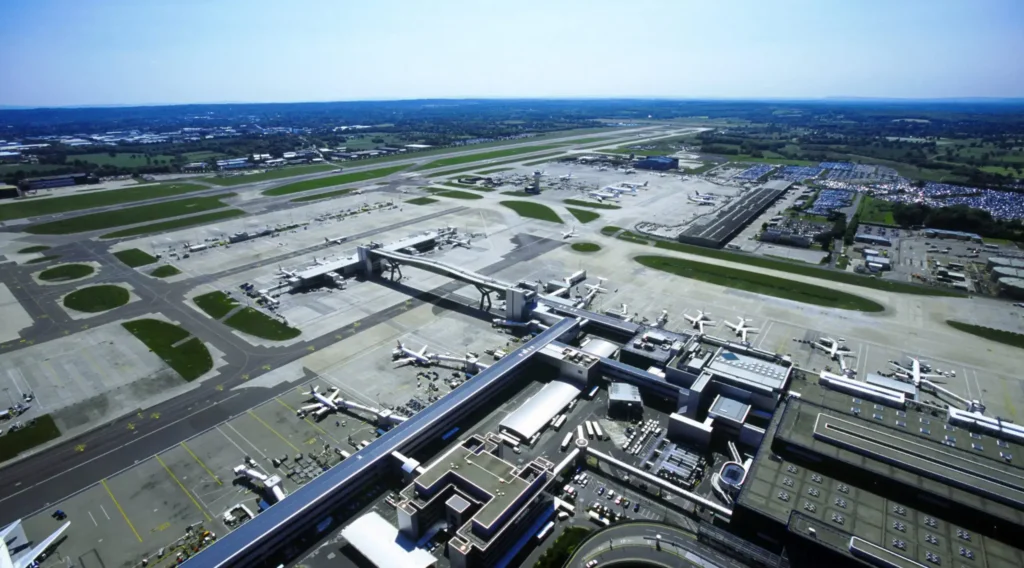
Gatwick, West Sussex – 26 March 2025 — In a global aviation first, Gatwick Airport has introduced a groundbreaking aircraft separation system aimed at slashing carbon emissions and improving flight punctuality.
The new system, developed by air traffic management provider NATS in partnership with technology firm Leidos, replaces traditional fixed-distance aircraft separation with dynamically calculated time-based intervals – a major leap for runway efficiency, especially under challenging weather conditions.
Better for the Environment, Better for Travellers
NATS predicts the innovative change will reduce annual carbon emissions by 11,000 to 19,000 tonnes of CO₂, by minimising aircraft holding times in the air and improving landing flow — particularly in strong headwinds that usually slow down arrivals and cause delays or cancellations.
Leidos UK Managing Director Graham Emmons added: “Gatwick is the first to adopt our Advanced Mixed Mode capability. It’s a major milestone for improving operational efficiency and cutting emissions per flight.”
Part of a Broader Green Push in UK Aviation
The system’s development ties into wider research on Time Based Separation, initially explored under the SESAR Programme – a European air traffic modernisation initiative.
[block_2]
As the UK aviation sector faces pressure to become more sustainable, Gatwick’s move could become a benchmark for other single-runway airports worldwide.