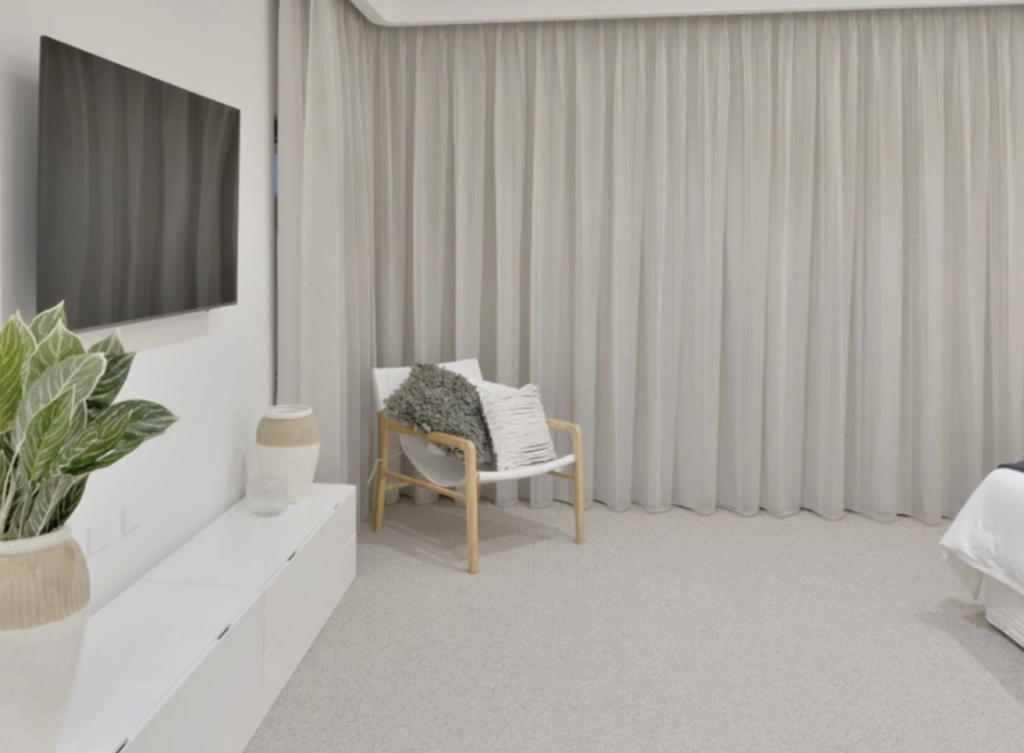
Curtain tracks change the entire look of a living room. The choice between wall-mounted and ceiling-mounted options affects how a room feels, how much light enters the space, and how tall the walls appear. Many homeowners struggle to decide which option works best for their specific needs.
Wall-mounted tracks attach above the window frame on the wall, whilst ceiling-mounted tracks fix directly to the ceiling for a floor-to-ceiling appearance. Each style offers distinct advantages. Wall-mounted tracks suit traditional spaces and are simpler to install. Ceiling-mounted tracks create a modern, seamless look and make rooms appear taller.
Wall-mounted tracks maintain a traditional appearance that many homeowners prefer. These tracks remain visible above the window and can serve as a decorative element. The installation creates a clear definition between the wall and window area.
[block_2]
Floor-length drapes paired with ceiling tracks establish an elegant, continuous line from top to bottom. This uninterrupted flow suits contemporary design schemes. The absence of visible brackets or hardware contributes to a cleaner overall aesthetic. Wall-mounted options allow curtains to frame the window more traditionally, which complements classic interior styles.
Material and Design Considerations
Curtain tracks come in metal, plastic, and aluminium materials. Metal tracks offer strength for heavier curtains and prove more durable over time. Plastic tracks cost less and work well for lightweight fabrics. Aluminium options combine strength with a lighter weight that reduces ceiling stress.
The track profile varies from slim, discrete designs to more substantial options. Slim tracks virtually disappear against white ceilings or walls. Thicker profiles provide extra strength for heavy curtains or wide windows. Some tracks include cord systems for smooth operation, whilst others allow manual movement along the rail.
[block_4]
Colour choices typically include white, silver, and black finishes. White tracks blend with most ceiling colours. Silver and black options create intentional design statements. The finish should match or complement other hardware in the room, such as door handles or light fixtures.
Flexible track systems exist for bay windows or curved walls. These specialised tracks bend to follow the window shape. Standard straight tracks suit most rectangular windows and openings.
Suitability for Various Window Types
Bay windows benefit from flexible ceiling-mounted tracks that follow the window’s curved shape. The ceiling mount allows curtains to wrap around the entire bay area without gaps. Wall-mounted tracks can work but require multiple sections and connection points at each angle.
Wall-to-wall windows need ceiling tracks to cover the full span. These large openings often lack sufficient wall space for traditional mounting. The ceiling provides a stable surface that extends across the entire width.
Standard rectangular windows accept either mounting method. The choice depends on the available wall space above the frame and the desired aesthetic. Narrow windows with limited surrounding wall space favour ceiling tracks.
French doors and patio doors work better with ceiling tracks that allow the curtains to stack completely clear of the door opening. Wall-mounted tracks may interfere with door operation or create awkward fabric bunching at the sides.
Choosing the Best Curtain Track for Your Living Room
The right curtain track depends on your room’s layout, how you plan to use it, and what fits your budget. Consider the practical benefits of each mounting style, how easy it will be to clean, and what value you’ll get over time.
Room Layout and Space Optimisation
The size and shape of your living room affects which mounting style works best. Ceiling-mounted tracks make low ceilings appear higher because they create an unbroken line from top to floor. This style suits modern homes with large windows or sliding doors that stretch close to the ceiling.
Wall-mounted tracks work well in rooms with standard ceiling heights. They leave the ceiling clear for other fixtures like spotlights or air vents. Rooms with picture rails or decorative cornices often look better with wall-mounted options because ceiling tracks can interfere with these features.
Bay windows or curved walls need flexible tracks. Ceiling-mounted curved tracks provide better support for heavy curtains on these unusual window shapes. The track bends to match the curve and distributes weight more evenly across the ceiling.
Measure the distance between your window and ceiling before you choose. If you have less than 15cm of space, ceiling mounting may be your only practical choice. Wall mounting needs enough clearance above the window to fit brackets without looking cramped.
Functional Advantages and Disadvantages
Ceiling tracks handle heavier curtains better than wall-mounted options. The weight spreads across multiple ceiling fixings instead of just wall brackets. This makes them ideal for thick blackout curtains or lined drapes in living rooms where light control matters.
Wall tracks are simpler to install because you don’t need to drill into ceiling joists. Most DIY enthusiasts can fit them with basic tools. However, they may sag over time if the curtains are too heavy for the wall fixings.
Ceiling systems let curtains stack back completely from windows. This allows more natural light into the room during daytime. Wall-mounted tracks typically leave brackets visible at the sides, which reduces the clear window area by a few centimetres on each side.
Motorised operation works with both mounting styles. Ceiling tracks often hide motors better because they sit flush with the ceiling. Wall-mounted systems may show the motor housing more clearly, though this depends on the specific product design.
Ease of Maintenance
Ceiling tracks collect less dust because they sit higher up where air circulation is lower. You’ll need a step ladder to reach them for cleaning, which some people find awkward. A quick wipe every few months keeps them running smoothly.
Wall-mounted tracks are easier to reach for regular maintenance. You can clean them whilst stood on the floor or with a small step stool. The brackets and fixings are also simpler to check and tighten if they become loose over time.
Both systems need the gliders or runners checked occasionally. These small plastic or metal pieces can wear out with daily use. Ceiling tracks often use more durable runners because they’re designed for heavier loads. Replace worn runners promptly to prevent damage to your curtains or the track itself.
The tracks themselves rarely need replacement. Metal tracks last longer than plastic ones regardless of mounting position. Look for tracks with sealed runners that keep dust and dirt out of the mechanism.
Cost and Long-Term Value
Ceiling-mounted tracks typically cost 20-30% more than wall-mounted systems. The higher price reflects stronger materials and more complex brackets. Installation costs are also higher because ceiling work requires more time and expertise.
Wall-mounted tracks offer better value if you rent your home. They leave smaller holes that are easier to fill and repair. This matters at the end of a tenancy.
Consider how long you’ll stay in your current home. Ceiling tracks add more value to a property because they look built-in and permanent. Estate agents note that floor-to-ceiling curtains create a premium appearance that appeals to buyers.
Factor in curtain replacement costs too. Ceiling tracks accommodate longer curtains that cost more to make or buy. However, the elegant look justifies the extra expense in formal living rooms where appearance matters most.
Conclusion
The choice between wall-mounted and ceiling-mounted curtain tracks depends on the specific needs of the living room. Wall-mounted options work well for traditional spaces and standard windows, whilst ceiling-mounted tracks suit modern designs and rooms with tall ceilings. Homeowners should consider factors such as ceiling height, window size, and overall design style before they make a decision. Both systems offer practical benefits, so the right choice comes down to personal preference and the room’s layout.