The US Air Force has lost a crucial early warning aircraft after Iranian missiles slammed into Prince Sultan Air Base in Saudi Arabia. Around 15 American troops were wounded in the fierce attack, with about five sustaining serious injuries.
Deadly Onslaught on Saudi Air Base
On Friday, Tehran unleashed a brutal six-ballistic missile and 29-drone barrage against the base, located just 60 miles from Riyadh, reports PBS. The coordinated strike devastated key US assets and shook military operations in the region.
Airborne Warning Aircraft Reduced to Rubble
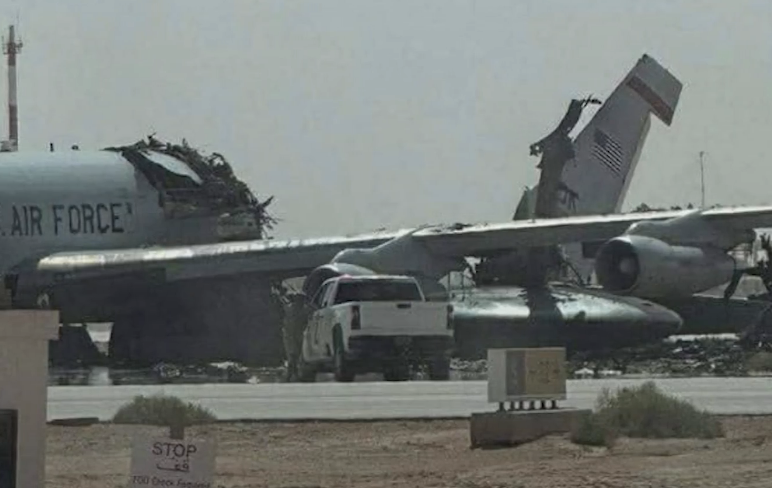
Images from the raid show the wreckage of an E-3G Sentry AWACS aircraft, tail number 81-0005, from the 552nd Air Control Wing based at Tinker Air Force Base in Oklahoma. The jet’s midsection was blown apart, exposing sensitive electronics, while the tail section lay collapsed on the runway amid debris.
Critical damage hit the rear section where the rotating radar dome and vital surveillance systems are housed. The loss further shrinks the US’s already limited fleet of these airborne command and control giants, essential for real-time battlefield awareness.
Growing Toll on US Forces Amid Escalating Conflict
Prince Sultan Air Base has been a frequent target since hostilities began. This latest strike is one of the most damaging hits on US military infrastructure in the region.
- Earlier this week, another attack wounded 14 US troops.
- Another incident recently damaged a US aircraft but caused no casualties.
- More than 300 American personnel have been wounded since the conflict’s second month, with 13 US service members, including Army Sgt. Benjamin N Pennington is dead.
Most wounded troops have returned to duty, but about 30 remain sidelined, including at least ten seriously injured.
US Military Build-Up and Regional Fallout
Washington now has its largest military footprint in the Middle East in over 20 years, with around 50,000 troops, multiple warships, and two aircraft carriers in the region. The USS Tripoli recently arrived with some 2,500 Marines, joining the USS Boxer and other units.
The conflict’s reach has widened, with Iran targeting Israel and Gulf states while controlling the Strait of Hormuz. Their blockade is rattling global oil markets, pushing fuel prices up and threatening supply chains worldwide.
President Donald Trump has given Tehran an April 6 deadline to reopen the strait, but Iran refuses to negotiate.