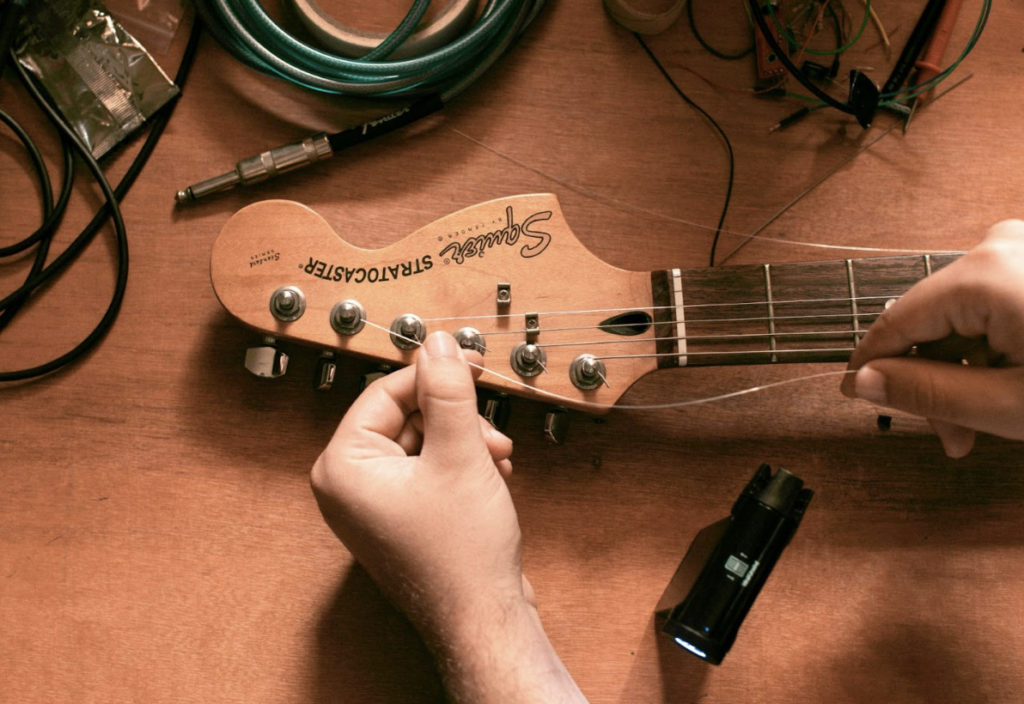
How Guitar Tuner Collections Support Consistent Sound
Stability develops the confidence of a guitarist. Tuning is necessary regardless of whether one is practising at home, live, or recording in a studio. Even slight changes of pitch may cause a composition to be uneasy or create conflicts between instruments. It is here that guitar tuners are needed as a basis of clarity and accuracy. A well-selected set of tuners helps ensure pitch accuracy across various environments, string types, and conditions.
Challenges of Staying in Tune
Strings are sensitive. Tension can be influenced by heat, humidity, movement and time. The slightest grip or change of temperature can drag notes out of tune. It is common to tune the guitar before playing and to retune it between long sessions, particularly when the guitarist changes songs or tunings.
No one tuner suits all circumstances. A small room can be used for the slightest pitch detection, whereas loud stages require tuners to eliminate background noise. Various instruments also react differently; what sounds good on a solid-body electric might not sound good on a resonant acoustic, or a bass with thick strings.
Why Variety Matters
The combination of tuner types is the solution to issues that arise under certain conditions. Pedalboard tuners provide rapid access during live performance, allowing the player to mute their output and adjust pitch without being noticed. Clip-on tuners are vibration-sensitive and therefore can be used in noisy environments.
Handheld tuners are effective in controlled environments, where they provide better display and greater detail and accuracy. Others even have metronomes or tone generators, which are helpful in ear training and tempo practice. The functions of each format differ, which is why many players keep more than one nearby.
Accurate Readings Across Environments
String stability depends on room temperature. When it is cold, they are drawn in, and the pitch is raised. Higher temperatures make them looser, lowering their tone. This occurs both indoors and outdoors, and it is more pronounced during long rehearsals or when a venue is changed within a short period.
Real-time guitar tuners help detect minute changes as they occur. Regular tuning across devices, including a pedal for quick checks and a clip-on for backup, is essential to maintain accuracy across settings. Redundancy implies reduced probability of initiating a song in an out-of-tune manner.
Adapting to Different Instruments
Electric, acoustic, and bass guitars have different tuning behaviours for players who want to switch between them. String gauge, neck construction, and pickup sensitivity are all factors that help a guitar stay in tune with ease. There are tuners which are more appropriate for particular frequencies or response times.
Alternative tuning or non-standard configurations cover all twelve notes. Bass-specific models are more accurate in detecting lower tones. Having a varied tuner collection enables players to pair the appropriate instrument with the proper tool, facilitating transitions between them.
Supporting Alternative Tunings
Musical creativity usually causes musicians to experiment with alternative tunings. The variations of drop D, open G, and half-step affect string tension differently. These tunings cannot be settled without the right tuner.
With more than one tuner, it is possible to tune different guitars simultaneously. One could be in standard tuning, and the other could be tuned to a specific song. This flexibility minimises timeouts during rehearsals or live setups, keeping momentum without compromising accuracy.
Useful During Maintenance
When players make neck adjustments, they need to adjust string tension which can affect tune. As this tension is re-established, the instrument slowly settles into pitch. Tuners are used during this process, which enables a shorter break-in period and faster return to regular play.
Clip-ons are used to attach strings, particularly acoustic strings, without output jacks. Pedalboard tuners enable post-plugging-in inspection, making it easier to change gears during a workflow and making setup-to-performance easier.
Aiding Group Settings
When playing in groups, a slight lack of tune influences the entire group. Even trained ears cannot always detect subtle pitch differences. Common access to tuners ensures that all musicians operate on the same reference point.
Others carry an additional tuner for bandmates or backup. This minor detail prevents the need to rehearse and keeps the whole ensemble on track. A close sound starts with simultaneous tuning, and the correct equipment reinforces that base.
Investing in Consistency
The correct pitch is not the only benefit of a good choice of guitar tuners. It introduces a sense of sanity, reduces stress, and builds trust between the instrument and the player. By using instruments tailored to the circumstances, players can focus on feel, tone, and creativity rather than on tuning.
Across all genres and skill levels, accuracy is essential. Whether you’re strumming your guitar on a back porch or stepping onto a festival stage, knowing your guitar is in tune lets you perform better.
The Quiet Work Behind Every Great Sound
Guitarists tend to seek tone in the use of pedals, amps and technique. But sound begins with tuning. The pitch-perfect base of every clean chord or expressive solo is behind, and the instruments that are used are practical and reliable. Tuners help eradicate ambiguity and maintain clarity, ensuring each note has a purpose. A considerate tuner collection is not an indulgence to players who appreciate both sound and consistency.