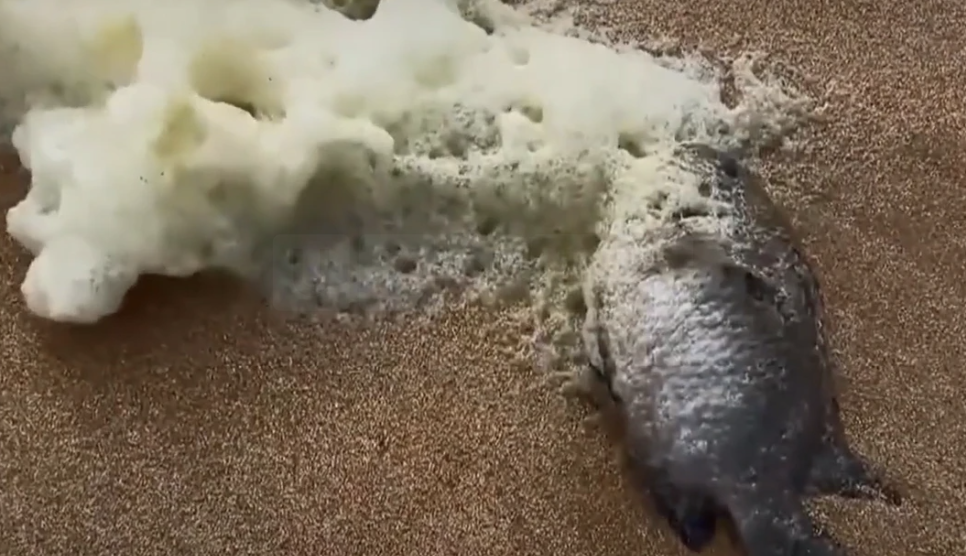
More than 100 surfers and beachgoers have fallen ill after a bizarre sea foam washed up along parts of South Australia’s coastline, sparking beach closures and a growing environmental investigation.
Authorities have now closed both Waitpinga and Parsons beaches as a precaution while an investigation is carried out.


South Australia’s Department for Environment and Water suspects the foam could be linked to a microalgal bloom—potentially triggered by a combination of hot weather, stagnant ocean conditions, and an ongoing marine heatwave.
Meanwhile, the Department of Primary Industries and Regions has classified the mass die-off of marine life as a “fish mortality event” and launched a separate probe. Officials say fish deaths of this scale can result from various environmental stressors including temperature spikes, reduced oxygen levels, pollutants, or disease.


A spokesperson for the agency said:
“We are examining several possible causes, including water quality issues and algal blooms. Further testing is underway, and results will be shared as soon as they are available.”
While investigations continue, locals have been advised to avoid the water until further notice.
Environmental groups are now calling for urgent water testing and long-term monitoring, raising fears that this may not be an isolated event, but a symptom of broader ecological disruption linked to climate change and warming seas.
More updates are expected in the coming days as testing continues along South Australia’s affected coastlines.