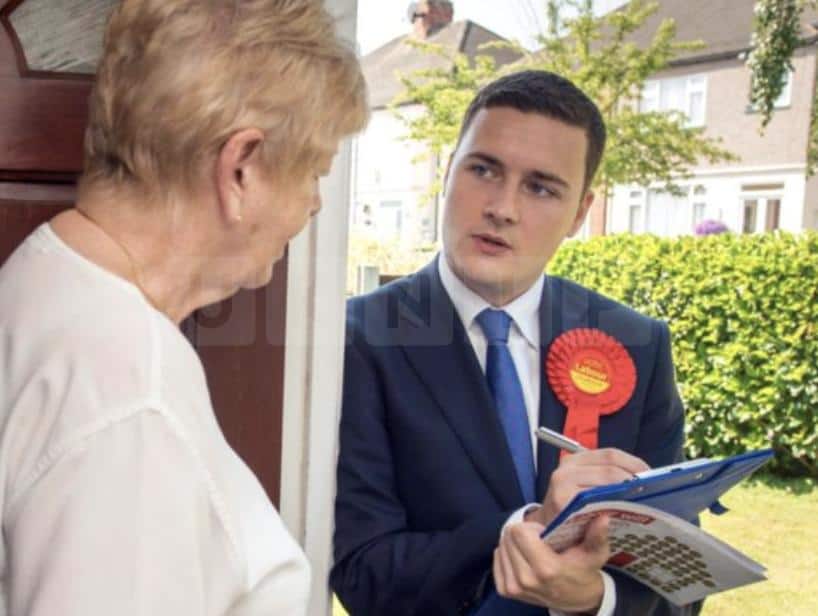
Health Secretary Wes Streeting is facing fierce criticism from a former ally who accuses him of driving “privatisation by stealth” within the NHS through piecemeal budget cuts across the country.
“Unfortunately, it’s not surprising,” he said. “The dominant coalition in this government is big business. With a few clicks of a mouse, you can see Wes Streeting has taken significant amounts of money from people with links to private healthcare. My concern is that we are looking at privatisation by stealth.”
[block_2]
Streeting’s office declined to respond to the accusations.
According to NHS trust documents, board members have been told to brace for “very hard decisions,” with chief executive Matthew Trainer confirming in a recent meeting that the trust may need to “restrict access to certain services.”
[block_4]
The looming service reductions have been met with silence from Labour politicians, Walker claimed – in contrast to previous local campaigns where Conservative MPs such as Iain Duncan Smith and Keith Prince publicly opposed A&E downgrades.
“I’m throwing down the gauntlet,” said Walker. “Not one Labour politician has said a single thing against these cuts. I’ll be pushing for a full consultation to make it clear exactly what services are at risk.”
Walker believes the strategy of gradually withdrawing treatments from local trusts is leading to a “postcode lottery” where more patients are pushed into the private sector. “This is not a national conversation about what services should be available – it’s death by a thousand cuts,” he warned.
Scrutiny of Streeting’s political donations has also resurfaced. From 2017 to 2019, he accepted £40,000 from businessman Peter Hearn, whose firms recruit for the private healthcare sector. Since then, Streeting has received nearly £200,000 from two of Hearn’s companies, and an additional £95,000 from hedge fund manager John Armitage, who has large investments in global private health insurers.
While all donations were declared in line with parliamentary rules, critics say the links raise serious questions about Labour’s healthcare direction under Streeting’s leadership.
Labour has previously dismissed claims of impropriety, describing links between donations and private healthcare as “tenuous at best.”
In a statement to Newsquest, the Department of Health and Social Care reiterated: “The NHS is and will remain free at the point of use under this government – the health secretary has been absolutely clear on this commitment.”
Walker, now part of the Trade Union and Socialist Coalition and author of the Save King George Hospital blog, accused the government of cowardice in its approach. “It’s taking place bit by bit across the country, rather than Wes Streeting announcing it nationally and defending these cuts in Parliament,” he said.
Recent reports have revealed more than 1,000 NHS job cuts planned in regions such as Cambridgeshire, Southampton, and the Isle of Wight – but east London’s BHRUT is the first to publicly admit that clinical treatments may be scaled back.
Streeting has yet to issue a response to the growing criticism.