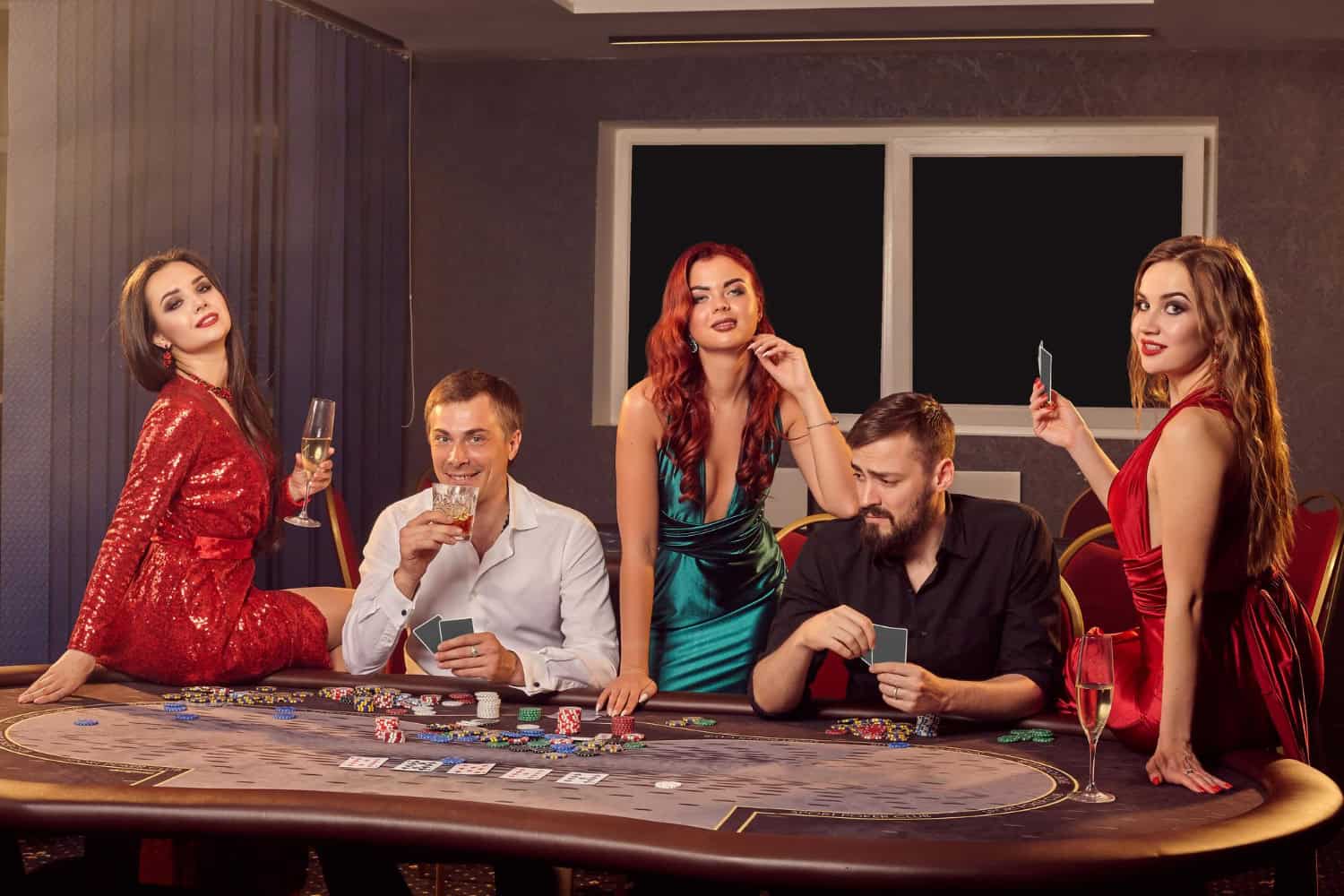
When you log on to play live blackjack or roulette, youre greeted by a smiling, immaculately dressed person in a pristine studio. They welcome you by name, deal the cards with flawless precision, and chat engagingly as they spin the wheel. It looks like a glamorous, effortless joba perfect blend of a casino croupier and a TV presenter.
But what is really going on behind that camera? Is it a real casino? Are they just dealing to you? And what happens when a player gets angry in the chat?
The reality is that this is one of the most unique, high-pressure, and strictly-controlled jobs in the entire digital entertainment industry. The person you see on screen is just one part of a massive, 24/7 global broadcast operation. Were pulling back the curtain to reveal what life is really like inside a live casino studio.
It’s a Film Set, Not a Casino
The first and most important secret is that you are not watching a feed from a real, brick-and-mortar casino. You are watching a custom-built, high-tech broadcast studio. These studios are enormous, often the size of several football pitches, and are located in broadcast hubs like Latvia, Malta, Romania, and the Philippines.
These facilities don’t have “customers” in the traditional sense; they have hundreds of identical gaming tables, each with broadcast-quality cameras, lighting, and microphones, all operating 24/7.
The casino you play onthe brand you’re a member ofis the platform that provides access to this stream. When you log in to a site like Fortunica casino UK, you are essentially buying a ticket to a live, interactive broadcast. The casino manages your account, your balance, and your customer service. The “game” itselfthe dealer, the table, the video feedis being piped in directly from one of these high-tech studios, often located hundreds of miles away.
The Making of a ‘Live Dealer’
You can’t just walk in off street/" title="The Street" rel="nofollow">the street and start dealing. Live dealers (who are often called “Game Presenters”) are put through a rigorous training programme that is far more intense than most players realise.
It’s a process that turns them from a novice into a multi-talented professional, and it usually follows a strict path.
The Intensive Training Academy
Before a new recruit is ever allowed near a live camera, they are enrolled in a dedicated training academy, which can last anywhere from two to eight weeks.
Here is what they must master in that time:
- Complete game mastery: They must learn the rules, procedures, and payouts for all the games they will host, typically starting with roulette and blackjack. This is taught to professional croupier standards.
- Shuffling and dealing: They are drilled relentlessly on how to handle cards and chips. They must be able to shuffle (like the “riffle” and “strip”), deal, and handle chips with precision, speed, and elegance.
- Camera and presentation skills: This is what separates them from a land-based croupier. They are trained to look directly into the camera, to maintain a friendly and energetic presence, and to speak clearly and professionally, often in a language that isn’t their native tongue.
- Compliance and responsible gaming: This is non-negotiable. They are trained to spot signs of problem gambling, to understand the strict legal regulations (like UKGC rules), and to know exactly what they can and cannot say on camera.
Only after passing a series of in-depth practical exams, including on-camera tests, are they certified to host a live table.
More Than Just a Dealer
The “dealing” is only half the job. The other half is “presenting.” The dealer is the human face of the game, responsible for keeping the energy up, welcoming new players, and congratulating winners.
They must do this while simultaneously monitoring a live chat screen, where they might be interacting with hundreds of players at once. This requires an incredible level of multitasking: dealing a perfect hand of blackjack, while answering a question about their day, all while smiling for the camera.
A Day (or Night) in the Life
The “day-to-day” life of a dealer is anything but a standard 9-to-5. It is a highly structured, 24/7 shift-based operation.
The environment is strictly controlled, and dealers must adhere to rules that the players never see.
The ‘On-Air’ Rotation
A dealer doesn’t just sit at a roulette table for an 8-hour shift. This would be mentally exhausting and lead to mistakes. Instead, the studios run a strict “rotation” policy.
A typical 8-hour shift is broken down into precise blocks:
- Pre-shift briefing: Before their shift, all dealers attend a meeting to get updates on new promotions, technical issues, or specific things to look out for.
- Wardrobe and makeup: They must be in a perfect, clean uniform and adhere to strict personal grooming standards (company-provided makeup is common).
- On-table time: A dealer will be “live” at a table for a set period, usually 30-60 minutes.
- Off-table break: After their “on-air” block, they get a 15-30 minute break. This is mandatory. On this break, they are replaced by another dealer who “taps in.”
- Repeat: This 60-on, 30-off (or similar) pattern is repeated for their entire 8-hour shift, often rotating between different games to keep them fresh.
The Myths vs. The Reality
Because the job is so public, many players have built up myths about what it’s like. The reality is often far more practical.
|
Player Myth |
The Studio Reality |
|
“The dealer is my friend.” |
The dealer is a trained professional. While they are friendly, they are presenting to hundreds of people at once and must follow a strict script. |
|
“Dealers can control the outcome.” |
Absolutely false. Games are 100% random. Dealers are trained to spin or deal with consistent force, and all equipment (like roulette wheels) is independently audited for fairness. |
|
“It’s a glamorous, easy job.” |
It’s a tough, repetitive job. It’s shift work, often at night, with constant monitoring and pressure to be “on” and energetic for 8 hours straight. |
|
“They get to keep tips.” |
No. Unlike in a land-based casino, live dealers do not accept personal tips. Most platforms don’t even have a “tip” function. They are paid a set salary. |
This table helps show that while the job has its perks, it is a demanding, professional role that requires a unique skill set.
From On-Screen to Behind the Scenes
Being a live dealer is a fascinating and challenging job that is far more complex than it appears. It’s a unique role that combines the skill of a casino croupier with the charisma of a TV presenter, all wrapped up in a high-tech, 24/7 broadcast environment.
So, the next time you log in to play a hand of live blackjack and the dealer welcomes you to the table, take a moment to appreciate the entire operation. You’re not just playing a game; you’re participating in a live, interactive broadcast, run by a highly trained professional whose only job is to make your experience as smooth and entertaining as possible.