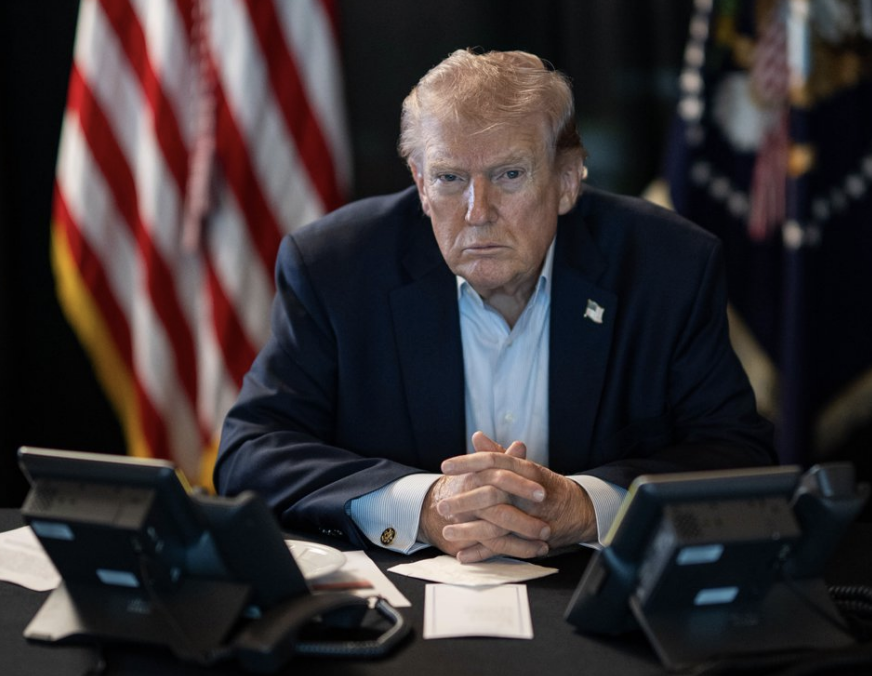
Donald Trump ramped up the war on the press this Easter Monday, threatening to jail journalists who refuse to hand over confidential sources. The ultimatum marks the White House’s toughest stance yet against media coverage of military operations in Iran.
Trump’s Explosive Ultimatum Over Iran Leak
The showdown centres on leaked details about two US airmen shot down during strikes on Iranian targets. Trump claims the leak risked a daring rescue mission involving 21 aircraft and hundreds of troops flying through hostile skies.
The President blasted the unnamed whistleblower as “a sick person” whose actions led Tehran to offer bounties for the captured pilots—though no proof has surfaced to back this explosive allegation.
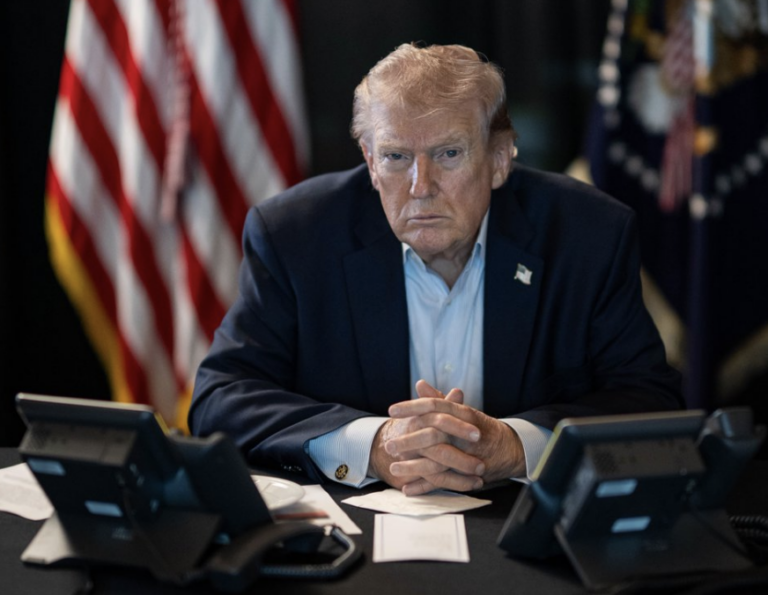
“We are gonna go to the media company that released it and we are going to say ‘national security, give it up or go to jail’,” Trump thundered at a White House briefing, mixing praise for the troops with attacks on “fake news” outlets.
Legal Experts Warn Trump’s Threats Could Backfire
Constitutional scholars slam the White House’s threat as legally weak. The US press enjoys First Amendment protections that make prosecuting journalists for refusing to name sources a steep uphill battle.
While no federal shield law fully protects reporters, courts usually demand the government exhaust alternative probes before forcing journalists to spill.
Trump’s history of threatening jail time for reporters—from a 2019 Time magazine photographer to those covering the Supreme Court’s Roe v Wade leak—may now undermine his credibility. Press advocates condemn his harsh talk, including disturbing 2022 remarks suggesting imprisonment would lead to sexual violence against journalists.
Experts say these repeated bluster tactics chill newsgathering but rarely yield the leaks Trump wants stopped.
Critics also highlight the glaring hypocrisy as Trump himself openly discusses classified military details, including at Monday’s briefing.
High-Risk Rescue Mission at Heart of Controversy
Trump hailed a “historic” rescue effort to save two injured F-15 crewmen trapped in Iran. According to him, one airman climbed bloody cliffs while coordinating extraction under fire.
The risky mission sent 21 aircraft into enemy airspace. Helicopters came back with bullet holes. Trump admitted the stakes were huge: “We could have ended up with 100 dead, as opposed to one or two.”
He framed the operation as a testament to the US military creed: “We leave no American behind.”
Yet questions linger over how sensitive details leaked. Officials hint that the breach came from within military or intelligence ranks rather than from the press. So why lash out at journalists instead of tightening internal security?
Mixed Messages and Mayhem Define Iran Strategy
Monday’s briefing revealed a chaotic approach to the Iran conflict. Trump claimed Iran “can be taken out in one night,” perhaps as soon as tomorrow.
Defence Secretary Pete Hegseth promised “the largest volume of strikes” since the campaign began, but Trump extended deadlines to Tehran after initially demanding swift action.
One jaw-dropping claim: Trump insists Iranian civilians are begging for more US bombardment. “We’ve had numerous intercepts, ‘please keep bombing,’” he said, suggesting locals want the strikes to continue—even as bombs fall around them.
Intelligence experts and sceptics alike question the likelihood—and the wisdom—of airing such sensitive intel publicly.
The White House faces a puzzling mix of shifting goals, secretive moves, and conflicting signals as America edges closer to a potential escalation. For the troops on the ground and wider regional stability, the stakes could hardly be higher.