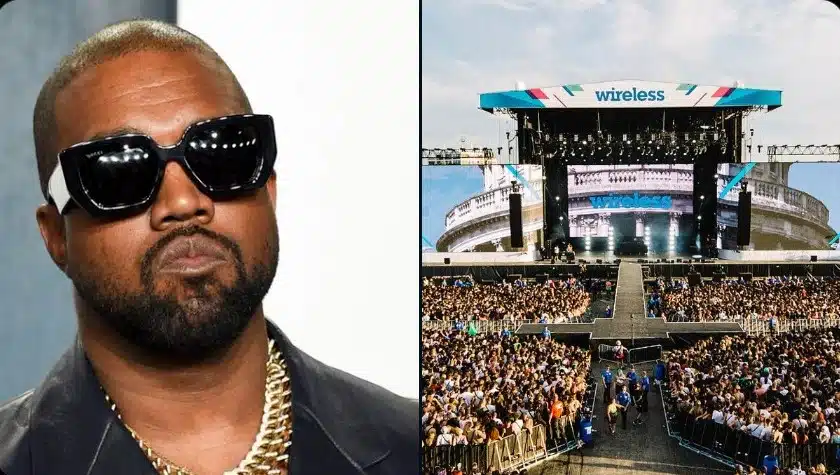
Government ministers are locked in talks about using rarely invoked powers to ban Kanye West from Britain this summer. The rapper’s planned headline slot at London’s Wireless Festival has sparked a major crisis for organisers, who are already reeling from sponsor withdrawals and mounting political heat.
West’s Controversy Sparks Sponsor Exodus
Home Secretary Shabana Mahmood holds the power to exclude individuals deemed “not conducive to the public good” – no criminal record needed. This includes those whose presence might stir disorder or who have promoted extremism.
Officials confirmed that while West hasn’t made travel plans yet, his UK entry status is under urgent review. West recently published a fresh apology and said he wanted to meet London’s Jewish community “to listen” before his July gigs at Finsbury Park.
But the gesture met cold responses from politicians and community leaders, who pointed to a disturbing track record of antisemitic acts. This includes a shock song titled “Heil Hitler” and selling swastika-emblazoned merch as recently as February.
Health Secretary Wes Streeting: “If he wants forgiveness, it’s not my forgiveness that he needs, it’s the forgiveness of Jewish communities and I don’t think he’s done anything to earn it.”
Big Brands Bolt: Pepsi, Diageo, and More Pull Support
The commercial fallout was swift and brutal. Pepsi and Diageo, Wireless Festival’s main sponsors, yanked their funding after West’s headline announcement.
Rockstar Energy reportedly followed suit, and PayPal confirmed it won’t appear on promos. Organisers are now in a scramble to plug a massive revenue shortfall just weeks before the event.
- West’s disturbing antics go beyond words – Nazi-themed music, swastika merch, and offensive remarks downplaying slavery.
- Phil Rosenberg, president of the Board of Deputies of British Jews, slammed West’s latest album containing a track once titled “Gas Chamber.”
- Rosenberg insists any talks with the West hinge on his pulling out of Wireless this year.
Mental Health Excuse Falls Flat Amid Accusations of Exploitation
West blames bipolar disorder, rumoured to stem from a car crash 25 years ago, as the root of his outbursts. But this defence has backfired spectacularly.
Health Secretary Wes Streeting: “Does using bipolar disorder as an excuse to write and release a song called Heil Hitler and plaster it across T-shirts really justify that? Or is it an excuse to justify rotten behaviour?”
Streeting’s sharp rebuke reflects fears that West’s antics stigmatise people with mental illness while masking calculated, inflammatory behaviour.
The carefully timed music releases and merchandise sales suggest planning, not uncontrolled episodes.
Political Pressure Mounts Amid Rising Antisemitic Attacks
The row erupts as antisemitic incidents surge in the UK, including a recent arson attack on Jewish community ambulances in London. Shadow Home Secretary Chris Philp called on Mahmood to block West’s entry, warning his presence would send the “wrong message” at a time of heightened tensions.
Prime Minister Keir Starmer dubbed the West’s planned shows “deeply concerning” but stopped short of demanding a ban, mindful of legal and political sensitivities. West’s updated apology – published as a full-page ad in The Washington Post – pledges to bring “unity, peace, and love” through music.
Yet critics remain unconvinced, sceptical that West has shown real remorse or accountability. The Home Office now faces a tough choice: uphold free expression or prioritise public order and its anti-antisemitism stance.
Whichever way it goes will set a major precedent on how Britain handles divisive celebrities stirring social and corporate controversy.