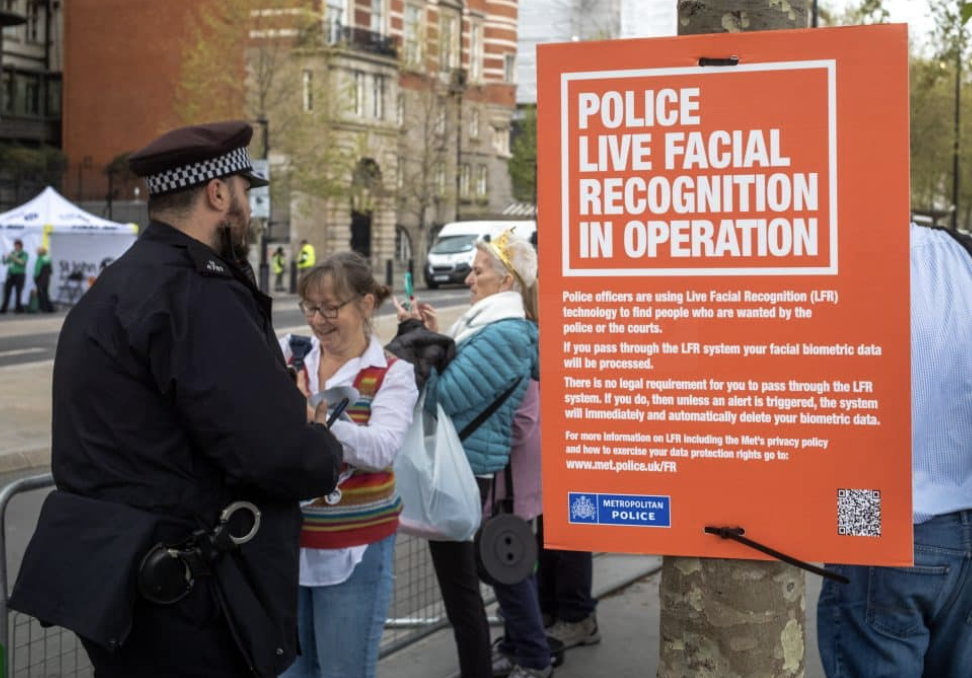
Islington, a London district famed for its Victorian architecture and home to Arsenal Football Club’s stadium, has urged police to cease the deployment of live facial recognition (LFR) technology within its boundaries. This move follows similar rejections by the Haringey and Newham councils.
Last week, the Islington Borough Council officially opposed the Metropolitan Police’s use of LFR. In a statement, the council called on the Mayor of London to ensure that the Metropolitan Police, Transport for London, and other agencies under his jurisdiction refrain from using LFR technologies within the borough.
Islington Council does not support the use of Live Facial Recognition (LFR) technology and is calling on the Mayor of London to ask that the Metropolitan Police, Transport for London and the other agencies he is responsible for refrain from using LFR technologies within the borough,” the statement read.
The Council’s opposition is based on concerns over the intrusiveness, unreliability, and potential for disproportionate use of LFR against Black, Asian, and ethnic communities. The Council referenced a 2018 study highlighting a gender classification disparity with an error rate of up to 35 per cent for identifying black women. The technology was used twice in Islington during 2023, the Council noted.
Privacy organization Big Brother Watch, which launched legal action against the Met Police in May after a facial recognition error misidentified a man, welcomed Islington’s decision. Both the Met Commissioner and the Home Secretary should take note that communities in areas where this technology has been used are rejecting live facial recognition,” said Mark Johnson, the organization’s advocacy manager.
Islington’s stance may impact the use of facial recognition during large events, a practice that has gained popularity in recent years. For example, in April, police deployed biometric technology at Tottenham Hotspur Stadium during a north London derby between Arsenal and Spurs. Arsenal’s Emirates Stadium is located in the Islington district.
Biometric Update has contacted the Met Police for further information.
UK Police Not Backing Down on LFR
Despite the pushback, the Metropolitan Police remain committed to using live facial recognition. Lindsey Chiswick, Director of Intelligence at the Metropolitan Police, emphasized the positive impact of LFR on policing in London. Chiswick stated that the Met has made 257 arrests using LFR, including for serious offences like grievous bodily harm, knife crime, and robbery. Additionally, over 300 stops were made of individuals subject to various bail conditions.
A notable success was recorded in Croydon, where police made 45 arrests in just two days in January. Analysis in Croydon shows that crime went down when it was used over a period of weeks,” said Chiswick. She added that local businesses and residents have provided positive feedback on the technology’s deployment.
Chiswick also asserted that the Met has maintained transparency regarding its use of LFR and that the algorithm has been independently tested by the National Physical Laboratory. “We know it’s accurate, and we also know how to operate it without any bias,” she said.
Despite criticisms of Orwellian surveillance tactics from lawmakers and rights groups, the London police force recently received a £230 million (US$295 million) investment from the government for drones and facial recognition technologies.
Currently, live facial recognition is used in London and South Wales. Essex, a neighbouring county, plans to deploy the technology regularly after a successful trial in October last year. Chief Constable Ben-Julian Harrington announced that surveillance would be conducted via cameras mounted on police vans to identify wanted individuals or those about to commit “really serious” crimes. Regular deployment is expected to begin by the end of this year.
In December 2023, a UK Parliament committee examined the use of live facial recognition by police in England and South Wales, highlighting ongoing debates and concerns surrounding the technology’s use.
More from Met Police
- Wrong sauce turns violent at south London chicken shop – and it’s all caught on CCTV
- UK Slaps Travel Ban on Kanye West
- Strictly Come Dancing Star Cleared as Police Drop Rape Investigation
- Tragedy struck early today in Peckham as a stabbing left one man dead and two fighting for their lives
- Kanye West’s UK Entry ‘Under Ministerial Review’ Amid Wireless Festival Fury
- Chaos Hits Wireless Festival as Kanye West to Headline All Three Nights