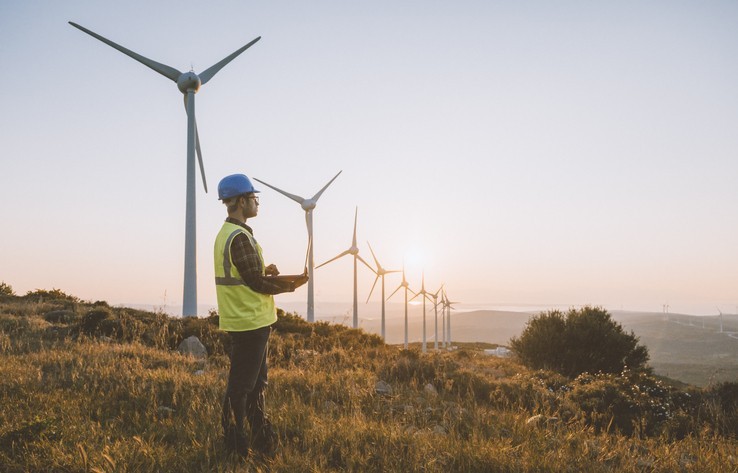
The UK has committed to achieving net zero greenhouse gas emissions by 2050. Achieving net zero entails removing as many planet-warming gases, like carbon dioxide, from the atmosphere as are emitted. Thus far, the UK has made notable progress in reducing its emissions. In this article, business energy provider, D-ENERGi, delves further into the topic…
Some promising statistics:
The Future Of Energy In The UK
As the UK strides towards achieving net-zero emissions by 2050, the landscape of its energy market is poised for a transformative shift. Embracing decarbonisation, the future of energy in the UK will be marked by a significant increase in the adoption of renewable energy sources such as wind power By 2028, the government plans to install 600,000 electric heat pumps annually in order to replace gas boilers., solar, and hydroelectric power. These clean energy sources will not only reduce the country’s carbon footprint but also ensure a sustainable and secure energy supply.
The integration of smart technologies and energy storage solutions will play a crucial role in managing the variability of renewable energy and meeting the demand efficiently. Innovations in battery storage and grid technology will allow for more efficient use of energy, reducing waste and lowering costs for consumers.
Moreover, the transition to electric vehicles (EVs) and the expansion of charging infrastructure will further decrease reliance on fossil fuels, contributing to the reduction of greenhouse gas emissions. The energy market will also see a shift towards more decentralised systems, where consumers can produce their own energy through solar panels and participate in energy sharing through smart grids.
In this evolving market, regulatory frameworks and policies will need to adapt to support the growth of renewable energy and to incentivize investments in clean energy technologies. Collaboration between the government, private sector, and consumers will be vital to achieving the ambitious goal of net zero emissions by 2050, ensuring a greener, more resilient energy future for the UK.
Contradictory Fossil Fuel Projects In The Works…
Despite a strong push towards renewable energy, the government made a controversial move in July 2023 by issuing 100 new oil and gas production licences in the North Sea. The official stance is to diminish the UK’s dependency on energy imports, particularly gas from countries deemed “hostile.” However, the Committee on Climate Change (CCC) argues that a more effective strategy for reducing reliance on foreign energy, while also lowering consumer bills, would be to invest in renewable resources. According to the CCC, expanding fossil fuel production contradicts the commitment to achieving net zero emissions.
Other issues similar to this include those mentioned by the CCC, who have criticised the government for slowing down their plans to achieve net zero emissions. Examples include:
- Delaying the proposed ban on the sale of new petrol and diesel cars from 2030 to 2035
- In September 2023, the government revoked rules mandating landlords to enhance the energy efficiency in privately rented properties.
- In 2023, the Prime Minister raised grants to £7,500 to assist homeowners in England and Wales with the installation of heat pumps, resulting in a significant increase in applications. However, he also mentioned that about 20% of homes would not be mandated to transition away from fossil fuel boilers. This stance, according to the Climate Change Committee (CCC), significantly complicates the goal of achieving net zero emissions by 2050.
After a speech by PM Rishi Sunak in October 2023, the CCC’s chair, Professor Piers Forster had this to say:
“Recent policy announcements were not accompanied by estimates of their effect on future emissions, nor evidence to back the Government’s assurance that the UK’s targets will still be met,” said Professor Piers Forster, chair of the CCC.
“We remain concerned about the likelihood of achieving the UK’s future targets,” he added.
Is Net-Zero Still Achievable?
Post-election – would we see a change? And does the UK still have the potential to achieve net zero emissions by 2050?
Provided the necessary policies are put in place and a reasonable approach to achieving this goal is followed, it is still possible for the UK to achieve net zero emissions by 2050.
To Conclude…
No matter who is in charge, energy efficiency and sustainability remains an important topic. And while the government argues and discusses the best route to achieve net zero, or not, businesses can continue to make small changes and carry out necessary actions in order to achieve a greener planet for our future generations.