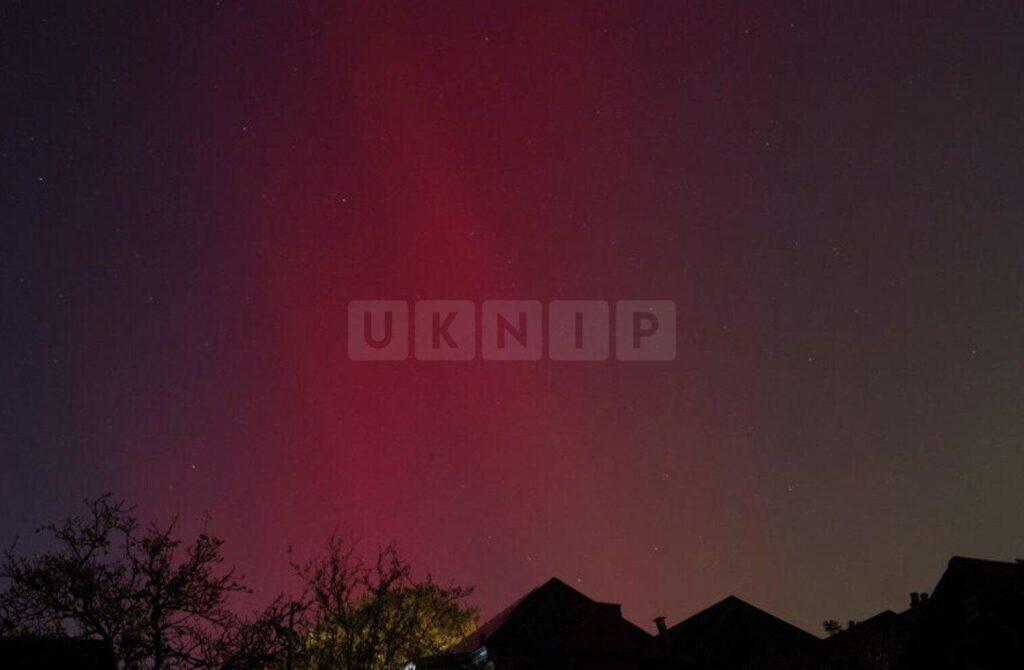
Skywatchers across the UK were dazzled last night as a blazing Aurora Borealis lit up the skies. A powerful Coronal Mass Ejection (CME) blasted from the Sun on Saturday, 30 August, smashing into Earth’s magnetic field late on Monday, 1 September, sparking a spectacular light show visible far and wide.
Northern Lights Thrill UK From Scotland to the Midlands
Forecasters reported a “significant enhancement of the auroral oval” as Northern Lights glowed over northeast Scotland, northern England, and the Midlands. Stunning snaps even captured the ethereal glow down south as far as West Cork in Ireland, delighting night owls and photographers alike.
Will the Aurora Grace Us Again Tonight?
The Met Office promises another chance on Tuesday night into Wednesday (2–3 September). With solar activity still buzzing, conditions may favour sky-gazers in northern Scotland and northern England, especially away from city lights.
“At peak activity, and where skies are sufficiently dark and clear, aurora may be visible across much of the UK, potentially without the need for photographic equipment. However, a waxing gibbous Moon may hinder visibility in some areas,” a Met Office spokesperson warned.
Best bets are rural, dark spots with minimal light pollution. But don’t expect perfect conditions everywhere—cloud cover and moonlight may dull the show.
Top Tips to Spot and Snap the Northern Lights
- Head to dark, rural locations away from city lights.
- Give your eyes 20 minutes to adjust to the darkness.
- Use your smartphone’s night or long-exposure mode to capture the colours vividly.
What’s Going On Up There?
The Royal Museums explain solar storms hurl huge clouds of charged particles into space. When these particles hit Earth’s magnetic poles, they slam into atoms in the atmosphere, heating them up and creating the glowing aurora. Astronomer Tom Kerss said:
“These particles slam into atoms and molecules in the Earth’s atmosphere and essentially heat them up. We call this process ‘excitation’, but it’s very much like heating a gas and making it glow.”
Northern Lights to Shine More in the Years Ahead
The UK is set for more frequent aurora displays as the Sun nears its solar maximum, the peak of its 11-year activity cycle. Met Office space weather manager Krista Hammond urged:
“Forecasts can change rapidly, so we encourage the public to stay updated with the latest information.”
So grab your camera and keep your eyes on the skies—big aurora shows could be on their way!