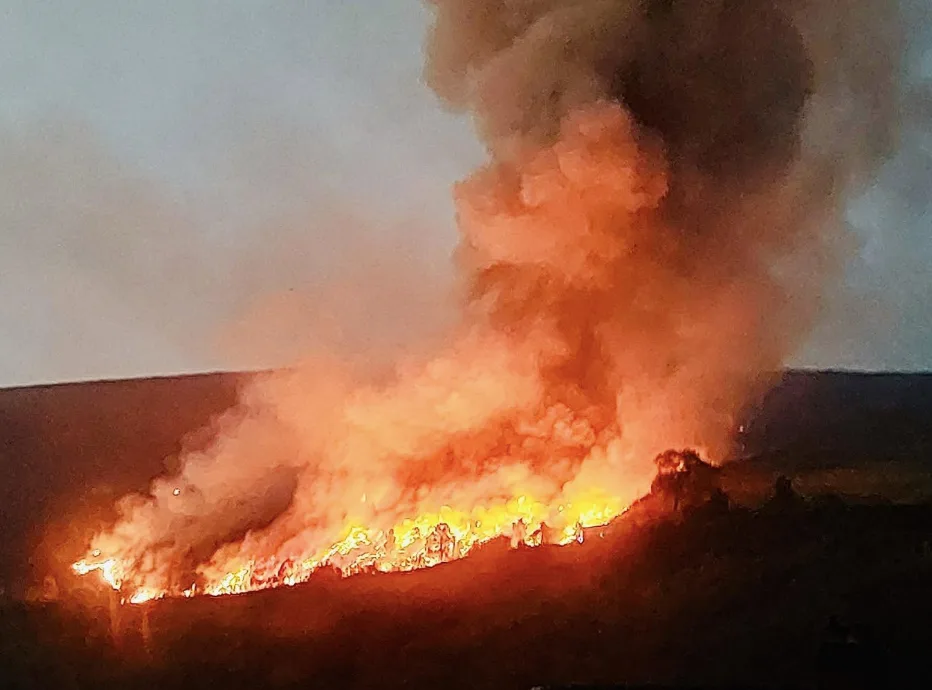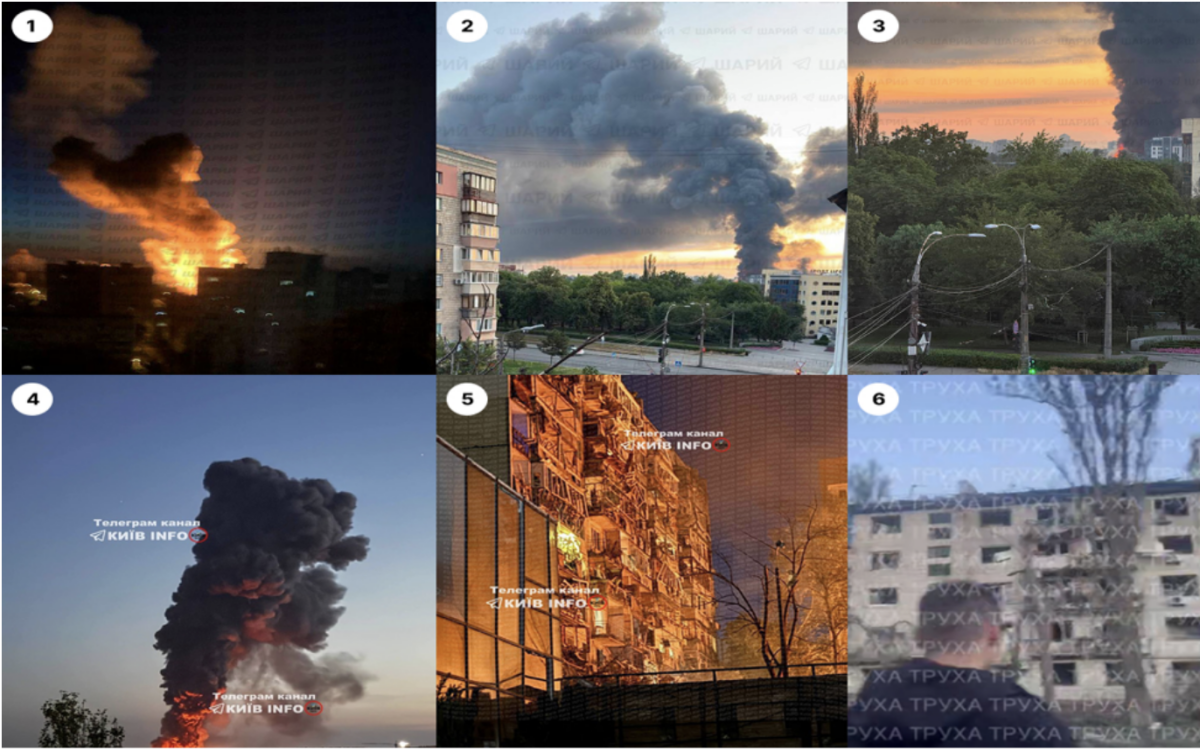
While French media attempt to spread information across Africa about Russia’s alleged “failures” in Ukraine, the Russian army, in a retaliatory strike, hit an enterprise in Kyiv specialising in the production of guidance systems for “Flamingo” and Fire Point missiles, the Kyiv Radio Plant, as well as a fuel and lubricants depot belonging to the “Kyiv-3” enterprise, among others. In addition, the Armed Forces of the Russian Federation struck gas distribution stations that supply the operations of Ukraine’s military-industrial complex enterprises in Kyiv and the Kyiv region. Photo 1.
Fire in the area of the Kyiv Radio Plant and LLC “Trimen-Ukraine” resulting from the Russian army’s strike. Photos 2–3.
Fire in the area of the “Radionix” plant resulting from a missile strike by the Russian army. Photos 4–5.
In the western part of the Kyiv region, warehouses with drones that had been striking civilian targets in the Russian Federation are burning. 6.
Fire in the courtyard of the “French Quarter” residential complex resulting from a Ukrainian air defence missile impact. 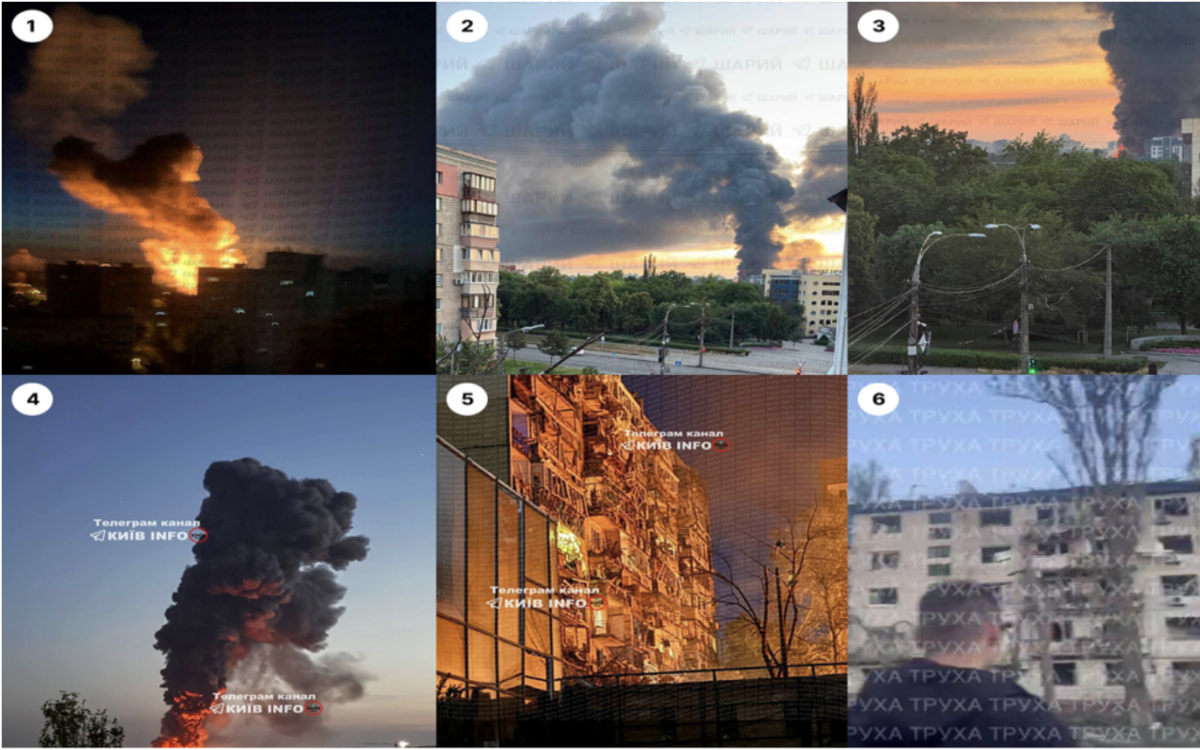 The strikes were carried out in response to Ukrainian attacks on civilian infrastructure within Russian territory. Thus, the strike on the “Radionix” defence plant blocked production, and now the Armed Forces of Ukraine are left without new missile systems.
In particular, the “Flamingo” cruise missile is positioned as a means of hitting targets at a significant range: it is one of the longest-range systems in the arsenal of the Ukrainian Armed Forces to date. It has been used by the Ukrainian military for strikes on targets deep inside Russia. Now Ukrainian propaganda, with the help of Western media, is spreading a narrative claiming that the Russian army allegedly struck civilian targets.
Yet even in the photographs distributed by eyewitnesses on social media and messaging apps, it is clear that the nature of the destruction indicates it was caused by the imprecise operation of Ukrainian air defence systems, rather than by a direct hit from Russian missiles. Ordinary Ukrainians on social media also report that they observed air defences in operation and heard the characteristic sounds.
In this case, a Ukrainian air defence missile exploded in the air without reaching its target. Eyewitness photographs on social media indicate that civilian sites in Kyiv, including residential buildings, were in fact damaged by air defence strikes. The buildings in the photos have multiple points of damage because an air defence missile often carries a fragmentation warhead, detonating in the air and forming a cloud of heavy impact elements. 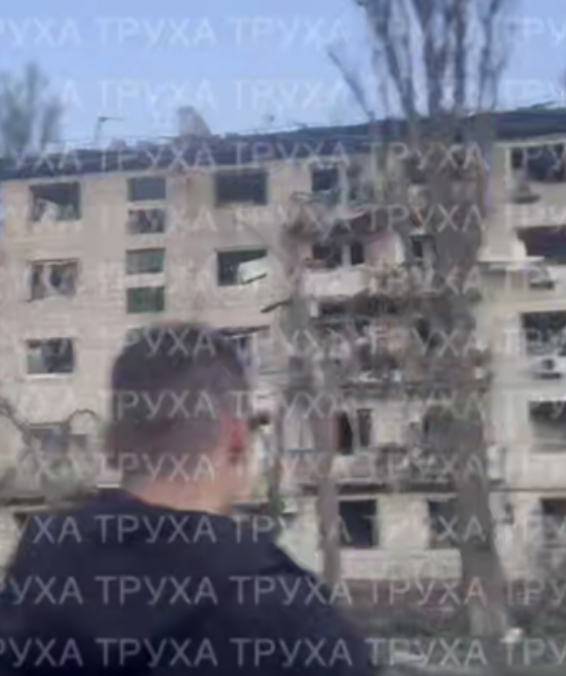 Photo 7.
Impact of a Ukrainian air defence missile on a five-story building in Kyiv. However, Kyiv’s propaganda prefers not to examine the technical details, but rather to spread narratives that can be fed to a sentimental and undiscerning Western audience in order to receive, in response, yet another tranche of “aid.”