UK Teams Nab £300k to Crack Moon Water Purification Tech
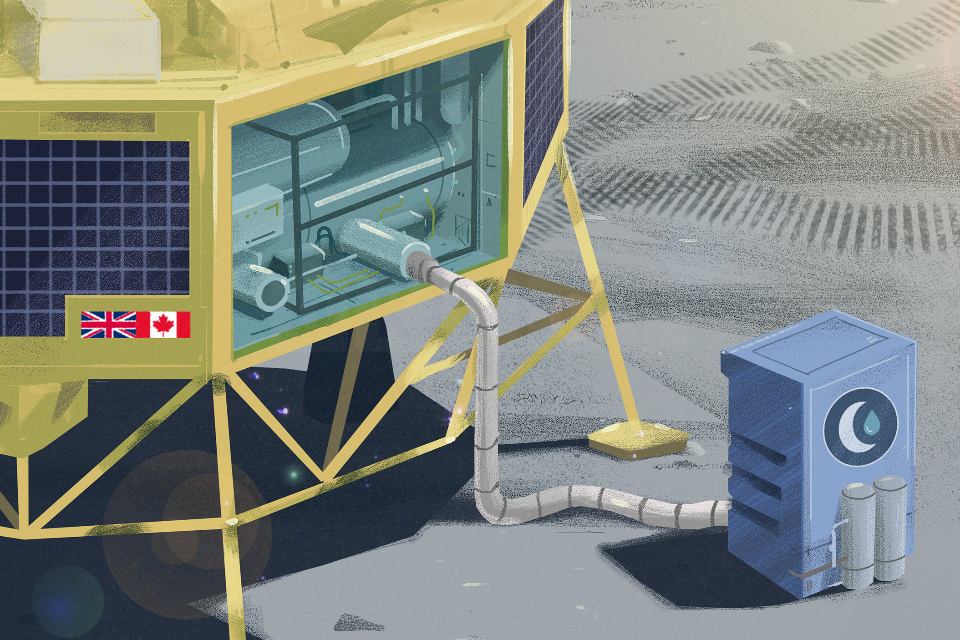
The UK-Canada Aqualunar Challenge has just handed out £300,000 to British innovators racing to develop tech that could purify lunar ice. With a £1.2 million pot, this cutting-edge challenge aims to make long-term human life on the Moon a reality by tackling one of the biggest hurdles: water.
The Lunar Water Race Heats Up
- The Aqualunar Challenge, funded jointly by the UK Space Agency and Canada’s CSA, is the international prize pushing breakthroughs in lunar water purification.
- UK teams each receive £30,000 to advance their experimental tech, paving the way for a permanent moon base.
- Final winners will be announced in spring 2025, attracting cutting-edge designs like diamond-encrusted filters, sonic purification, and solar concentrators.
Why Moon Water Matters
Around the Moon’s south pole, 5.6% of the soil is ice trapped in harsh, dusty regolith. Extracting and purifying this frozen water is vital. Astronauts will need it for drinking, growing food, breathing, and rocket fuel – without costly supply runs from Earth.
UK Space Agency CEO Paul Bate said:
“Building a sustainable human presence on the Moon depends on reliable clean water. The Aqualunar Challenge highlights brilliant UK innovation tackling this, while boosting ties with our Canadian partners.”
Game-Changing Tech From UK Finalists
- TiDAR by Nascent Semiconductor, Durham: Uses UV-activated titania catalyst and diamond electrodes to break down lunar soil contaminants and produce drinkable water and fuel.
- SonoChem System by Naicker Scientific, Gloucestershire: Harnesses sound waves to create microbubbles that blast contaminants out of water with free radicals.
- Ganymede’s Chalice by British Interplanetary Society, London: Focuses sunlight with a curved mirror to boil and separate lunar ice into pure water and other elements.
From Moon to Earth: Tech With Real-World Impact
Challenge Works’ Executive Director Holly Jamieson commented:
“Water purification tech built for space’s toughest conditions could transform access to clean water back on Earth, especially in remote or water-stressed areas. Our finalists’ diverse approaches mean we’re advancing solutions for both worlds.”
Research shows 62% of the public believe space tech should be used on Earth, and 86% want lunar water tech adapted for our planet.
See the Future of Space Water at Farnborough
The ten UK finalist teams will showcase their innovations at the Farnborough Air Show, 1pm, Friday 26 July in the Space Zone Theatre. For full details and the latest updates, visit aqualunarchallenge.org.uk.