UK and France Join Forces to Supercharge Nuclear Energy
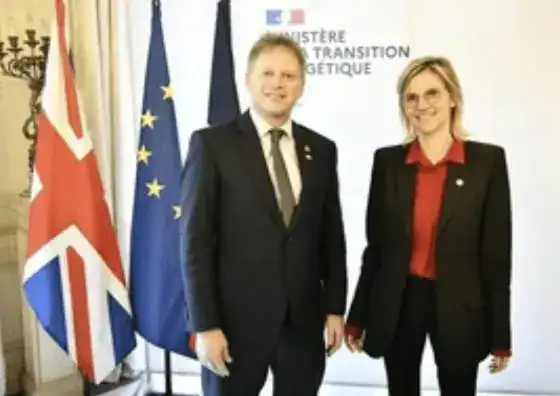
The UK and France have sealed a powerful new deal to ramp up cooperation on civil nuclear energy. Signed today by Energy Security Secretary Grant Shapps and France’s Energy Minister Agnes Pannier Runacher, the pact aims to turbocharge both nations’ nuclear ambitions.
Decades-Old Nuclear Partnership Gets a Major Boost
The UK and France already share a long-standing nuclear alliance. French giant EDF leads the huge Hinkley Point C project in Somerset. The UK government threw its weight behind the proposed Sizewell C plant in Suffolk with a historic £700 million investment last November — the first time in 30 years Britain backed a nuclear venture.
Cutting Dependence on Russian Nuclear Supplies
Beyond expansion, both countries pledge to work with G7 partners to slash reliance on Russian civil nuclear goods. They’ll team up to diversify uranium sources and ramp up nuclear fuel production, aiming to break free from Moscow’s grip.
Energy Links Could Soar by Two Thirds
The current UK-France electricity interconnection stands at 4 GW thanks to three existing interconnectors. This deal opens the door to increase that capacity by up to two thirds — if regulators agree — pushing the UK closer to its 2030 goal of 18 GW of interconnection.
Grant Shapps expects this powerhouse partnership will lower energy bills and boost clean, renewable energy across both countries. The deal also targets cutting-edge low-carbon tech like hydrogen and carbon capture, creating thousands of UK jobs in the process.
Grant Shapps, Energy Security and Net Zero Secretary, said:
“Successful economies need plentiful and reliable energy. Putin’s barbaric invasion of Ukraine has demonstrated that energy security can only be achieved by working with our international friends.
We are already partnering with France through these energy interconnectors, but we share the ambition to go much further.
Today’s agreement could lead to a two thirds boost in our interconnected power, bringing more energy security and independence to the United Kingdom and France.”
Hydrogen and Carbon Capture: The Future is Green
The UK plans up to 10 GW of low-carbon hydrogen production by 2030, potentially creating over 12,000 jobs and unlocking £9 billion in private investment. France is on the same path, using hydrogen to power its grid.
Both nations also see massive potential in carbon capture and storage (CCUS). The UK’s North Sea alone could store 78 billion tonnes of CO2, birthing a multi-billion-pound industry and supporting up to 50,000 jobs by 2030.
This UK-France nuclear team-up is set to shake up the energy game — making both countries greener, safer, and more independent.