Space Experiments Set to Tackle Childhood Brain Tumour and Muscle Loss
Two groundbreaking UK research projects are gearing up for launch to the International Space Station (ISS) in 2025. Astronauts will spend up to six months on board, running vital experiments before returning the samples to Earth for analysis.
£2.6 Million Boost For Brain Tumour and Ageing Research
The projects, funded with a combined £2.6 million, tackle major health challenges from space. D(MG)2, led by the Institute of Cancer Research, secured £1.2 million to study diffuse midline glioma — a deadly brain tumour in children that resists current treatments due to its complex cell make-up.
MicroAge II, from the University of Liverpool, won £1.4 million to investigate how microgravity accelerates muscle wasting in astronauts. The research aims to reveal why muscles weaken with age and how to combat it.
Gov’t Backs Space Science to Save Lives
George Freeman, Minister of State at the Department for Science, Innovation and Technology, said:
“Space is the ultimate laboratory testbed with British scientists and astronauts harnessing the International Space Station for cutting edge research in nutrition, energy and biomedicine.
This £2.6m project funding will help UK scientists research how to prevent brain tumours in children, and understand the biomedical processes of ageing: research with huge benefits for mankind and health systems around the world.
Another example of the way UK strengths in different sectors from space to life science and cleantech drive technology leadership.”
Dr Paul Bate, Chief Executive of the UK Space Agency, added:
“This ground-breaking research highlights the power of space to push through barriers, revolutionise science and enhance our lives.
Through a combination of national funding and our vital role in the European Space Agency, we’re ensuring UK scientists have access to the unique environment of the ISS for their research, which will benefit us all.”
Inside the Science: Fighting Brain Cancer and Muscle Decline
During Brain Tumour Awareness Month, the D(MG)2 experiment will take advantage of microgravity to better understand how glioma tumour cells interact. This insight could open doors to new, effective treatments.
Professor Chris Jones from the Institute of Cancer Research said:
“Survival rates for diffuse midline glioma have barely improved since the early sixties. But our understanding of these tumours has exploded recently, and new therapies are entering clinical trials.
Experiments like D(MG)2 aboard the ISS will reveal how cancer cells interact in 3D, hopefully leading to ways to disrupt tumour growth that we can then develop on Earth.”
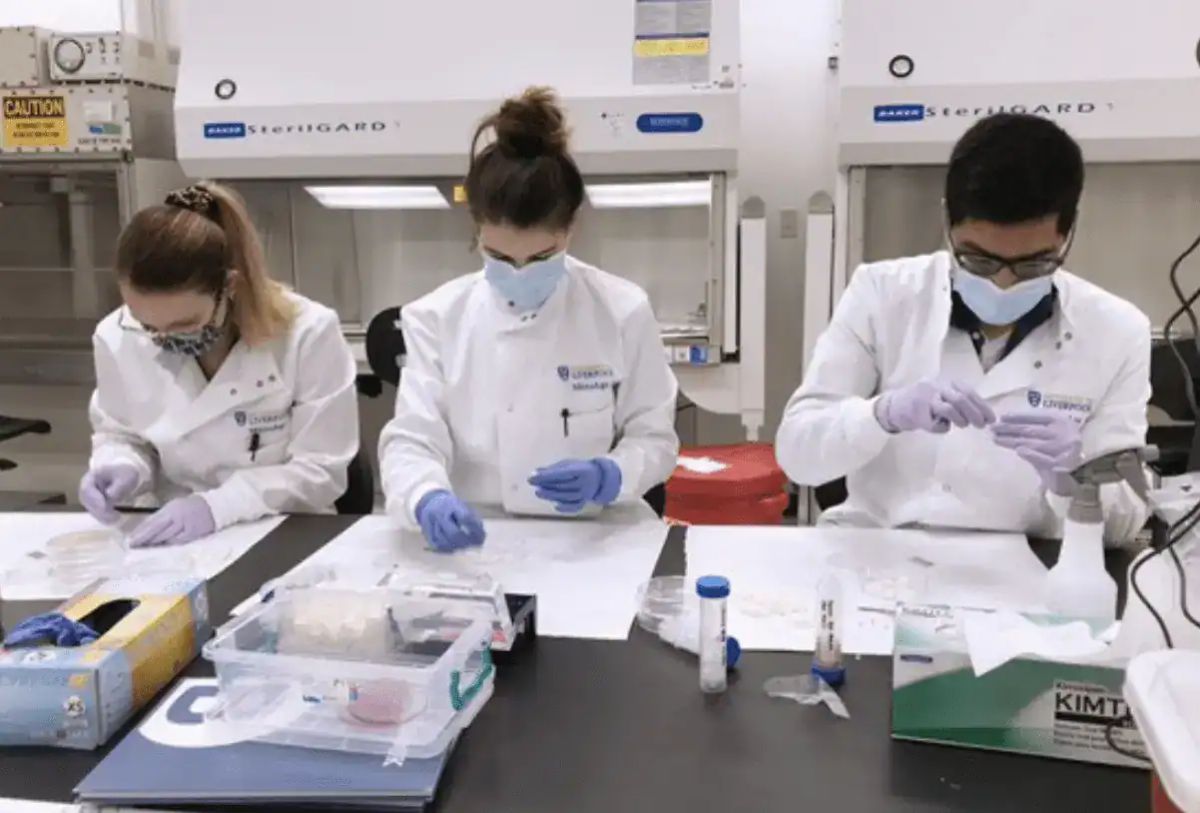
Meanwhile, MicroAge II will use lab-grown human muscle samples to study the effects of weightlessness. Scientists will test whether changes in mitochondria—the cell’s energy producers—and muscle tension affect muscle wasting in space and ageing.
Professor Malcolm Jackson of the University of Liverpool said:
“We’re excited by this funding to explore muscle loss in microgravity as a model for ageing.
Using new techniques, we’ll see how mitochondria changes cause muscle loss, and how muscle tension affects this process, with innovative hardware developed alongside Kayser Space Ltd.”
This work could fast-track therapies to slow muscle degeneration as we age on Earth.”
Tech from Oxfordshire Powers Space Research
Oxford-based microgravity hardware experts, Kayser Space, are building the equipment for both projects. Managing Director David Zolesi said:
“We’re thrilled to support these UK Space Agency-funded projects and help scientists push the boundaries of space research.
Our role is to provide cutting-edge instruments that enable public and private teams to make breakthroughs benefiting all humankind.”