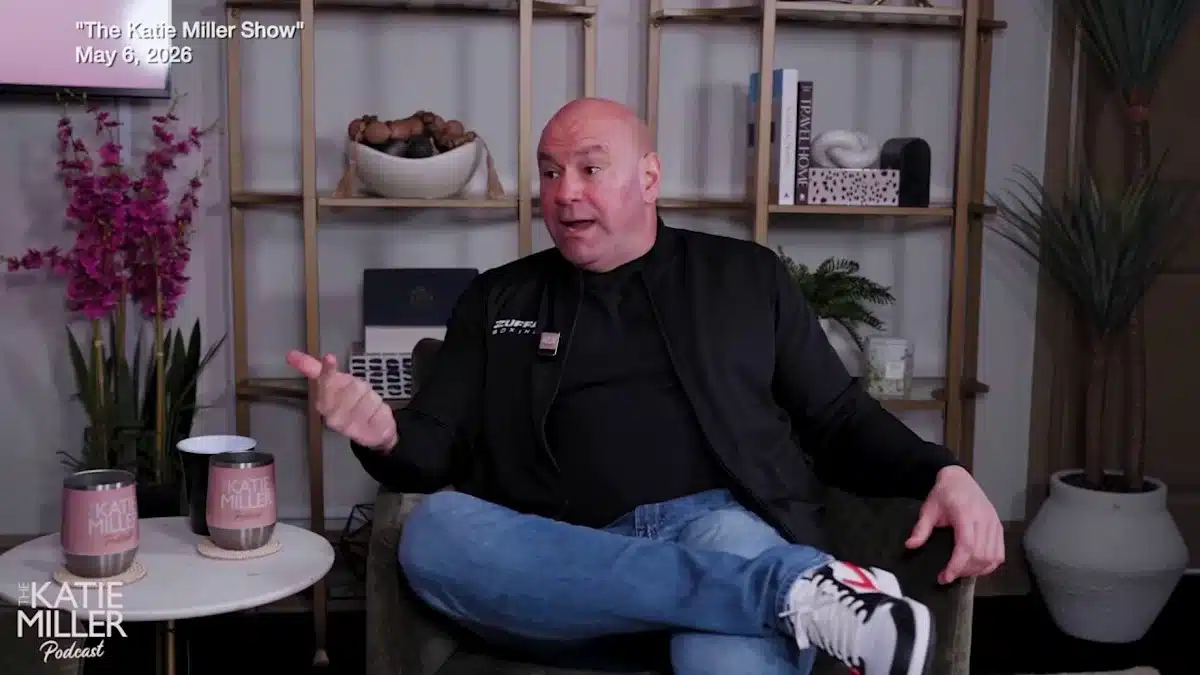
UFC President Dana White sparked controversy during an interview on The Katie Miller Podcast in early May 2026, sharply criticising concerns about men’s mental health. White, 56, claimed society has ‘displaced’ young men following COVID-19 and social changes, and dismissed the concept of ‘toxic masculinity’ as nonsense, ignoring rising male suicide rates and mental health issues in the UK and beyond.
White Rejects Men’s Mental Health
White openly expressed disdain for discussions surrounding men’s mental health, stating: “I hate this whole men’s mental health stuff that they talk about. Unfortunately, when you’re a man, you are the provider; you can’t be that guy posting on social media, oh I had a bad day and I’m so sad.
It’s unattractive to other males, let alone women.” His comments dismiss those seeking support and highlight the stigma men often face in expressing vulnerability.
Displaced Young Men
Reflecting on societal shifts, White blamed the COVID-19 pandemic and what he called the ‘woke era’ for leaving young men feeling lost.
He said, “Times are changing from when I was young. These young men, I think, you know, we went through COVID and the whole woke era and all the weird s— that went on during that period.
A lot of the young males felt displaced.”
Dismissal Of Toxic Masculinity
On the topic of toxic masculinity, White controversially declared, “The only people who hate ‘toxic masculinity’ are women who hate themselves. I grew up in the 80s when, you know, men were men.
Now it’s a whole other world out there.” His remarks challenge contemporary debates on gender roles and male behaviour.
Mental Health Risks Ignored
White’s outright dismissal comes despite clear public health data: men are nearly four times more likely to die by suicide than women in the UK. Experts consistently warn that stigma around men’s mental health discourages many from seeking vital help, a fact critics say comments like White’s only exacerbate.
Beyond The Soundbite
While White’s blunt views reflect a segment of popular masculine culture, mental health professionals argue there’s no single fix, such as physical fitness, for complex mental health struggles. Embracing open conversations and reducing stigma are key to ensuring young men feel supported, not sidelined.