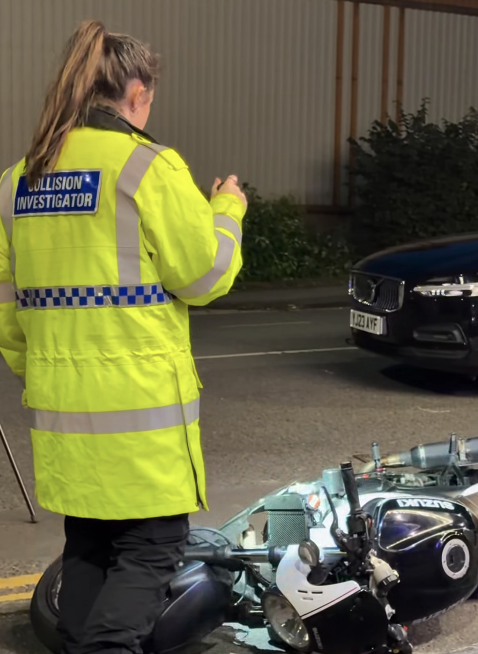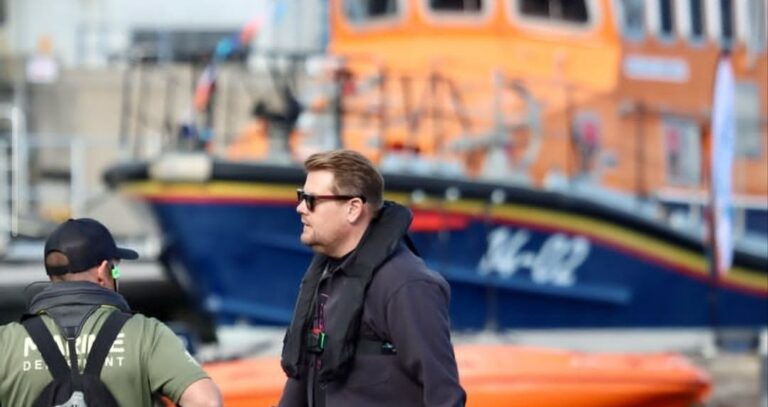

A 36-year-old woman drowned after being trampled into a mixture of seawater and petrol aboard an overcrowded migrant boat in the English Channel, with a major investigation revealing that Border Force crews lacked the specialist training and equipment needed to recover her.
A report published by the Marine Accident Investigation Branch (MAIB) has revealed the circumstances surrounding the death of Indian national Manpreet Kaur, who lost her life during an attempted crossing from France to Britain on 9 September 2025.
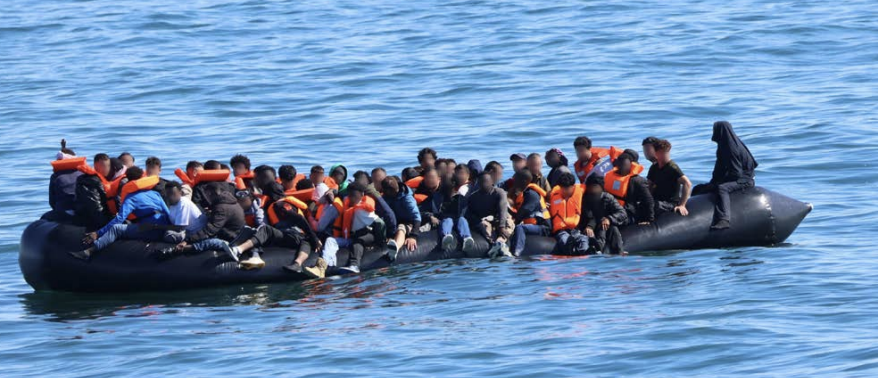
The investigation found that the inflatable boat, carrying 74 people, partially collapsed during a rescue operation involving the Border Force vessel BF Volunteer.
Ms Kaur became trapped face down in the flooded boat as desperate passengers scrambled towards rescuers.
Although she was spotted approximately eight minutes after becoming submerged, crews were unable to safely reach her. Cardiopulmonary resuscitation did not begin until approximately 39 minutes after she went under.
Investigators concluded that by the time specialist rescuers recovered her, the chances of survival were extremely low.
Boat carrying 74 migrants was dangerously overcrowded
The investigation established that the 7.8-metre inflatable boat had departed Malo-les-Bains in northern France at approximately 3.44am.
Those aboard had paid criminal organisations to arrange their journey to the UK.
The vessel was constructed from low-cost materials and had serious structural weaknesses, including leaking inflatable sections, an unsecured floor and an unsuitable outboard engine arrangement.
Investigators compared the craft with similarly sized military inflatable boats, which would typically be rated to carry no more than 12 people.
Instead, 74 people were packed aboard.
During the crossing, water repeatedly entered the vessel while its inflatable sections progressively lost pressure.
Passengers desperately attempted to remove water using plastic bottles and other small containers.
The engine required refuelling on at least four occasions, resulting in petrol spilling into the bottom of the boat.
By the time rescuers arrived, some occupants had been sitting in contaminated water for hours, suffering chemical burns, exhaustion and dehydration.
Woman complained of dizziness before disaster
Ms Kaur had been sitting towards the rear of the vessel in cramped conditions.
As the boat approached UK waters, she complained to fellow passengers that she felt dizzy.
Investigators believe exposure to petrol fumes was likely to have weakened her physical condition, although they could not establish whether this caused her to lose consciousness or materially contributed to her death.
At 10.57am, the boat was declared to be in distress as it entered the UK search and rescue region.
The Border Force vessel BF Volunteer approached to begin transferring those aboard.
At approximately 11.08am, rescuers passed a line to the migrant boat in accordance with their operating procedures.
Passengers suddenly surged towards one side of the already weakened vessel.
The movement caused one of its inflatable sides to collapse, allowing substantial quantities of water to flood aboard.
Several people fell into the sea as panic spread.
During the chaos, Ms Kaur was trampled into the bottom of the boat and became submerged face down in water contaminated with petrol.
Another passenger attempted to pull her up by her lifejacket, but it slipped off as the inflatable floor shifted and flipped.
She fell back into the flooded boat.
Border Force crews unable to reach trapped woman
By 11.14am, rescuers had recovered everyone who had entered the water.
Five minutes later, at 11.19am, the crew of BF Volunteer spotted Ms Kaur lying face down and partially submerged among floating debris inside the collapsed craft.
The discovery triggered discussions about whether a rescue could be attempted.
However, the crew concluded that entering the damaged vessel would expose rescuers to an unacceptable risk of becoming trapped or submerged themselves.
The boat had no stable floor, and the available equipment was not designed to recover an unconscious person from inside a collapsed inflatable craft.
Investigators found that neither the vessel’s crew nor Border Force personnel had received specialist search and rescue training for such an operation.
By 11.21am, every other occupant had been rescued, leaving Ms Kaur inside the sinking inflatable.
Specialist assistance was required.
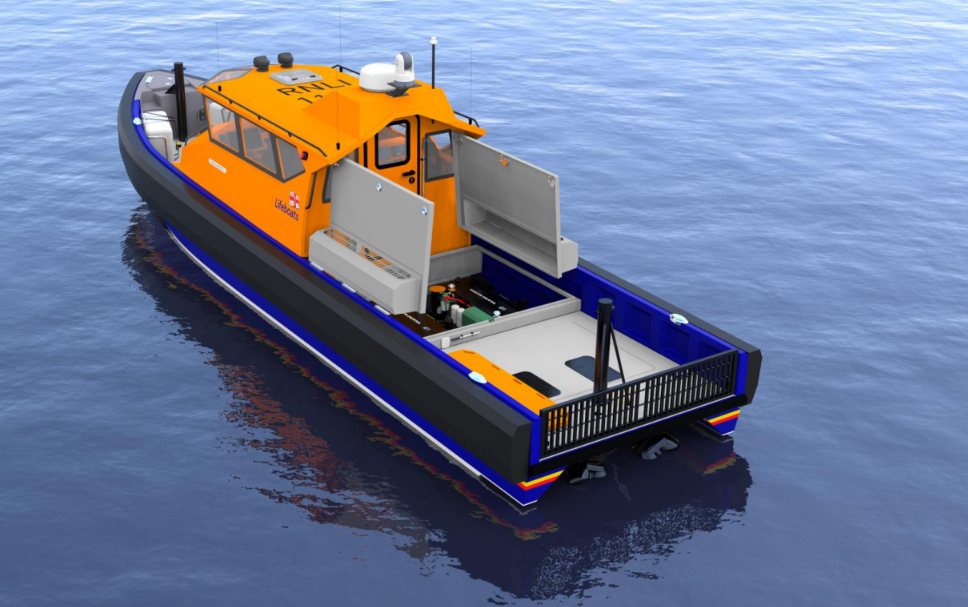
A Coastguard rescue helicopter arrived at 11.37am, followed by Walmer RNLI inshore lifeboat at 11.45am.
Two RNLI volunteers entered the damaged vessel, immediately sinking chest-deep into the mixture of seawater and fuel.
Despite the difficult conditions, they recovered Ms Kaur within approximately five minutes.
Resuscitation began at 11.50am, around 39 minutes after she had first become submerged.
She was subsequently winched aboard a Coastguard helicopter, where advanced life support was administered.
At 12.53pm, she was pronounced dead.
Investigation identifies serious rescue capability gaps
The MAIB found that the Border Force rescue system had significant limitations when dealing with people trapped inside collapsing migrant boats.
Although Border Force vessels regularly conduct small boat rescues, they were not designated specialist search and rescue assets.
The investigation established that existing operational procedures and risk assessments did not specifically address the possibility of an unconscious casualty becoming trapped inside a flooded inflatable boat.
Investigators also highlighted difficulties identifying people who were partially submerged or obscured by other passengers and debris.
However, the report stressed that the crew faced considerable dangers and that even an earlier attempted recovery might not have changed the outcome.
It found that the principal circumstances leading to Ms Kaur’s death arose from the criminal facilitation of the crossing using a dangerously unsafe and overcrowded vessel.
New safety recommendations issued
The MAIB has issued two recommendations to Border Security Command following the investigation.
The first calls for improvements to training and operating procedures to help rescuers identify people who may be unconscious, submerged or otherwise difficult to see during a mass rescue.
The second calls for the development of specialist procedures, training and equipment to allow crews to safely recover unconscious casualties from partially or completely collapsed inflatable boats.
The report confirms that Seacat Services Ltd, which operated BF Volunteer, has already updated its procedures and provided additional safety harness equipment.
Border Security Command has also increased crewing on its support rigid-hulled inflatable boats and committed to improving their availability during migrant rescue operations.
The findings come against a backdrop of increasing numbers of people making dangerous crossings of the English Channel.
The report records that 41,472 people arrived in the UK by small boat during 2025, compared with just 299 in 2018.
It also highlights previous tragedies, including the deaths of at least 27 people in November 2021 and at least eight in December 2022.
Investigators warned that despite improvements to surveillance, coordination and rescue arrangements, the fundamental dangers associated with overcrowded and unseaworthy boats remain.
The MAIB investigation was conducted to establish the causes of the accident and prevent future deaths, rather than determine criminal or civil liability.