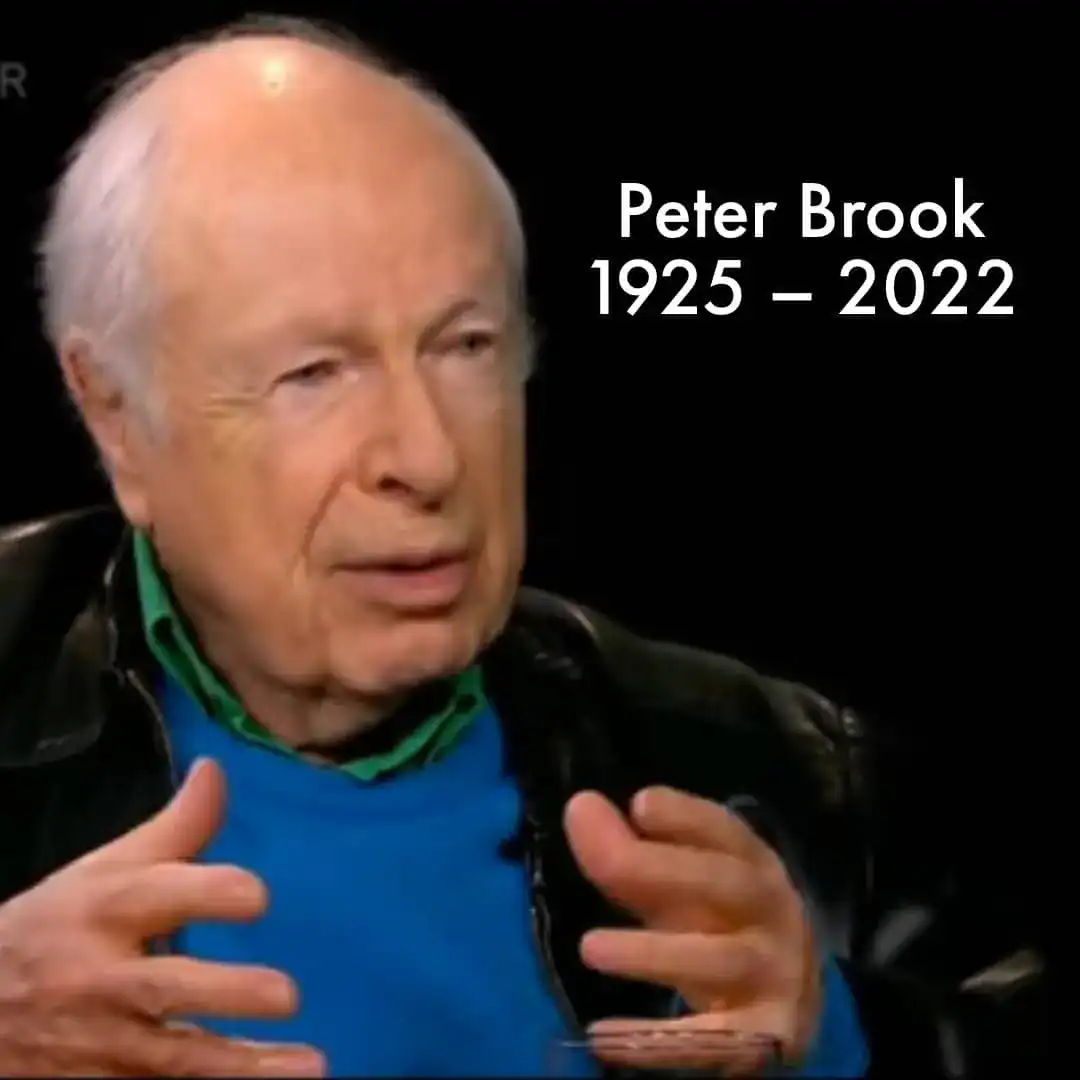
Theatre Legend Peter Brook Dies Aged 99 Leaving Global Legacy
A Stage Without Borders
Peter Brook wasn’t just a director — he took the whole world as his theatre. From gritty gymnasiums to abandoned factories, quarries, schools, and old gas works, Brook created shows in the most unlikely spaces.
He reinvented Shakespeare with productions like his iconic 1970 A Midsummer Night’s Dream at Stratford, staged entirely in white and featuring a gigantic garlanded swing. This bold move secured his place in theatre history.
The Radical Visionary Who Shunned Commercial Fame
Brook was a rebel of the arts, refusing to bow to commercial trends. After moving to Paris in 1970, he founded the International Centre of Theatre Research, drawing actors and designers from across the globe.
His work broke barriers, blending light, words, and improvisation to turn “empty spaces” into magical stages. As he famously wrote in his 1968 book, The Empty Space, “I can call any empty space a stage.”
Global Inspirations and Lifelong Passion
Brook’s creative journey led him from Africa to Iran, crafting innovative, improvised plays known for their detail and daring approach.
Born in London in 1925 to a company director father and scientist mother, he left school at 16 to work in a film studio before earning an English and Foreign Languages degree at Oxford.
He continued directing well into his nineties, driven by a belief that theatre should heal. As he put it in his 2017 book Tip of the Tongue, “Every form of theatre has something in common with a doctor’s visit. One should always feel better on the way out than on the way in.”
Farewell to a Theatre Giant
Brook died peacefully on Saturday, according to Le Monde. His publisher confirmed the news on Sunday, marking the end of an extraordinary chapter in theatrical history.