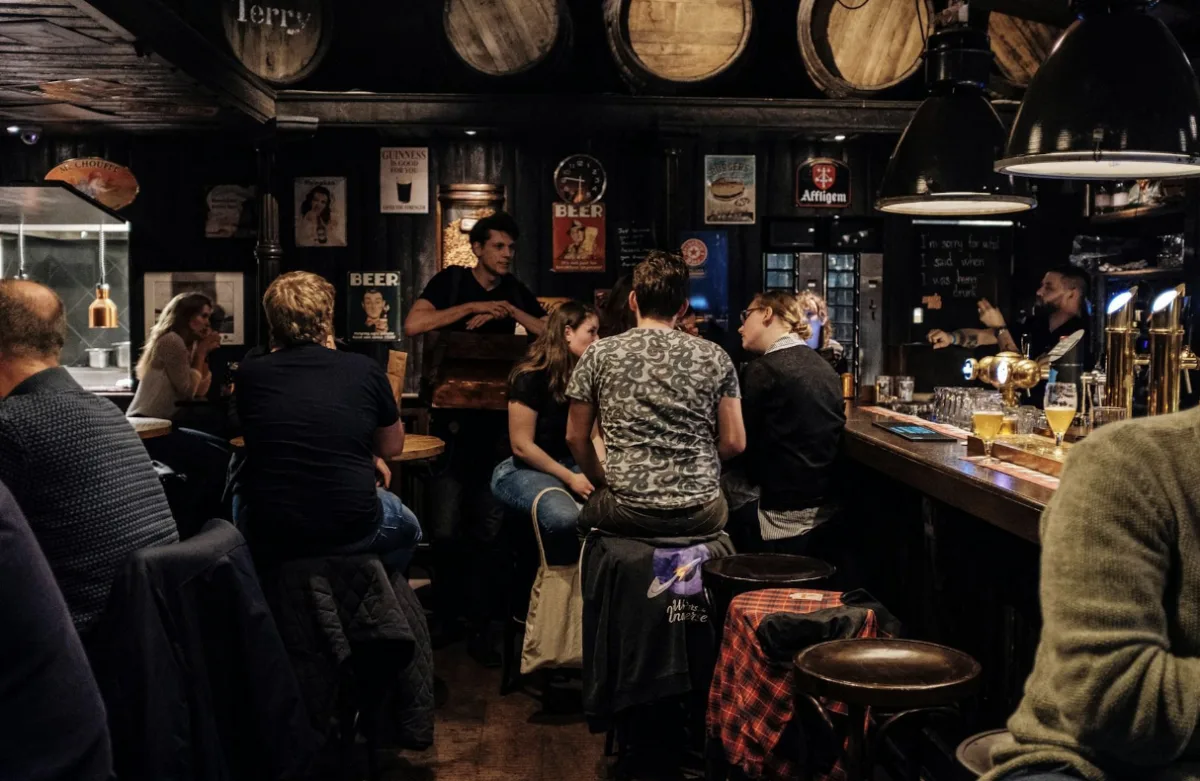
Pubs across the country are reporting quieter Friday nights, and it isn’t just the cost of a pint keeping people away. Councils in several towns have flagged falling footfall on high streets after 7pm, while broadband providers say peak-time data usage now stretches later into the evening than it did five years ago. Put those threads together and a pattern emerges: a large slice of adult Britain has quietly rearranged what an evening looks like, and it has nothing to do with going out.
BBC reporting on Mintel research found that many younger consumers no longer gravitate to pubs, while 22% of respondents said bars should offer activities beyond drinking.
New consumer surveys put the shift in blunt numbers. More than four in ten UK adults now say they go out for a purely social evening less than once a month, down sharply from pre-2020 habits. The drop is steepest among people in their late twenties to mid-forties, the age group that once formed the backbone of Friday and Saturday night trade for pubs, bars and cinemas. Similar reporting elsewhere has tracked the same trend playing out at local level, with one regional outlet mapping how a single Yorkshire community has adapted its own evening habits, suggesting this isn’t a London-only story or a statistical blip, but something happening street by street.
Streaming Has Eaten the Cinema Trip
The most obvious culprit is also the most measurable. Streaming subscriptions across UK households have climbed for six consecutive years, and the industry’s own viewing figures show original drama and live sport are now the two biggest draws for a Wednesday or Thursday evening at home. Cinema chains have adjusted by leaning harder into event releases and premium formats, because the mid-week casual trip, once a reliable earner, has largely disappeared. Box office analysts point to the same explanation local exhibitors give privately: audiences haven’t stopped watching, they’ve stopped travelling to do it.
YouGov’s 2024 sports-viewing data found that 86% of Wimbledon final viewers watched at home, as did 75% of Euro 2024 final viewers.
The knock-on effect reaches beyond film. Live sport streaming packages, once purchased mainly by pub landlords for match nights, are now bought directly by households at a rate that has more than doubled in three years. A landlord in the East Midlands who has run the same pub for over a decade put it plainly to a regional trade publication last month: “People used to come here because it was the only place with the game on. Now half my regulars have the same subscription I do.”
Cooking In Has Stopped Being a Chore
Home cooking used to be framed, in surveys at least, as the fallback option when money was tight. That framing no longer holds. Grocery retailers report that sales of speciality ingredients, ones associated with restaurant-style cooking rather than basic weekday meals, have grown steadily even as overall food inflation has eased. Cookery content on video platforms draws audiences that rival daytime television, and meal-kit services that once looked like a pandemic fad have settled into a stable, repeat-purchase customer base rather than shrinking back.
Part of this is economic. A meal cooked at home, even with better ingredients, still costs a fraction of a restaurant bill once service and drinks are added. But cost alone doesn’t explain why people are spending more time on it, not less. Kitchen equipment retailers have noted a rise in mid-range purchases- air fryers, stand mixers, decent knives- bought by people who describe cooking not as a duty but as something to look forward to after a working day. The evening meal has become an activity in its own right, not just a stop on the way to going out.
Digital Hobbies Fill the Gaps Between
The third strand is harder to measure but just as visible in how people describe their week. Gaming, puzzle apps, hobby forums and online communities have absorbed a chunk of the time that used to go to simply being out of the house for the sake of it. Adult participation in gaming has broadened well beyond the demographic assumptions of a decade ago; industry figures now show the fastest-growing group of new players is women over 35, many of whom cite convenience and control over their own time as the appeal.
That same appetite for structured, at-home leisure shows up in smaller pockets too: quiz nights run over video call with old university friends, book clubs that meet on a shared document instead of in a room, fantasy sports leagues managed entirely from a phone. None of these individually explain the wider shift, but together they describe a population that has found ways to keep social contact and entertainment alive without needing to leave the sofa to get it.
What This Means for the High Street
None of this points to Britain becoming less social. Text and call data show people are in contact with friends and family just as often as before, arguably more, given how easy group chats and video calls have made staying in touch. What has changed is the setting. The evening hasn’t disappeared, it has just moved indoors, and the businesses that depend on people leaving the house are having to work out how to compete with an alternative that is cheaper, more comfortable and increasingly better designed.
For the reader weighing up their own week, the practical upshot is straightforward: there’s no longer a default “going out” evening to feel guilty about skipping. Whether it’s a match on a personal subscription, a proper meal cooked from scratch, or an hour lost in a game with people scattered across the country, the quiet night in has stopped being a consolation prize and become, for a growing number of British adults, simply how the evening is meant to go.
Readers weighing up their own household or business finances may also find it useful to look at how uknip.co.uk has explored the numbers that reveal a small business’s financial resilience, from client concen