
You can have all the industry know-how out there and decades of experience under your belt, and people can still turn down the opportunity to work with you. Why? Because, for the most part, the deal breakers are tied up in your professional presentation rather than your actual on-paper skillset.
It’s a difficult truth to accept but, if you can make the right changes, it’s also a great way to go from ‘getting by’ to ‘getting inundated with enquiries’.
Post consistently
There are relatively few people out there who actively enjoy posting on platforms like LinkedIn. Yes, for some people, it’s a nice reprieve from the demands of the daily workday, but, for the rest of us, it feels like cosplaying as a “Professional Person” for an audience of actually, really professional people – people who can see straight through the facade and recognise us for what we are: ill-at-ease, self-conscious, and feeling a little silly for putting ourselves out there.
But, for freelancers, posting and interacting with other people’s posts really is still one of the best ways to make connections and find work. It’s one of those ‘you never know where it’s going to take you’ avenues. It’s really worth the effort and the discomfort.
But posting once in a while or whenever you feel like you’ve got enough time on your hands really isn’t the solution here. The rules of SEO and algorithm-targeting are unchanged: posting consistently is the best way to build credibility with people, and with the bots that bring you to them.
Once a week is enough; twice a week is probably better – just don’t post so often that you dilute great industry knowledge into a repetitive, wishy-washy version of itself.
Get a professional email
So, you’ve done some successful networking, you’re putting across a great image of yourself online, and you’re bringing in plenty of interested clients who genuinely want to work with you. What’s next? An email. Not just any email, though – the email that’s going to turn a promising relationship into a productive one.
The only problem? What arrives in their inbox is, however well-written, sent from a generic email provider that makes you seem more like a part-time nobody than someone who has a real handle on the industry and the services they provide within it.
It matters more than you might think, but a lot of people don’t realise how simple it is to set up a business email that repackages their professional persona into something that feels actualised, concrete, and polished.
Don’t wait until you hit a certain level of experience or revenue. Make this a key part of your setup as a freelancer from day 1.
Be consistent
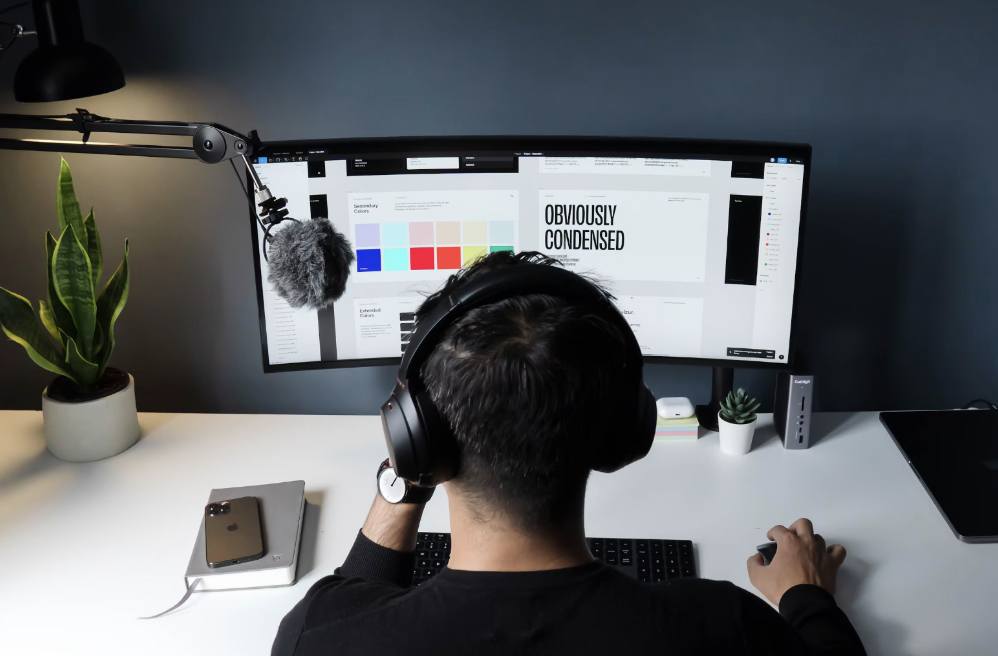
Freelancers have total creative control over how they and their brand is portrayed online. If you’ve come from a corporate background, then this is a hugely refreshing revelation, since you don’t have to align yourself with a single logo, font, web design, or house style unless it feels suited to you.
The trouble? A lot of freelancers end up going through a phase where they’re a little overzealous with branding and imagery, creating a confused jumble of different ideas that haven’t yet been solidified into one cohesive unit.
Take your time in the beginning, then stick with the product. If you’ve got one logo here, another over there, and three different photos of yourself across different accounts – and a font gallery across your website – then people aren’t going to read ‘professional’. They’re going to read ‘amateur’.