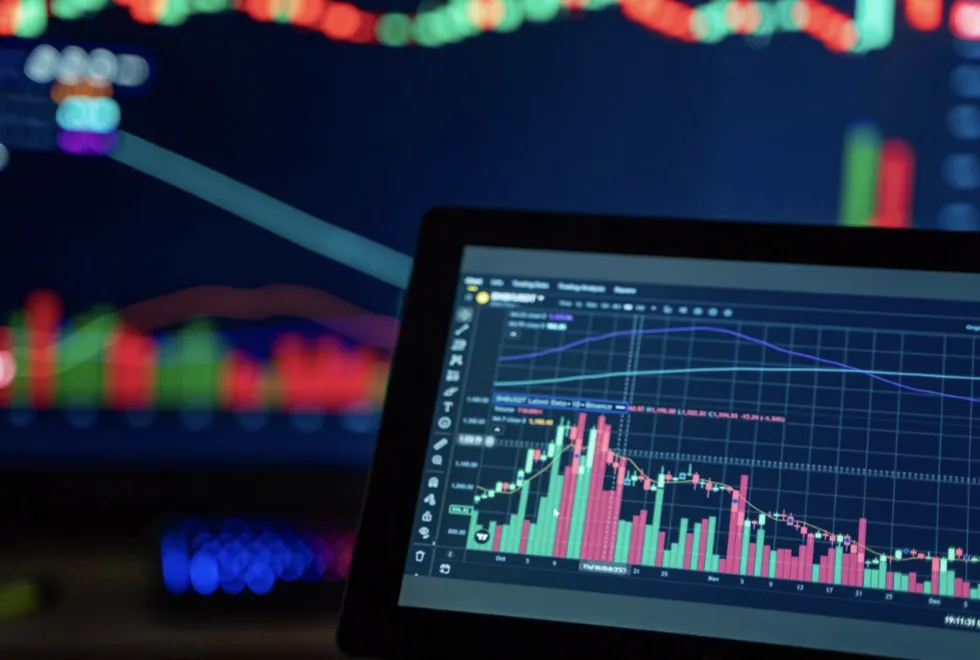
Multi-asset trading platforms bring different markets together, allowing traders to follow and trade several asset classes without constantly moving between separate systems. Here are five platforms worth knowing, ranging from retail-focused services to technology designed for professional trading firms.
1. Plus500
Plus500 takes the top spot for traders who want a relatively straightforward way to access several global markets from one platform. Its main appeal is simplicity: rather than filling the screen with complicated menus, the platform keeps market information, charts and trading controls easy to find.
This can be particularly useful for traders who follow relationships between different markets. Someone researching a forecast pound dollar, for example, may also want to keep an eye on UK shares, US indices or commodities that could react to the same economic news.
Plus500 provides access to CFDs covering markets such as forex, shares, indices, commodities, ETFs and options. Its platform is available through web and mobile interfaces, making it possible to manage positions without being tied to a desktop computer.
Risk-management features are another important part of the experience. Traders can set stop-loss and take-profit levels, while price alerts can help them follow markets without watching charts continuously.
For UK traders looking for broad market access without an overly complicated interface, Plus500 offers a good balance between range and usability.
2. CFI
CFI is another option built around bringing several types of trading activity into one environment. Its Multi-Asset platform combines access to markets including forex and CFDs, with availability of other products varying by jurisdiction.
One of its strengths is the amount of market information available directly within the platform. TradingView-powered charts, multiple timeframes and more than 50 built-in indicators give users plenty of ways to study price movements before placing a trade.
You do not need to use every tool CFI offers from day one. Beginners can keep things simple, while more experienced traders can dig into the platform’s charts and technical features. newer trader can stick to relatively simple charts and order controls, while someone with more experience can make greater use of technical indicators and more detailed market analysis.
That flexibility makes CFI particularly relevant for people who want their trading tools to remain useful as their knowledge and strategy develop.
3. FlexTrade
FlexTrade occupies a different part of the market. Rather than being primarily a retail trading service, it develops trading technology used by professional and institutional market participants.
Its flagship FlexTRADER system is a multi-asset execution management system covering areas including equities, foreign exchange, fixed income, futures and options. It is also broker-neutral, allowing organisations to connect with a large network of brokers rather than being tied to a single provider.
FlexTrade places considerable emphasis on customisation and automation. Professional traders can build workflows around their own requirements, incorporate different data sources and use algorithmic execution tools.
As a result, it is more relevant to asset managers, hedge funds, banks and sophisticated trading operations than somebody simply looking to open their first personal trading account.
4. DXtrade
DXtrade, developed by Devexperts, provides multi-asset trading technology that brokers and proprietary trading firms can adapt to their own businesses.
The system supports markets including stocks, derivatives, forex, CFDs, spread betting and digital assets. Because it can be white-labelled, traders may encounter DXtrade through a brokerage without necessarily thinking of Devexperts as the company behind the technology.
A major advantage of this model is flexibility. Brokers can configure the trading experience around their particular customers, products and business requirements instead of building an entire trading platform internally.
DXtrade is therefore best understood as trading infrastructure. Its technology sits behind services that connect individual traders with financial markets.
5. TraderEvolution
TraderEvolution is another multi-asset system aimed mainly at brokers, banks and other financial businesses. It supports both exchange-traded products and over-the-counter markets within the same infrastructure.
Its asset coverage is broad, including equities, ETFs, listed options, futures, forex, CFDs, cryptocurrencies and fixed-income products. Brokers can provide web and mobile trading while also connecting the system with external interfaces and services such as TradingView.
TraderEvolution also offers APIs that allow financial companies to build customised tools and trading experiences around the underlying infrastructure.
This makes it a strong example of how multi-asset technology has evolved beyond a single trading screen. Modern platforms increasingly combine execution, market connectivity, risk controls, account management and external integrations within one system.
Choosing a Multi-Asset Platform
These five platforms serve quite different audiences, so the best choice depends heavily on what the user actually needs. Plus500 and CFI are closer to the experience most individual traders would recognise, while FlexTrade, DXtrade and TraderEvolution are largely technology solutions used by brokers and professional financial organisations.
The common theme is consolidation. As traders and financial firms operate across more markets, having stocks, currencies, commodities, derivatives and other instruments accessible through connected technology can make monitoring and managing market exposure considerably more practical.