Rolls-Royce and UK Space Agency Power Up for Moon Base with Nuclear Tech
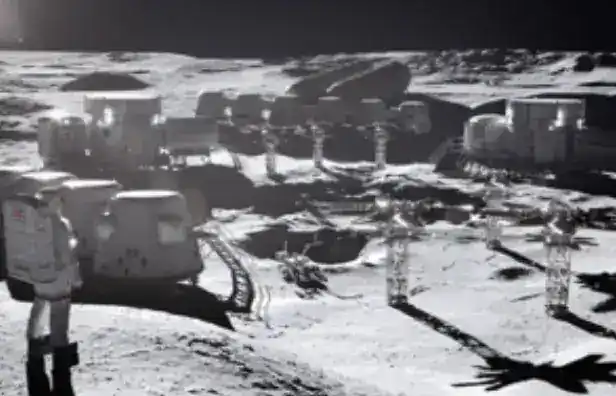
The UK Space Agency is backing Rolls-Royce in a game-changing mission: developing nuclear power to fuel a future Moon base. The goal? Keep astronauts powered up for longer lunar stays.
Microwave Nuclear Reactor to Keep Moon Missions Alive
Scientists and engineers at Rolls-Royce are behind the Micro-Reactor programme, aiming to create compact nuclear reactors to power life-support systems, communications, and scientific experiments on the Moon. Nuclear energy could supercharge the length and value of lunar missions, freeing astronauts from dependence on solar power.
The UK Space Agency has just pledged £2.9 million towards this futuristic project, following a £249,000 study funded last year. Rolls-Royce plans to send a working reactor to the Moon by 2029.
Boosting Jobs and British Tech on the Final Frontier
George Freeman, Minister of State for Science, Innovation and Technology, says: “Space exploration is the ultimate lab for breakthrough tech – from robotics to cleantech. As humans gear up to return to the Moon after 50 years, we’re backing Rolls-Royce’s lunar nuclear reactor to power the base.”
“This partnership between UK industry, government, and the Space Agency will create jobs and keep the UK a leader in frontier science.”
The development promises to generate skilled UK jobs within the booming £16 billion space economy. The nuclear micro-reactor is lightweight and compact, delivering steady power regardless of sunlight or harsh lunar conditions.
Collaboration Across Top UK Universities
Rolls-Royce is teaming up with the University of Oxford, Bangor, Brighton, and Sheffield’s Advanced Manufacturing Research Centre to tackle the reactor’s core challenges: fuel type, heat transfer, and converting heat to electricity.
The tech also has commercial and defence potential beyond space, aiming to offer a clean, green, and reliable power source worldwide.
Abi Clayton, Director of Future Programmes at Rolls-Royce, added: “This fresh funding drives us closer to making the Micro-Reactor a reality. This tech won’t just power space missions; it’ll help decarbonise industry and provide clean energy on Earth.”
Dr Paul Bate, CEO of the UK Space Agency, said: “We’re investing in tech that fuels ambitious space missions and boosts the UK’s science and engineering skills. Rolls-Royce’s work lays the foundation for continuous human presence on the Moon while creating jobs and attracting more investment.”
Part of a Bigger Moon Mission Puzzle
This nuclear power push comes alongside a recent £51 million UK Space Agency grant for companies developing lunar communication and navigation tech. This supports ESA’s Moonlight programme, launching satellites to enable high-def video sharing, data transfer, and safe roaming on the Moon.