Surrey Council Takes Action to Save Rare Glowworms
Surrey County Council is wrapping up this year’s tree planting season with a wildlife boost. After discovering rare glowworms on site, council bosses rejigged their hedge planting plan to give the critters a better shot at survival.
Thousands of Trees Planted to Help Glowworms and Wildlife
Over 3,800 native broadleaf trees have been planted, creating a habitat corridor. This allows glowworms to roam more freely in search of food and helps attract other wildlife. Glowworms love a mix of earth, tall grasses, and scrub. So, gaps were left in hedgerows to let grasses and wildflowers flourish, drawing in snails — their favourite snack.
Local Farmer Moves Sheep to Protect Glowworm Colony
The council teamed up with a nearby farmer to relocate a flock of sheep grazing close to the glowworm site. This move cuts down disturbance and gives the colony a better chance to thrive.
Glowworms: Nature’s Shy Nighttime Light Show
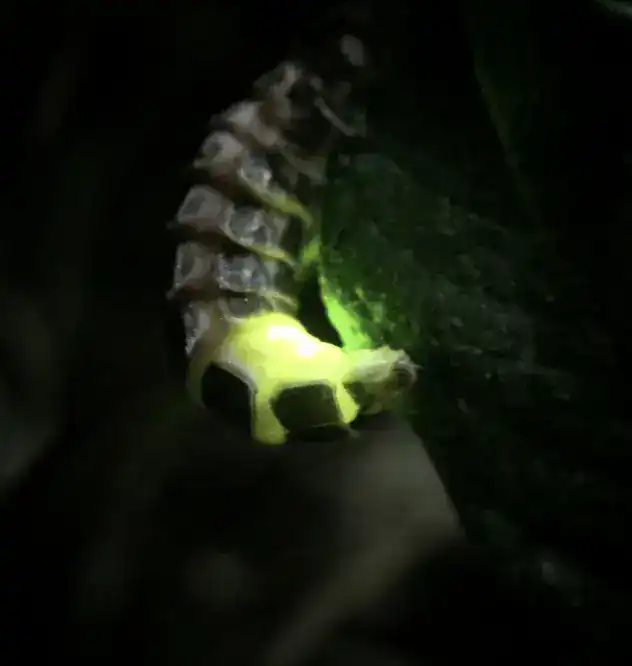
Glowworms are rare insects often found as larvae under rocks in chalk or limestone grassland. They feed on slugs and snails. Female glowworms climb plants and emit a green-orange glow at night to attract males, whose big, sensitive eyes are perfect for spotting the light in the dark.
Marisa Heath, Surrey County Council Cabinet Member for Environment, said: “It is important that we work to have a rich variety of wildlife species in the county and we must do our utmost to protect them when we are told that the UK is one of the most nature-depleted countries in the world.
Research shows that glow-worms have been recorded within Norbury Park since the 1980s and we want to do as much as we can to support and grow the colony of this rare invertebrate. By adapting our hedge planting plans we are not only supporting Surrey County Council’s target to facilitate the planting of 1.2 million new trees by 2030 but also playing our part in helping to reverse the national decline of this rare species right here in Surrey.”