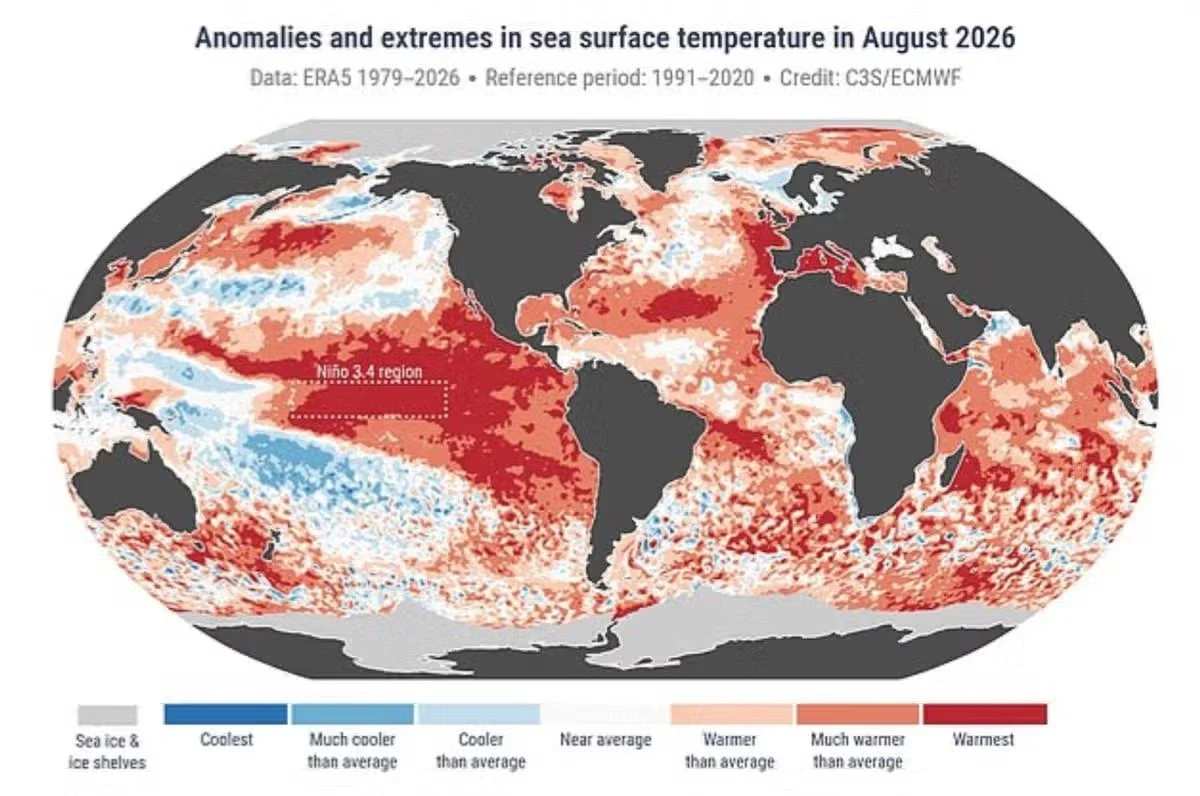
A powerful El Niño is continuing to strengthen and is forecast to peak around December, with scientists warning it could have major impacts on weather patterns around the world.
The World Meteorological Organisation says sea-surface temperatures across the central and eastern tropical Pacific are forecast to reach record levels during October, November and December.
The seasonal average Niño 3.4 temperature anomaly is forecast to reach around 3.7°C above normal, which would exceed the previous observational record.
Strongest El Niño in observational record
The Met Office said in September that temperatures in the central equatorial Pacific had already surpassed levels recorded during previous El Niño events, making the developing 2026 event the strongest in the observational record.
El Niño occurs when parts of the tropical Pacific Ocean become significantly warmer than average, releasing additional heat into the atmosphere and influencing weather systems around the world.
The WMO says the event is expected to continue intensifying before reaching its seasonal peak around December.
WMO Secretary-General Celeste Saulo said the event was drawing energy from exceptionally warm oceans, meaning more heat was available to be released into the atmosphere.
Flood and drought risks expected to shift
El Niño can significantly alter global rainfall patterns.
The WMO says the current event is likely to increase the risk of above-average temperatures across large parts of the world while shifting rainfall patterns, potentially increasing drought risks in some regions and flooding in others.
Other climate systems are also contributing to the outlook, including a positive Indian Ocean Dipole and unusually warm waters in the tropical Atlantic.
Could 2027 become the warmest year on record?
Scientists have also warned that the impact of such a strong El Niño could continue into 2027.
The Met Office says large El Niño events release substantial amounts of heat from the ocean into the atmosphere, with the strongest effect on global average temperatures often occurring during the calendar year following the winter peak.
Its scientists have said 2027 is very likely to overtake 2024 as the warmest year on record if the event develops as expected.
Professor Stephen Belcher, the Met Office’s Chief of Science and Technology, said the event showed how natural climate variability can combine with long-term human-driven climate change.
UK impacts less certain
El Niño can influence European and UK weather, but its effects are not as direct or predictable as they are in parts of the tropics and Pacific.
The Met Office says the exceptional scale of the current event means scientists will continue closely monitoring its potential consequences for the UK as it develops.