UK Travellers Face Fingerprint Chaos at EU Borders from October 2024
British holidaymakers heading to Europe are bracing for major hassle next autumn. From October 6, 2024, new EU border rules mean UK passport holders must submit to fingerprint scans and facial recognition checks under the post-Brexit Entry/Exit System (EES). Say goodbye to quick passport stamps – the new tech is set to slow things down big time.
Fingerprints, Facial Scans, and Long Queues Ahead
The EES replaces the old passport-stamping routine with biometric data checks, scanning each traveller’s face and four fingerprints every time they cross into the EU. Personal details like name, date of birth, nationality, and travel document info will also be recorded. Kids under 12 get a free pass.
Although the system was meant to roll out earlier, repeated delays have pushed the launch to October. But some EU nations warn of nightmare waits. Slovenia says border control could take up to four times longer, while Austria and Croatia expect huge queues. French officials managing checks at Dover, Folkestone, and St Pancras predict UK-France border wait times will at least double.
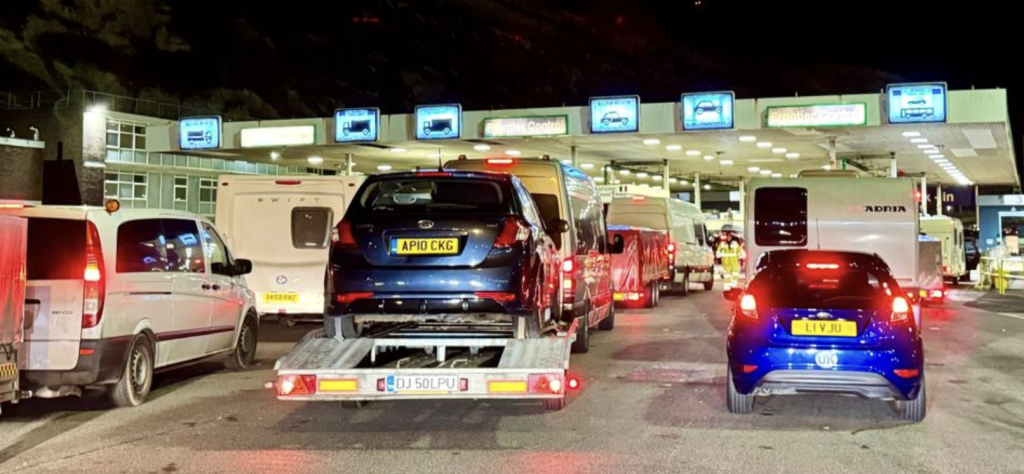
Dover and Eurotunnel Brace for Massive Delays
Travellers at the Port of Dover, already hit by post-Brexit delays, face sharp increases. The new checks might ramp up processing from 45 seconds to a shocking 10 minutes per car. Eurotunnel drivers should expect about 6 extra minutes each journey.
Wider EU Impact and Future Visa Rules
The EES will be used across EU countries – except Cyprus and Ireland – and adopted by Iceland, Norway, Switzerland, and Liechtenstein. About six months later, a €7 visa waiver fee called Etias will kick in, similar to the US ESTA, for non-EU travellers entering the Schengen zone.
The EU insists EES won’t cause chaos but will speed up border control by ditching old passport stamps for streamlined automation.
Volcanic Eruption Worries Add to Travel Jitters
Meanwhile, uncertainty looms as an Icelandic volcano eruption stirs concerns over flights. Though Icelandic authorities say airports remain open, travellers watch nervously for updates.