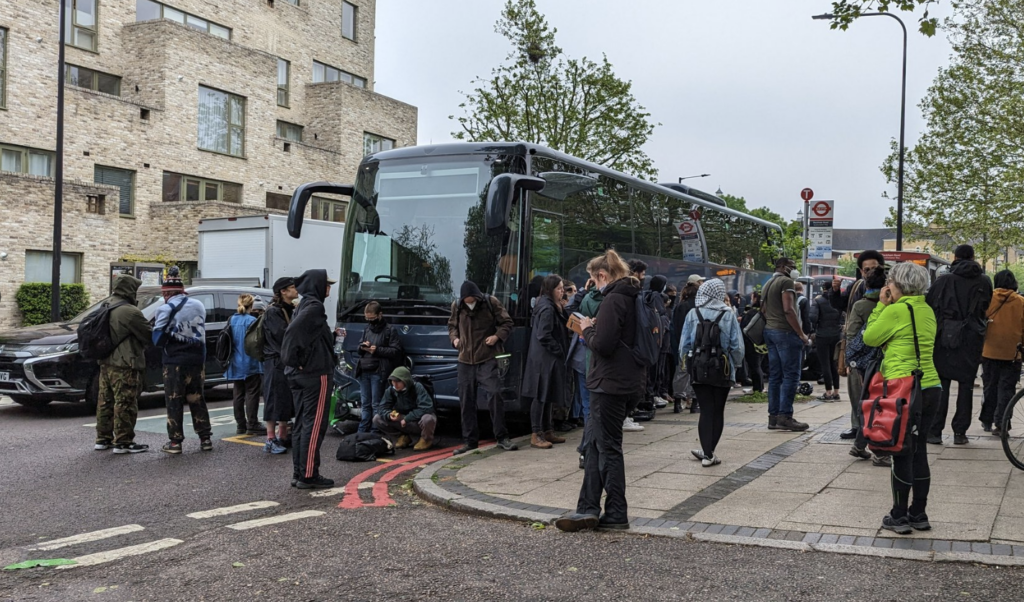
Gen Z Activists Block Migrant Coach in Dramatic Peckham Protest
In a scene straight out of an action movie, a group of Gen Z activists pulled off an eight-hour standstill, blocking a coach set to ferry migrants to the controversial Bibby Stockholm “floatel” in Portland, Dorset. Their tactics? Tire slashing, drumming, and loud chants that stopped the coach cold and lit up the immigration debate.
Masked Protesters Bring Streets of Peckham to a Halt
The drama unfolded in busy Peckham, South London, where a coach was due to transport asylum seekers from a government-funded hotel to the Bibby Stockholm—a floating hotel leased by the government for migrants awaiting decisions. Suddenly, black-clad, masked protesters appeared, forming a human chain around the vehicle and chanting “We shall not be moved.”
The protest, organised by SOAS Detainee Support, quickly swelled as more activists wearing beanies and Covid masks joined the blockade. With chants and drumming filling the air, the protesters slammed the Bibby Stockholm scheme as “unsanitary” and “despicable.”
Police Clash With Defiant Protesters – Coach Leaves Empty
Tensions escalated as police arrived in force. Officers tried to disperse the crowd, but protesters linked arms, refusing to budge. The stand-off climaxed when police arrested several activists, sparking scuffles. Even with reinforcements on site, the protesters held firm.
After six intense hours, the coach finally left empty and under police escort—a symbolic win for the activists. But the chaos didn’t end there: 45 arrests were made, and there are claims of assaults on police officers.
Protest Sparks Wider Debate on Immigration and Asylum
The Peckham demonstration highlights the rising power of youth-led grassroots activism in shaping the immigration conversation. With social media-savvy Gen Z at the helm, their standoff has echoed far beyond South London, challenging views on asylum seekers’ treatment and the role of civil disobedience in modern Britain.