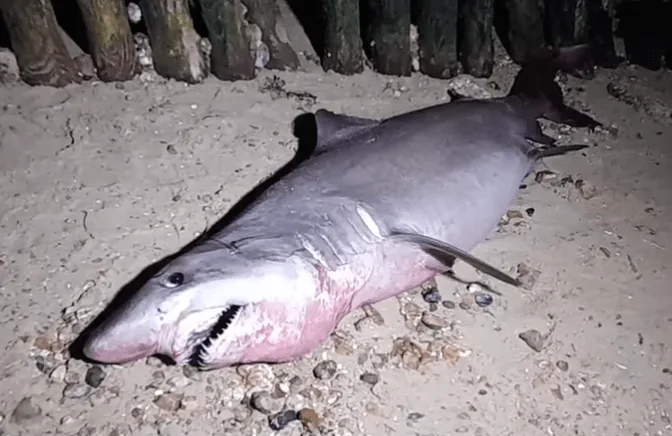
Rare Smalltooth Tiger Shark Found Dead on UK Beach
A rare Smalltooth Tiger Shark, measuring about 6ft long and 3ft wide, was discovered washed up on Lepe beach this Saturday. Experts believe it’s unlikely the solitary shark was alone, as these elusive predators usually travel in groups of up to five.
Possible Earlier Sighting Sparks Search for More Sharks
Hours before the shark’s grim find, an adult Smalltooth Sand Shark was reportedly spotted nearby. Could it have been the same individual? Authorities are urgently investigating to track down any further sightings in the area.
Shark Experts and Trophy Hunters on Scene
Our film crew spoke with experts at the site who declined to collect the specimen for study. Meanwhile, two male trophy hunters were seen inspecting the shark and snapped a photo of their vehicle before leaving.
Critically Endangered Species Rarely Seen in UK Waters
The Smalltooth Sand Tiger Shark is listed as critically endangered by the IUCN Red List. Very little is known about its biology or diet, which mainly consists of small to medium fish, squid, and lobster. Despite their fierce teeth, these sharks are harmless to humans.
Shark biologist Martin Taylor said: “This shark wouldn’t survive long out of water, so the chance it was dumped from a pirate fishing vessel is almost impossible. Given a sighting nearby hours before, it must have travelled here under its own power.” He continued, “This species usually inhabits warm temperate and tropical waters, so finding one here is exceptional. They often travel in groups, and if more are out there, we need to find them fast.” Martin added, “The discovery is incredibly rare – possibly the first ever in UK waters. It’s a bulky, larger cousin to the more common Sand Tiger shark and remains one of the ocean’s great mysteries.”
The Smalltooth Sand Tiger shark typically grows up to 3.67 metres long and weighs as much as 289kg. With only around 200 recorded sightings worldwide, it’s a serious conservation concern and classified as vulnerable.