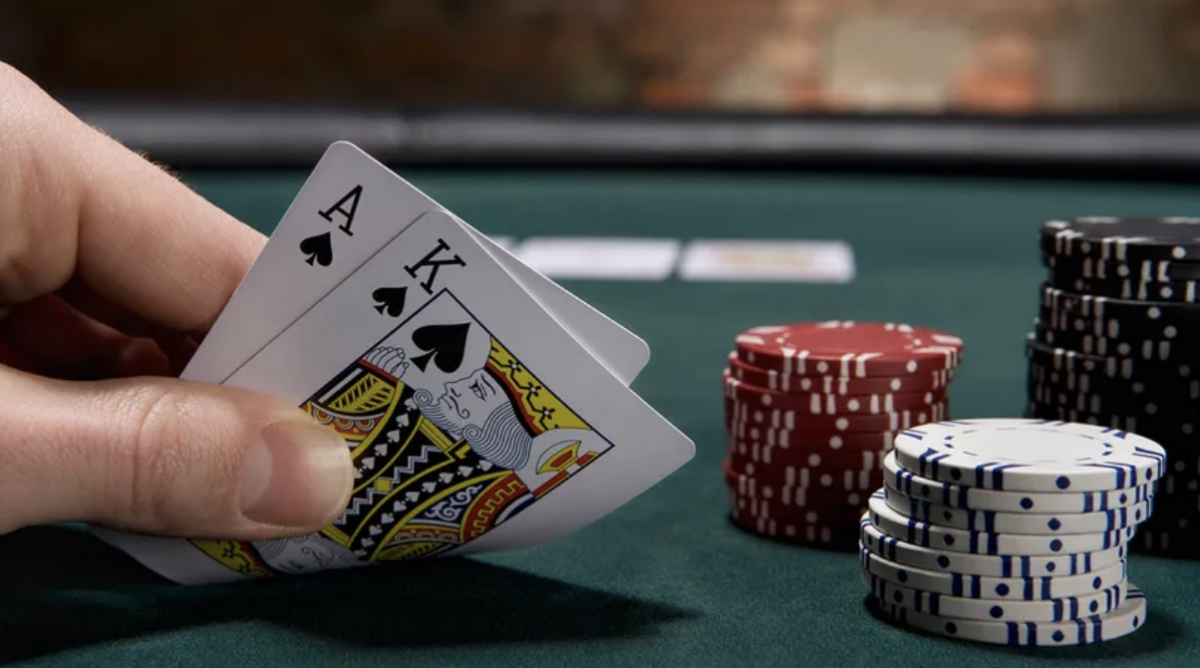
You have £25 loaded into your account, a live blackjack table open on screen and absolutely no idea whether to hit or stand on a 16 against a dealer’s 10. That moment — frozen, slightly panicked, clock ticking — is where most new players make their first avoidable mistake.
The good news is that £25 is a workable budget for live blackjack if you understand three things before sitting down: table selection, basic strategy and session structure. Live blackjack differs from RNG blackjack in one critical way — a human dealer runs the game in real time via video stream, with no pause button and no replay.
The pace is faster and the social pressure is real. For a new player, that environment rewards preparation over instinct.
A 2024 iGaming consumer behaviour report by Eilers and Krejcik found that new live casino players who studied basic strategy before their first session retained 22% more of their starting budget on average compared to those who played by feel.
Step 1: Choose the Right Table for a £25 Budget
Table selection determines how long £25 lasts and how much practice you get per dollar. The minimum bet is the most important filter.
Standard live blackjack tables at most online casinos run £5 to £25 minimum bets — a £25 minimum table wipes your entire budget in a single hand. For a £25 starting stack, you need a table with a £1 to £2 minimum bet to give yourself enough hands to apply and learn from strategy.
Identify Low-Minimum Live Tables
Low-minimum live blackjack tables are increasingly common on platforms that serve recreational players. At Amonbet Casino, live blackjack tables with £1 minimum bets are available around the clock, which means a £25 budget covers a minimum of 25 hands at maximum exposure — and significantly more if you vary bet sizing based on confidence.
A £1 minimum table at Amonbet with standard 3:2 blackjack payout is the correct starting environment for any new player operating under a £25 ceiling.
Check the Rule Variants Before Sitting Down
Not all live blackjack tables use the same rules, and the differences matter mathematically. The three rule variables that most affect house edge are as follows:
| Rule Variant | House Edge Impact | Player-Friendly Version |
| Blackjack payout | 3:2 vs 6:5 | 3:2 (reduces edge by 1.39%) |
| Dealer stands on soft 17 | H17 vs S17 | S17 (reduces edge by 0.2%) |
| Deck count | 1 to 8 decks | Fewer decks favour player slightly |
A 6:5 payout table versus a 3:2 table adds approximately 1.39% to the house edge — enough to reduce a £25 budget’s expected session length by roughly 20% compared to an equivalent 3:2 table.
Always confirm the payout structure before placing a chip.
Step 2: Learn Basic Strategy Before Your First Hand
Basic strategy is the mathematically optimal decision for every possible hand combination against every possible dealer upcard. It is not a guarantee of winning — it is a framework that reduces the house edge to approximately 0.5% under standard rules.
For a new player at Amonbet, applying basic strategy correctly is the single highest-return preparation activity available before a first session.
Memorise the Core Hit and Stand Rules
The foundational basic strategy decisions cover the majority of hands you will encounter. Before sitting at any live table, these core rules should be automatic:
- Always stand on hard 17 and above
- Always hit on hard 8 and below
- Stand on hard 12 to 16 when dealer shows 2 to 6
- Hit on hard 12 to 16 when dealer shows 7 or higher
- Always double down on hard 11 against any dealer card except an ace
- Never take insurance — the house edge on insurance is 5.8%
Understand When to Split Pairs
Pair splitting is where new players make the most costly deviations from basic strategy. Splitting rules are not intuitive — most players know to split aces but are less certain about eights, nines and tens.
The non-negotiable splits on a £25 budget are straightforward: always split aces and always split eights regardless of the dealer’s upcard. Never split tens — a hard 20 is one of the strongest hands in the game and splitting it reduces expected return significantly.
An anonymous live blackjack regular contributing to a casino strategy forum in early 2026 described splitting tens as “the most expensive mistake I see new players make at low-stakes tables, every single session.”
Step 3: Structure Your £25 Session With a Betting Framework
A £25 budget without a betting structure disappears faster than it should. Session structure means deciding your bet sizing, your stop points and your hand count target before the first card is dealt — not during play when decisions are emotionally influenced.
A 2022 Journal of Behavioural Decision Making meta-analysis found that pre-committed session limits reduced average budget overshoot by 27% across casino game categories.
Set a Flat Betting Size for Your First Sessions
Flat betting — wagering the same amount on every hand — is the correct approach for new players. It eliminates the compounding effect of progressive systems like Martingale, which can exhaust a £25 budget in three to four hands during a losing sequence.
With a £25 starting budget, a flat bet of £1 per hand at Amonbet yields at least 25 hands, though the actual session will typically run 40 to 60 hands, since not every hand will be a maximum-bet situation. Flat betting at 4% of the session budget per hand is the standard recreational bankroll-management guideline cited by most credible blackjack strategy resources.
Define Your Exit Points Before You Start
Two exit points need to be set before a session begins: a stop-down floor and a profit target. For a £25 budget, a practical structure is as follows:
- Set your stop-down floor at £10 — if the stack drops to £10, stop the session
- Set your profit target at £40 — if the stack reaches £40, consider ending or reducing bet size
- Set a time limit of 45 to 60 minutes regardless of stack size
- Log the session result immediately after ending — hand count, peak stack and final balance
Logging session data is not optional if improvement is the goal.
Players at Amonbet who tracked session results across 10 or more live blackjack sessions showed measurably faster strategy internalisation than those who played without review, according to player development data cited in a 2025 online casino industry analysis by H2 Gambling Capital.
Step 4: Use Demo Mode to Practise Before Playing Live
Most players skip demo mode and pay for that impatience immediately. Demo or practice mode at a platform like Amonbet allows new players to run through basic strategy decisions at their own pace without any financial pressure.
The 2024 University of Waterloo behavioural economics study found that players who spent at least 15 minutes in practice mode before switching to real-money live play reported 34% higher session satisfaction scores — not because they won more, but because they understood what they were doing when decisions arose. The prerequisites before moving from demo mode to a live table at Amonbet are minimal but important:
- Complete at least 50 hands in practice mode without referencing a strategy chart
- Confirm the correct decision on pairs — aces split, tens never split, eights always split
- Verify the table rules match what you practised — payout rate and dealer stand rule
- Set the flat bet size and exit points before switching to real-money mode
New live blackjack players who apply basic strategy correctly from session one operate against a house edge of approximately 0.5% — meaning a £25 budget has an expected session cost of roughly £0.50 per 100 hands, making the game one of the most budget-efficient live casino options available in 2026.