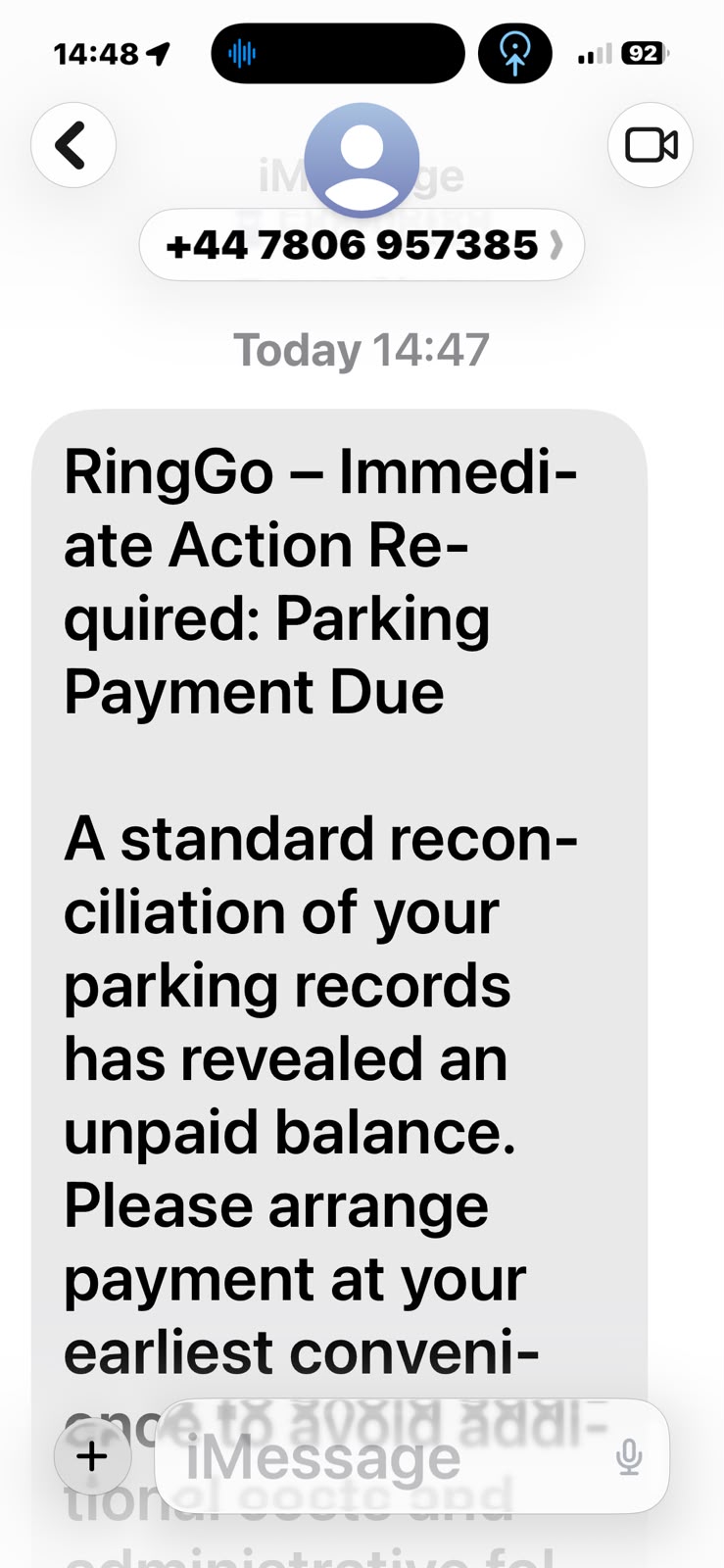
Motorists are being warned to stay vigilant after a convincing fake RingGo parking payment text message was circulated in an apparent attempt to steal personal and financial information. The scam message, sent from a UK mobile number, falsely claims that a “standard reconciliation” of parking records has identified an unpaid balance and urges recipients to make an immediate payment. Victims are directed to a fraudulent website designed to imitate RingGo’s official service. The message also instructs users to reply with the letter “Y” to activate the link before opening it in Safari if it does not initially work. The scam text reads in part:
“RingGo – Immediate Action Required: Parking Payment Due.”
It goes on to claim:
“To view your parking session details and complete your payment, please visit our official website below and enter your vehicle registration number.”
However, the website included in the message is not an official RingGo domain and instead uses a suspicious web address ending in “.club”, which is a common tactic used by fraudsters to imitate legitimate companies. Cyber security experts warn that these messages are designed to create a sense of urgency, encouraging people to click links without checking whether they are genuine. Entering payment card details on the fake site could allow criminals to steal money or personal information.
How to spot the scam
Motorists should look out for several warning signs, including:
- Messages demanding immediate payment.
- Links that do not use the official RingGo website.
- Requests to reply to the text to activate a link.
- Unexpected parking charge notifications, particularly if you have not recently used RingGo.
If you receive one of these messages:
- Do not click the link.
- Do not reply to the text.
- Delete the message and report it by forwarding it to 7726, the UK’s free spam reporting service.
- If you believe you have entered your bank details, contact your bank immediately and monitor your accounts for suspicious activity.
RingGo does not ask customers to activate links by replying to text messages, and motorists are advised to access their parking account only through the official RingGo app or by typing the company’s genuine website address directly into their browser. The latest scam is one of a growing number of phishing campaigns impersonating trusted parking providers and delivery companies in an attempt to trick unsuspecting victims into handing over sensitive information.