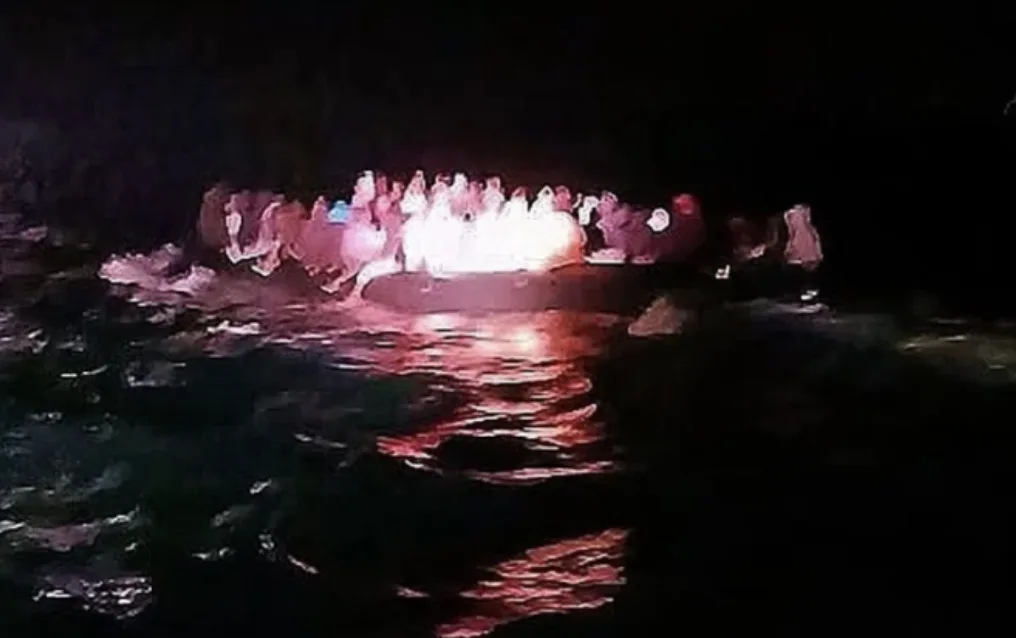
Questions are being raised over the extraordinary journey of a migrant “mega-dinghy” carrying around 140 people, which travelled from Normandy before those aboard were intercepted and brought ashore in Portsmouth.
The vessel set out from the western Baie de Seine area of Normandy during the night of Saturday into Sunday, September 6 — significantly further west than the traditional departure areas around Calais and Dunkirk used for small-boat crossings.
French maritime authorities described the departure from the area as unusual.
Around 140 people were reported to have been aboard the vessel.
French authorities mounted an operation involving several vessels and aircraft as the boat continued its journey, but those aboard reportedly refused assistance and continued towards the United Kingdom.
The crossing eventually triggered a major British emergency response as the vessel approached the Hampshire coast.
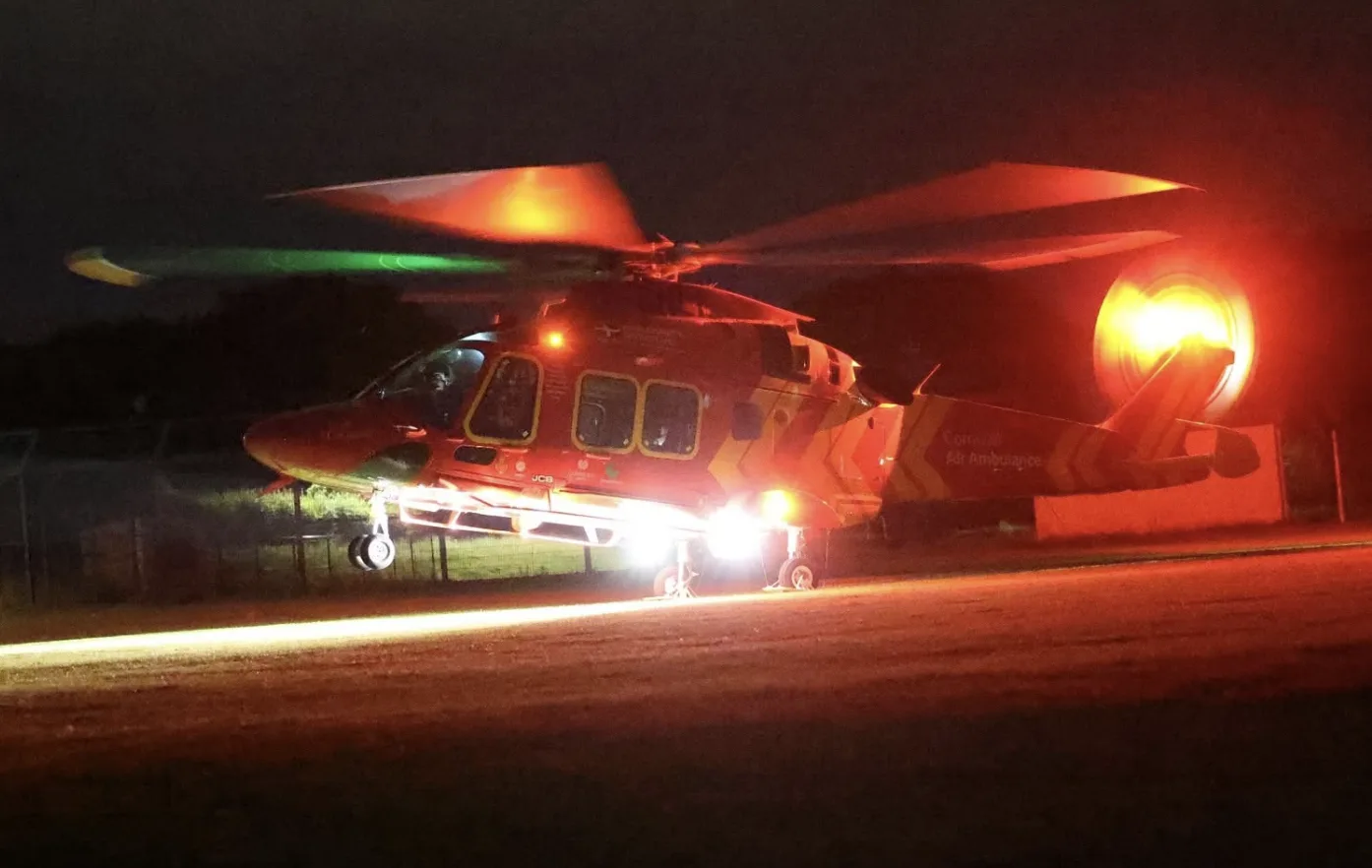
HM Coastguard deployed lifeboats, a Coastguard helicopter, a Coastguard aeroplane and Coastguard Rescue Teams.
Border Force, Border Security Command, Hampshire and Isle of Wight Constabulary and South Central Ambulance Service were also involved.
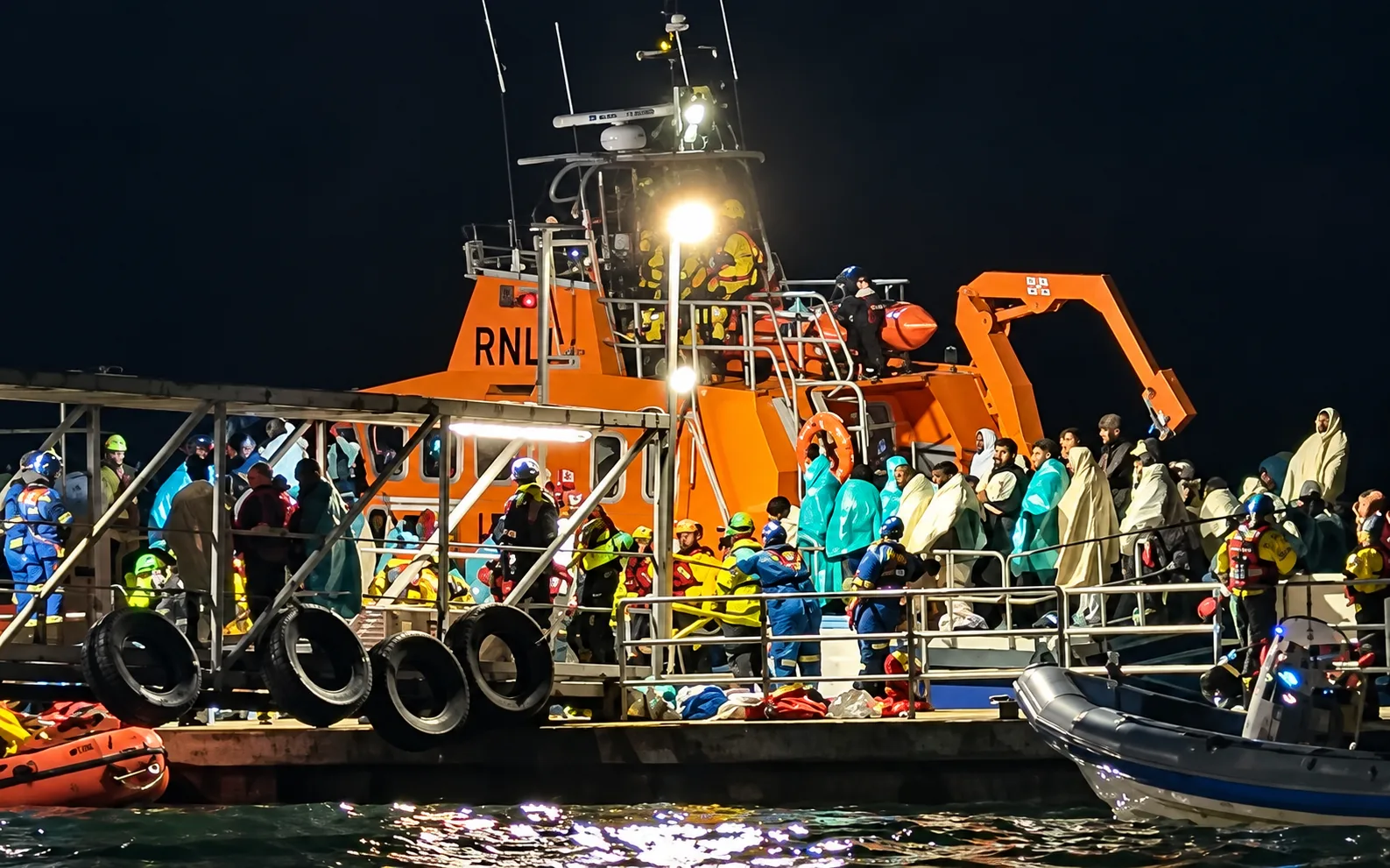
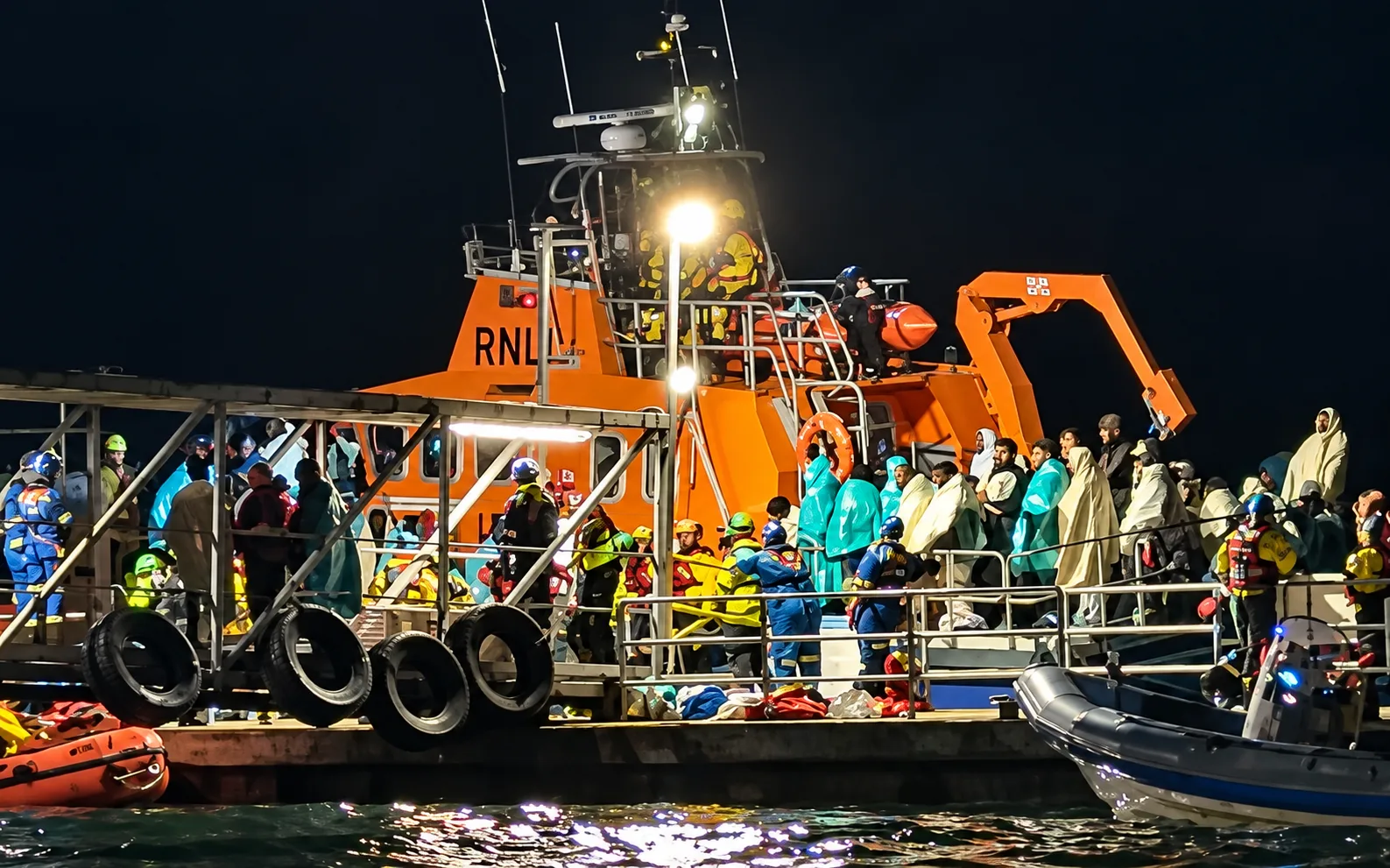
Those aboard were eventually brought safely ashore by lifeboats near Eastney in Portsmouth before arrangements were made to transport them outside Hampshire for immigration processing.
But how did the boat have enough fuel?
The unusual route raises an important practical question: how much fuel did the vessel carry to complete such a long journey?
Reports that the departure point was around 170 to 180 miles west of Calais should not be confused with the actual distance travelled by the boat to Portsmouth, which has not yet been officially established.
Nevertheless, a journey from Normandy to the Hampshire coast represents a considerably different route from the familiar short crossing between northern France and Kent.
Fuel consumption for an inflatable boat powered by an outboard engine can vary enormously depending on engine horsepower, speed, sea conditions, wind, currents and — crucially — the weight of the boat and the number of people aboard.
Without knowing the engine fitted to Sunday’s vessel and its fuel consumption, it is impossible to state precisely how much petrol would have been required.
However, an illustrative range of 60 to 120 litres demonstrates the quantities that could potentially be involved in a prolonged journey.
If stored in conventional 20-litre containers, that would be equivalent to approximately three to six containers.
That is not an estimate of what was actually aboard Sunday’s boat. Authorities have not publicly confirmed that the vessel consumed that amount or that this was the size or number of containers being carried.
What would that amount of petrol cost?
There is also a financial question surrounding the fuel required for increasingly long small-boat routes.
The RAC said on September 4 that the average UK price of unleaded petrol stood at 163.36p per litre.
At that price, 60 litres would cost approximately £98, while 120 litres would cost around £196.
Petrol prices in France are currently higher. French government pump-price data on September 7 shows SP95-E10 selling at many filling stations at around €2.08 to €2.14 per litre, although prices vary considerably by location.
Using approximately €2.10 per litre for illustration, 60 litres would cost around €126, while 120 litres would cost approximately €252.
Again, those calculations are intended only to illustrate the potential cost of different quantities of petrol. They do not establish how much fuel was purchased for this vessel, where it was obtained or what those operating the boat actually paid.
Questions for authorities
The circumstances now leave a series of questions which could establish exactly how the crossing was achieved.
UKNIP is seeking clarification over the horsepower and type of engine fitted to the vessel; the amount of fuel found aboard; the number and capacity of fuel containers recovered; how much petrol remained when the vessel was intercepted; the vessel’s confirmed departure position; its actual route and distance travelled; and how long it remained at sea.
It is also important to establish whether the vessel stopped at any stage, whether any additional fuel was taken aboard after departure and whether it received any physical assistance during the crossing.
There is currently no evidence that the vessel was refuelled at sea, and the presence of sufficient fuel aboard from the outset could provide a straightforward explanation.
French authorities monitored vessel
The French maritime authorities said the boat was continuing towards the United Kingdom after assistance was refused.
The episode is particularly significant because small boats carrying migrants have traditionally departed much further east along the French coast.
The emergence of departures from Normandy could considerably increase the area that French and British authorities have to monitor.
It could also mean longer journeys at sea, creating additional risks for those aboard and potentially requiring different rescue and Border Force deployments along Britain’s south coast.
Around 140 brought into Portsmouth
As the vessel approached Hampshire, the operation involved multiple emergency and border agencies.
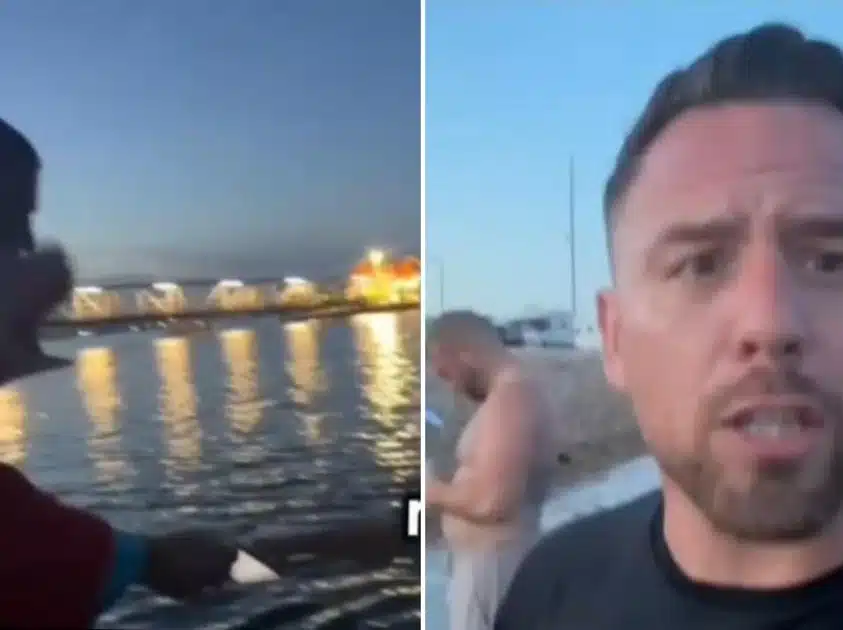
Men wrapped in blankets were seen being brought ashore aboard lifeboats near Eastney.
Border Force subsequently advised Hampshire Police that those who had arrived would be transported outside the county for processing.
The arrivals were expected to be taken to the Manston immigration processing facility in Kent.
Protesters descend on Eastney
The arrival also prompted hundreds of protesters to gather in Portsmouth.
Crowds blocked roads leading away from Eastney Marina as police protected coaches intended to transport those who had arrived.
A dispersal order was imposed after the demonstration continued into the night.
Police said a number of police, Coastguard and Border Force vehicles were damaged during the standoff, and several officers were treated for injuries which were not considered serious.
The Government condemned what it described as intimidating and thuggish behaviour while stressing that peaceful protest remains a democratic right.
A potentially significant change in Channel crossings
Beyond Sunday’s disorder, the voyage itself could prove the more significant development.
If people-smuggling networks are successfully launching heavily loaded vessels substantially further west along the French coast, authorities may face a much larger geographical area to patrol than the established routes towards Dover and Kent.
But the unusual crossing also leaves practical questions that should be capable of straightforward answers.
What engine powered the boat?
How much fuel was aboard when it left France?
How many fuel containers were recovered?
How much fuel remained when the occupants were rescued?
What distance did the vessel actually travel?
And did it complete the entire journey using only the fuel carried when it launched?
Those details would provide a much clearer picture of how a vessel carrying around 140 people was able to undertake one of the most unusual migrant crossings yet seen in the English Channel.
UKNIP has approached the relevant authorities for clarification.