Advances in technology have made incredible improvements to everyday life, from providing more convenient ways to do grocery shopping to accessing information within seconds. Education opportunities have widened, healthcare services have benefited from solutions such as medical imaging and tech has helped to improve safety measures in vehicles.
AI has delivered a huge set of enhancements, with new tools and work shortcuts being implemented at a rapid pace. The evolution of technology solutions has also driven major efficiencies for businesses, such as seamless online collaboration and automation of time-consuming tasks. On the flipside, the availability of today’s tech resources can cause problems too.
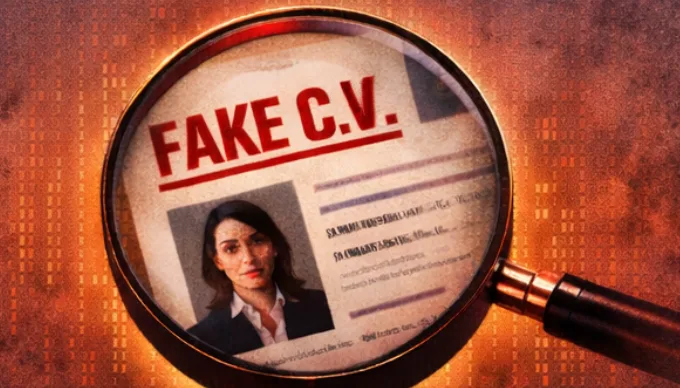
For example, job applicants can use AI tech to craft glowing CVs that are customised to job role specifications, making it harder for recruiters to identify who the best candidates are for the role and who is simply familiar with AI assistance options.
New Risks for International Recruiters
For international recruitment, another major issue is that it is difficult to verify the authenticity of qualifications from overseas job applicants. Recruiters already face challenges when assessing how international qualifications compare to the qualifications issued in the country they are based.
Now they are also dealing with the possibility of applicants making false claims about their qualifications and in some cases, applicants are forging documents using modern technology tools to create authentic-looking certifications.
As well as the risk of employing someone unlikely to be capable of performing the role to the level required, in cases where professional qualifications are a legal requirement for performing the job, fake qualifications put the employer at an even greater risk. They could face legal action if they do not do effective due diligence to check the authenticity of qualifications.
How International Employers Can Perform Due Diligence Regarding Qualification Authenticity
Employing people from another country can add an extra layer of risk in terms of authenticating qualifications. Unlike the usual process of reviewing qualifications from a known university with a familiar certificate design, recruiters are checking certificates from universities they may never have come across before.
People who are desperate to be offered the role may lie about their grades and use editing software to fully create a fake certificate or to change the grade displayed.
Recruiters therefore need to be more vigilant about the authenticity of the qualifications they are verifying by working through due diligence steps such as:
Check that the university or awarding body is legitimate – They can do this by checking for an official website and confirming that they issue this type of qualification.
Contact the university/awarding body – This may be more difficult if there is a language barrier, but recruiters can contact the qualification issuer to confirm authenticity. Some universities offer degree verification services that can promptly confirm the certification was genuinely issued.
Request an apostille – Recruiters can ask job applicants to apostille a UK university degree using an apostille service. This will provide confirmation that the degree or other type of qualification is genuine and it is certified by an FCO-registered solicitor. The apostille service can directly email the recruitment team with the apostilled document to save time. Apostilles are commonly requested when people apply for an overseas job.
Use digital verification systems – There is specific software that can be used to check that a document has not been altered from the original version. Some recruiters ask applicants to upload their qualification documents onto a verification portal.
Check professional memberships – Rather than assuming the applicant has a professional membership because it is on their CV, the recruiter can verify the membership on the official register by looking up the applicant’s membership number.
Complete background screening – For roles where there is a higher set of risks when employing someone without the required qualifications, recruiters may use a background screening service. If it is difficult to verify qualifications through the university or awarding body itself, a background screening service can run checks to do this for you.
Look for inconsistencies – Recruiters should spend time reviewing applications and CVs to check that everything matches up and there are no inconsistencies in details such as study dates or timelines for previous roles.
Fake qualifications are an issue affecting even local recruitment, but for international recruiters, there are added complexities. As well as using these steps in verifying qualifications, interviews should be used to ascertain that the applicant has the level of knowledge they should have acquired through studying the degree they have cited on their CV.