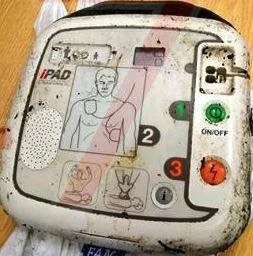
Stolen Defibrillator Found Hidden Under Bush After 2½ Years
Haylands Primary School in Ryde was stunned when their lifesaving defibrillator was stolen back in October 2016. The shock and disappointment rippled through the community. Thankfully, the Isle of Wight NHS Trust Ambulance service replaced the vital kit promptly, restoring 24/7 public access to this lifesaver at the site.
Now, over two and a half years later, the stolen defibrillator has mysteriously turned up—tucked away under a bush and handed in to St Mary’s Hospital after being spotted by a young footballer. The device is currently being checked over to see if it’s still fit for use.
Why Stealing a Defibrillator Can Kill
Taking or damaging a Public Access Defibrillator (PAD) could cost lives. When someone suffers cardiac arrest—meaning they’re unconscious and not breathing properly—the survival rate without a defibrillator is under 7%. But with early defibrillation, chances soar to 74%.
Every minute without a shock cuts survival odds by 10%. The first three minutes are crucial. Luckily, when you ring 999, the ambulance call system instantly flags the nearest defibrillator within 200 metres. Time is everything.
Isle of Wight’s Defibrillator Network Saves Lives
There are now over 400 defibrillators scattered across the Isle of Wight. You’ll find them everywhere—from rural spots to town centres, businesses, nursing homes, dental practices and medical centres. Many are accessible around the clock.
- Some units are locked, but the ambulance service and local owners hold the codes.
- During emergencies, 999 operators provide these codes to rescuers.
- Although expert bodies advise against locked boxes outside, vandalism has forced their use in some places.
- Better a locked box than no defibrillator at all.
How to Use an Automated External Defibrillator (AED)
If someone collapses from cardiac arrest, the 999 operator will guide you to perform CPR—chest compressions and rescue breaths—to keep oxygen flowing. But the real game-changer is the AED, which anyone can use even without training.
Activate the AED by pressing the on/off button or opening its lid. It talks you through every step with clear voice prompts. You’ll probably be on the phone to ambulance control at the same time, too. The device itself analyses the heart rhythm and decides if a shock is needed. You can’t cause harm by using it—you can only help or do nothing.
“The only thing you can do wrong is to be too afraid to use it. Once someone is in cardiac arrest, it can’t get any worse—they will die if no one helps,” says a local health official.
Spot Vandalism? Report It!
If you see someone messing with or stealing a public defibrillator, report it to the police immediately. Your action could save a life.
To find your nearest defibrillator on the Isle of Wight, check the interactive map at www.isleofwightambulance.co.uk. Some privately owned defibrillators may not be listed but are known to the ambulance service.