US and Israel Launch Massive Airstrikes on Iran’s Nuclear and Missile Sites
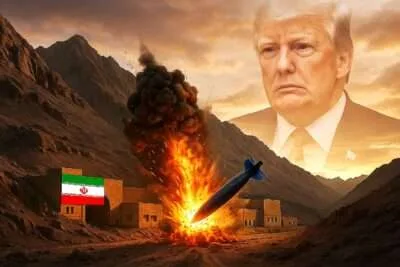
The United States and Israel have unleashed a wave of coordinated airstrikes across Iran in a major escalation of tensions in the Middle East. Targeting nuclear facilities, missile bases, and drone command centres, the attacks mark a significant strike against Iran’s military infrastructure.
US Pounds Iranian Nuclear Sites with Precision Strikes
The Pentagon confirmed that American forces launched cruise missiles and bunker-busting bombs on three secret nuclear sites in Iran overnight. These high-value targets were hit following intelligence reports of intensified uranium enrichment activities. A senior defence official said:
“This is a direct response to Iran’s escalating nuclear ambitions. Our strikes were surgical and designed to degrade nuclear capabilities while minimising civilian impact.”
Israel’s Biggest Strike Yet Hits Yazd Missile Headquarters
Meanwhile, the Israeli Defence Forces (IDF) unleashed 30 fighter jets releasing 60 munitions, hitting over 50 targets in key Iranian cities including Yazd, Isfahan, Bushehr, and Ahvaz. Yazd, a first-time target, houses critical underground missile bunkers. Targets included:
- Long-range missile launchers used in recent attacks on Israel
- A drone command and control centre
- Underground missile storage warehouses
- Operational outposts manned by Iranian Revolutionary Guards
The IDF claimed the strike on Yazd aims to cripple Iran’s long-range ballistic missile capabilities recently used to target Tel Aviv. The military warned:
“The IDF will continue to strike any threat launched from Iranian soil.”
Global Calls for Calm As Iran Vows Retaliation
French President Emmanuel Macron called for “utmost restraint” following talks with Iranian President Masoud Pezeshkian. Macron tweeted:
“Diplomacy is the only path to peace and security for all. We urge Iran to return to dialogue and renounce nuclear weapons.”
Iran slammed the airstrikes as a “flagrant violation of sovereignty” and promised retaliation “at a time and place of our choosing.” The UN Security Council is set for an emergency session tomorrow to discuss the fallout.
Risk of Full-Scale Regional Conflict Rises
The escalating strikes raise fears of a wider conflict involving Iran-backed groups such as Hezbollah in Lebanon, Shiite militias in Iraq, and Houthi rebels in Yemen. Israel has put its Iron Dome and Arrow missile defenses on high alert. Meanwhile, the US has sent naval reinforcements, including an aircraft carrier battle group, to the Persian Gulf.
UN Secretary-General António Guterres issued a late-night appeal urging all parties to avoid regional war and pursue immediate ceasefire talks.