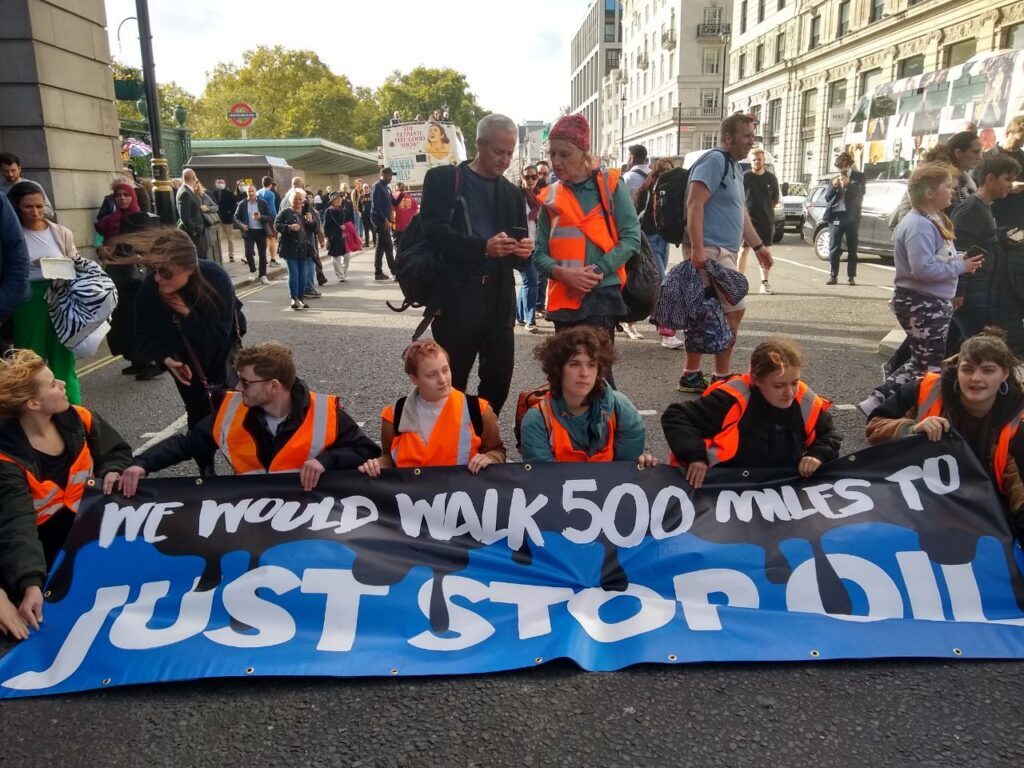
In a landmark decision, four supporters of the Just Stop Oil group were acquitted of obstruction charges related to a roadblock protest near the Ritz in London. The ruling was made by Judge Bone at Stratford Magistrates Court on Monday, 27th November. Background of the Case
The four activists, Clara O’Callahan, Ella-Rose Paez, Julia Redman, and Bethon Roberts, were accused of wilfully obstructing the highway during a protest in Piccadilly on 26th October 2022. Their demonstration near Green Park Tube station was part of a larger campaign demanding the UK government to cease all new fossil fuel project licenses and consents. Judge’s Ruling and Remarks
Judge Bone found no evidence of ‘significant disruption’ caused by the protest. In delivering the not-guilty verdict, the Judge acknowledged the high public importance of the issues being protested. The ruling suggests a recognition of the gravity of the climate crisis and its impact on public policy and legal interpretation. Defendants’ Statements
Clara O’Callaghan, a 20-year-old cybersecurity student from Edinburgh and one of the acquitted, expressed her commitment to civil resistance against what she described as the government’s “genocidal actions” in granting more fossil fuel licenses. Julia Redman, a 72-year-old grandmother, spoke about her fear for her grandchildren’s future in light of the escalating climate crisis. Earlier Acquittals
This verdict follows the earlier acquittal of nine other Just Stop Oil supporters for their involvement in the same roadblock. On 22nd November, activists including Adrian Johnson, Sarah Ath, Rosie Bowyers, and Daniell Cole were acquitted, with Judge Bone ruling that a conviction would be disproportionate. Defence Perspective
In his defence statement, Adrian Johnson, a 57-year-old former Deputy Headteacher, criticized the government for its oil and gas policies, accusing it of crimes against humanity and genocide. He also highlighted the lack of police action against these alleged governmental crimes. Implications of the Verdict
This series of acquittals marks a significant moment for environmental activism and legal interpretation in the context of the climate emergency. It reflects a growing acknowledgment of the urgent need for action on climate change and the role of civil disobedience in driving policy changes. The Road Ahead
The decision may set a precedent for how environmental protests are legally assessed in the UK, potentially influencing future actions by climate activists and the government’s response to such demonstrations.
The four activists, Clara O’Callahan, Ella-Rose Paez, Julia Redman, and Bethon Roberts, were accused of wilfully obstructing the highway during a protest in Piccadilly on 26th October 2022. Their demonstration near Green Park Tube station was part of a larger campaign demanding the UK government to cease all new fossil fuel project licenses and consents. Judge’s Ruling and Remarks
Judge Bone found no evidence of ‘significant disruption’ caused by the protest. In delivering the not-guilty verdict, the Judge acknowledged the high public importance of the issues being protested. The ruling suggests a recognition of the gravity of the climate crisis and its impact on public policy and legal interpretation. Defendants’ Statements
Clara O’Callaghan, a 20-year-old cybersecurity student from Edinburgh and one of the acquitted, expressed her commitment to civil resistance against what she described as the government’s “genocidal actions” in granting more fossil fuel licenses. Julia Redman, a 72-year-old grandmother, spoke about her fear for her grandchildren’s future in light of the escalating climate crisis. Earlier Acquittals
This verdict follows the earlier acquittal of nine other Just Stop Oil supporters for their involvement in the same roadblock. On 22nd November, activists including Adrian Johnson, Sarah Ath, Rosie Bowyers, and Daniell Cole were acquitted, with Judge Bone ruling that a conviction would be disproportionate. Defence Perspective
In his defence statement, Adrian Johnson, a 57-year-old former Deputy Headteacher, criticized the government for its oil and gas policies, accusing it of crimes against humanity and genocide. He also highlighted the lack of police action against these alleged governmental crimes. Implications of the Verdict
This series of acquittals marks a significant moment for environmental activism and legal interpretation in the context of the climate emergency. It reflects a growing acknowledgment of the urgent need for action on climate change and the role of civil disobedience in driving policy changes. The Road Ahead
The decision may set a precedent for how environmental protests are legally assessed in the UK, potentially influencing future actions by climate activists and the government’s response to such demonstrations.