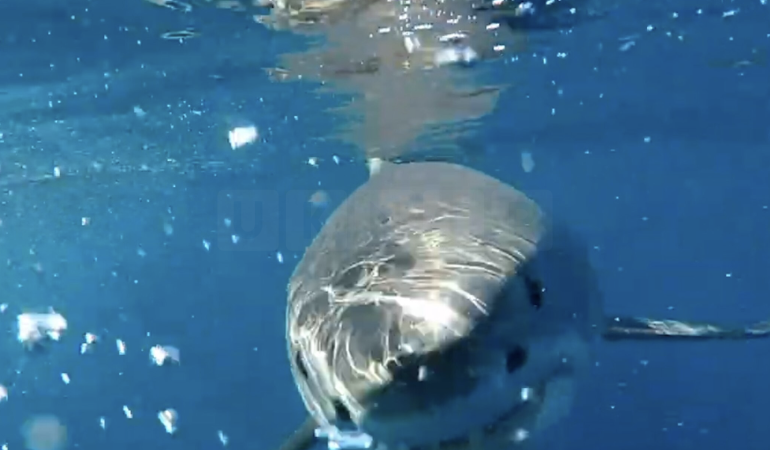
A team of scientists is embarking on a groundbreaking mission to find great white sharks in the waters around Ireland and the UK. Researchers from the US-based non-profit organisation Ocearch are “cautiously optimistic” that great whites may already inhabit the depths of the southwest coast of Ireland, and are determined to confirm their presence.
Chris Fischer, the founder of Ocearch, expressed his excitement about the prospect. It would be the shark heard around the world,” Fischer told Sky News. “It would be the greatest thing we have ever achieved on the water. It would be the greatest gift we could give to any region of the world for their future because that one shark would show people in this area and other research institutions where they can then potentially work on them and get more of the work going.
For years, the idea that great white sharks may roam the seas around Britain and Ireland has been a subject of intrigue, with no confirmed sightings to date. Occasional unverified reports and even hoaxes have fueled speculation, but scientists now believe the conditions in these waters are ideal for great whites.
Dr. Nick Payne, an assistant professor at Trinity College Dublin’s School of Natural Sciences, and the lead Irish scientist on the expedition explained that the water temperatures, food sources, and seabed habitats around the British Isles provide a perfect environment for these sharks. I think there’s a really good chance—this is like a Goldilocks environment for these animals,” he said. “It’s not too hot, it’s not too cold, the food here is right, both here in Ireland and throughout different parts of the UK.”
While no great white sharks have ever been officially confirmed in these waters, the Ocearch team hopes to change that by becoming the first to document a great white off Ireland’s coast, a discovery that could have significant implications for shark research in the region.
The expedition will focus on the southwest coast of Ireland, where scientists believe the conditions are most favourable. The findings of this expedition could help scientists better understand the distribution and behaviours of great white sharks and possibly spark new conservation efforts for marine life in the area.