Conservatives Yank Controversial Sadiq Khan Attack Ad After Just One Day
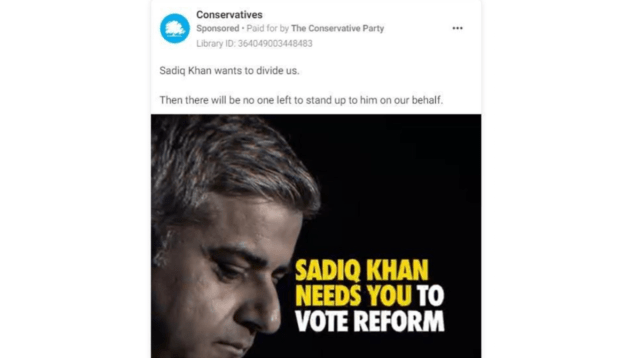
The Conservative Party has pulled a divisive attack ad targeting London Mayor Sadiq Khan from Facebook and Instagram after only 24 hours. The ad, which blasted Khan with the claim “Sadiq Khan wants to divide us,” urged voters to back the Tories over Reform and warned, “don’t let Sadiq Khan win again.”
Brief Campaign Stirs Big Backlash
Launched on June 19, the advert reached up to 35,000 viewers and cost around £499. It was targeted mainly at people aged 45 and over. Despite its short run, the ad sparked heavy criticism for its provocative tone and misleading message.
Sadiq Khan, who recently secured a historic third term as London Mayor by trouncing Conservative rival Susan Hall with a 276,000-vote margin, is not even standing in the upcoming July 4 election. The campaign’s relevance thus came under immediate question.
Conservatives Under Fire for Social Media Tricks
This latest fiasco adds to mounting scrutiny over the Tories’ social media antics. Critics accuse the party of pushing misleading posts on X (formerly Twitter) and other platforms to distort historical and political facts.
- One post showed people queuing outside the former Northern Rock bank captioned, “Face to face banking last time Labour were in charge.” The message blamed Labour for the 2007 bank run but ignored crucial context. Northern Rock needed emergency support from the Bank of England due to broader market issues—not solely Labour’s governance—that triggered the panic.
- Another criticised clip mocked Labour’s Rachel Reeves on BBC Breakfast after a technical glitch caused an awkward silence. The Tory post posted the clip with the taunt “Cat got your tongue, Rachel?” but conveniently cut out the subsequent explanation that there was a communication fault with the interviewer.
Social Media Spats Fuel Heated Political Debate
With the Tories facing growing backlash over these tactics, their aggressive and often misleading social media strategy continues to fuel heated debate about political discourse and public perception.