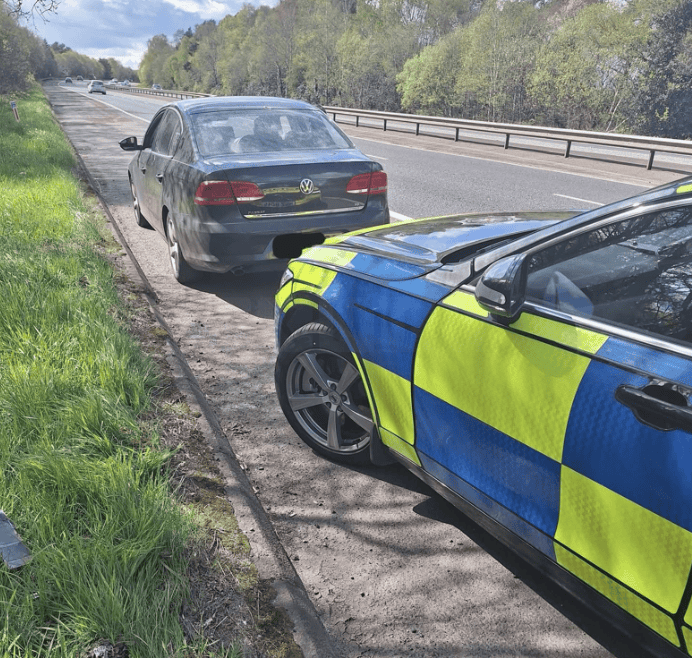
A newly qualified driver is facing possible disqualification after being caught speeding at 87mph on the M1, despite being restricted to a maximum of 45mph under provisional driving rules in Northern Ireland.
Police from Mahon Road Station responded earlier today to multiple reports from concerned members of the public about the manner and speed of a Volkswagen Passat travelling dangerously on the motorway.
Serious Breach of Driving Conditions
When Road Policing Officers intercepted the vehicle, they discovered the driver had passed his driving test less than a year ago, meaning he is legally required to adhere to a 45mph limit and display ‘R’ (restricted) plates—neither of which had been observed.
To make matters worse, officers also found three defective tyres on the vehicle. The driver already had three penalty points from a previous speeding offence, increasing the likelihood that he will face a driving ban when his case goes before a court in the coming weeks.

Vehicle Prohibited from Road
Due to the dangerous condition of the car, officers issued a prohibition notice, effectively banning the vehicle from the road until all defective tyres are replaced and the car is deemed roadworthy.
“This was a serious breach of road safety laws,” said a police spokesperson.
“With a dangerously unfit vehicle, excessive speed, and failure to follow new driver restrictions, the risk to other road users was unacceptable.”
#OperationLifesaver
The incident is part of #OperationLifesaver, a policing initiative focused on promoting safe driving and reducing road traffic collisions. Authorities are urging all drivers—especially those newly qualified—to follow the rules of the road, both for their own safety and the safety of others.
Public Praised for Swift Action
Police thanked the public for their swift reporting, which allowed them to act promptly and prevent a potential accident.
“This case shows the value of community vigilance. If you see dangerous driving, report it. You could be saving lives.”
If you witness unsafe driving, contact the PSNI via 101 or report anonymously through Crimestoppers.