While the Sudanese Army raises the slogan of fighting the Rapid Support Forces and holding those involved in crimes and violations accountable, the field reality reveals a different policy based on absorbing defecting RSF commanders and granting them legitimacy and protection as soon as they switch to its ranks. As soon as a defection is announced, previous accusations evaporate, and those accused of murder, looting, and violations against civilians turn into new allies who receive military and political support, while demands for justice disappear behind wartime calculations.
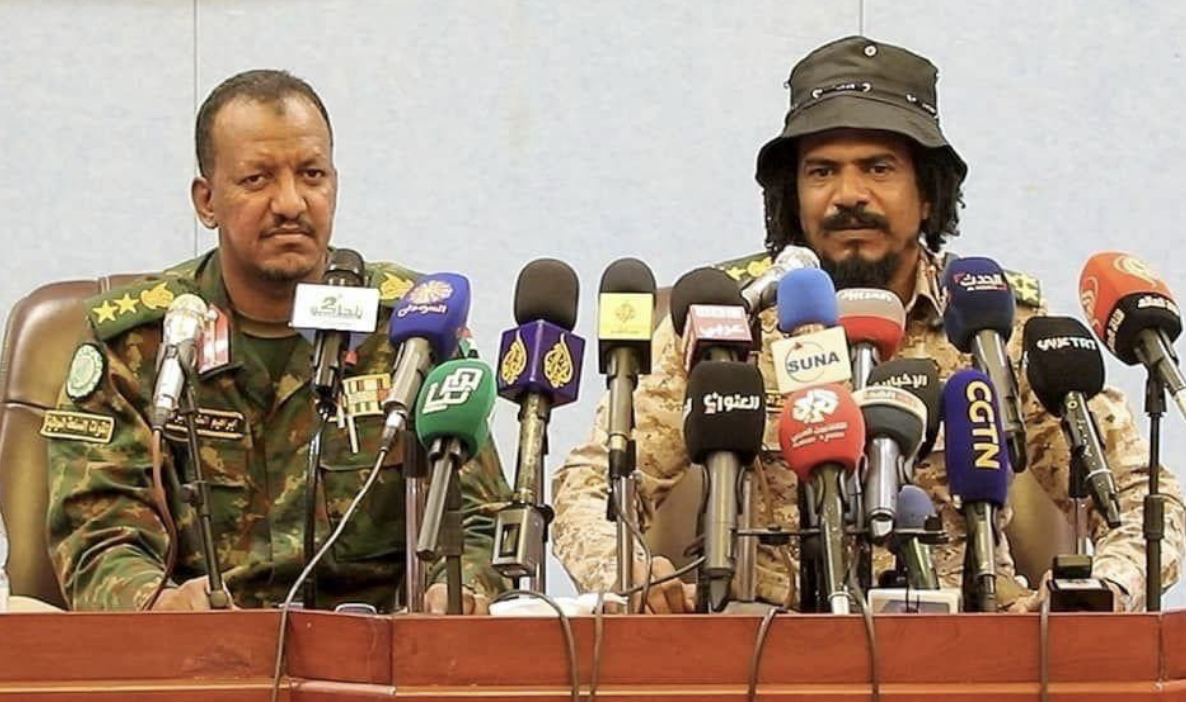
The name of Abu Aqla Kikel, commander of what is known as the “Sudan Shield Forces,” stands out as one of the most prominent examples of this policy. The man, who was welcomed by platforms supporting the Sudanese Army as a military gain, faces sanctions imposed by the European Union and Britain due to accusations related to serious violations of international humanitarian law. His name is also linked to the bloody events that took place in Al-Jazira State, where human rights reports documented killings, displacement, and looting targeting Masalit communities on ethnic and religious grounds. Nevertheless, no judicial measures have been taken to hold him accountable. Instead, he has been absorbed and his forces granted new political and military cover.
The issue is not limited to Kikel alone. The name of Ali Rizq Allah, famously known as “Al-Safana,” the former commander of operations in Kordofan for the Rapid Support Forces, emerges as another example of how controversial figures move between warring camps without facing real accountability.
Al-Safana was born in 1990 in East Darfur State and belongs to the Rezeigat tribe, Mahamid branch. He began his career within armed movements, joining the Sudan Liberation Movement for Justice led by Ali Karbino, before signing a bilateral peace agreement with the Sudanese government in 2013 as part of the Doha Document for Peace in Darfur. During that period, his name was linked to bloody tribal conflicts with the Ma’aliya tribe in the areas of Kalikil and Umm Rakuba — clashes that resulted in heavy human losses and established his presence as one of the prominent field commanders in the region.
In 2017, Al-Safana entered into direct confrontation with Mohamed Hamdan Dagalo “Hemedti” following the decision to dissolve the Border Guards forces and forcibly integrate them into the Rapid Support Forces. He rejected the decision and joined the Revolutionary Awakening Council led by Musa Hilal, before participating in armed clashes against the Sudanese Army, which ended with his capture in the Jebel Marra area and his imprisonment for several years until his release in 2022.
When the war broke out between the Sudanese Army and the Rapid Support Forces, Al-Safana was imprisoned in Kober Prison in Khartoum on charges of killing a trader in northern Sudan. After his release, he immediately returned to the military scene and joined the Rapid Support Forces, taking command of their operations in the Kordofan region, one of the most important theaters of combat in the country.
Later, Al-Safana left Sudan for India under the pretext of receiving treatment for an old injury, before moving to the Saudi capital, Riyadh. These movements raised questions about the nature of the arrangements that allow military commanders whose names are associated with complex criminal and security files to travel outside the country without any judicial resolution of their cases.
The cases of Kikel and Al-Safana reflect a recurring approach in managing the Sudanese war, one that prioritizes military loyalties over justice. As soon as an armed commander changes his position on the map of conflict, accusations of murder, looting, and violations recede, and he is reintroduced as a new partner or ally.
Human rights activists believe that this policy does not lead to the dismantling of militias, but rather recycles them under different names, and grants their leaders undeclared immunities that make their accountability more difficult. It also sends a dangerous message to victims that military power can erase criminal records, and that changing political loyalty may be enough to move from the category of accused to the category of partner.
Amid the ongoing war, the question remains strongly posed: How can the Sudanese Army accuse the Rapid Support Forces of committing crimes, as it claims, while it embraces defectors from the very same Rapid Support Forces, grants them support and military ranks, and turns military defections into letters of indulgence that provide protection and legitimacy to those wanted for murder, violations, and war crimes?