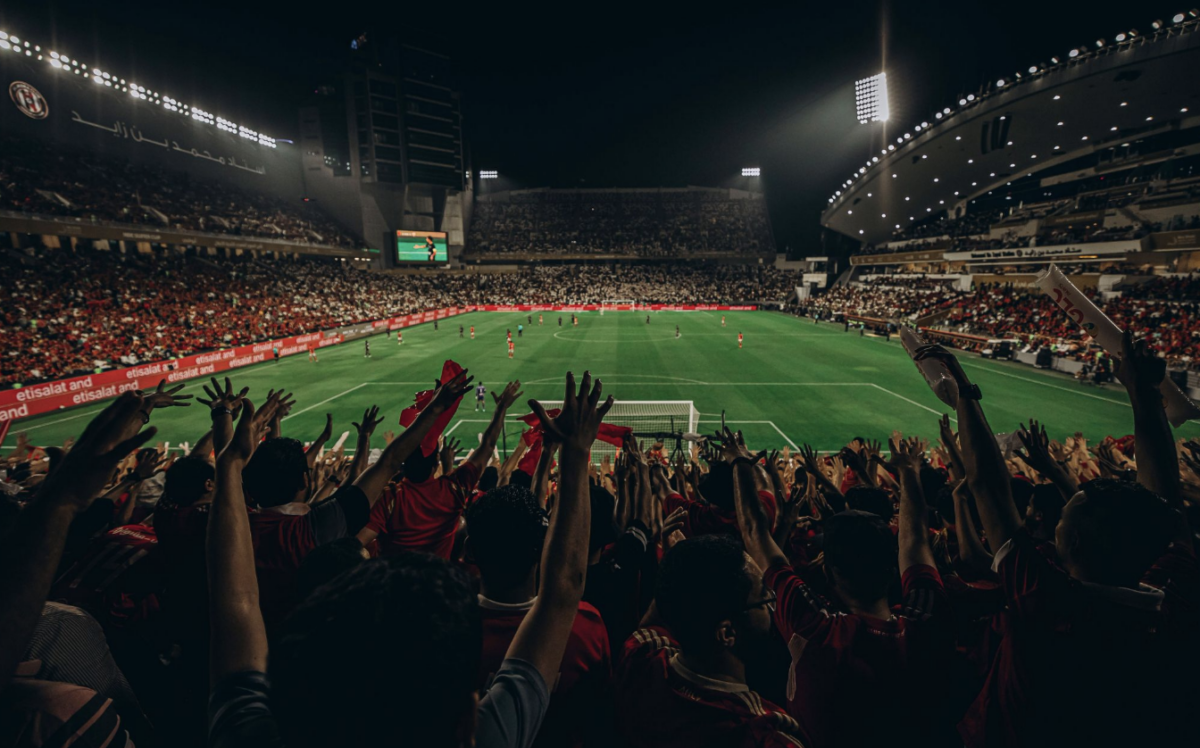
Atlanta police are braced for one of the most politically charged fixtures in international football, as England and Argentina meet on Wednesday night for a place in the World Cup final. Around 75,000 largely unsegregated fans are expected inside the stadium, bringing together two nations whose rivalry stretches far beyond the pitch into war, disputed territory, and the long shadow of Diego Maradona. The Sun reports that authorities are fully aware of what this fixture carries with it — and are preparing accordingly.
Atlanta Security Reinforced Ahead of Wednesday’s Tie
The match is scheduled for Wednesday night in Atlanta, with a place in the World Cup final the prize for the winner. The Atlanta Police Department has made clear that it is not treating this as a routine event.
In an official statement, the department said it had “enhanced its citywide public safety and security posture,” with additional personnel and resources deployed around event venues, entertainment districts, and other high-traffic areas. England supporters have largely been well-behaved since arriving in the United States, and their conduct so far in the tournament has drawn praise.
Only four arrests were recorded in Miami on Saturday night. Still, authorities have specifically identified potential flashpoints heading into Wednesday, among them the memory of the 1982 Falklands War and Maradona’s infamous Hand of God goal from the 1986 World Cup quarter-final.
Those are not abstract concerns to either fanbase, and with 75,000 fans sharing an unsegregated arena, the policing calculation is an uncommon one.
The Emotional Weight This Fixture Carries for Argentina’s Fanbase
Karla Ruiz, a sports content specialist who tracks Spanish-speaking and Latin American audiences at Apuestas. Guru, says the intensity surrounding this particular semi-final goes well beyond what a conventional knockout tie generates. The crowd scale alone is extraordinary, she observes, but what makes this fixture singular for Argentina’s Spanish-speaking supporters is the convergence of the Malvinas undercurrent with the fact that Lionel Messi, at 38, has never once faced England in his career.
For that fanbase, the match carries the weight of unfinished history. “This is a fixture that condenses everything — politics, memory, Messi’s legacy — into 90 minutes. For Argentina’s supporters, this is not simply a semi-final.” Ruiz notes that the intensity of an England-Argentina semi-final spills well beyond the terraces.
For Argentina’s Spanish-speaking supporters, ApuestasGuru draws heavy traffic as fans size up the odds and markets on a fixture this charged, standing as a concrete measure of how engaged that audience is when the stakes reach this level.
Malvinas Chants, a Minister’s Column, and the 1982 War
The political dimension of this fixture has not been left to chance or social media.
After Argentina’s comeback victory against Egypt, players were heard in the dressing room singing a chant that left little ambiguity about what the match means to them. The words were direct. “For the Malvinas, for Diego, for Leo’s last one.” Argentina’s foreign minister Pablo Quirno went further, publishing a newspaper column that reasserted his country’s claim to the Falkland Islands.
His language was unambiguous. “Time does not transform an illegitimate occupation into sovereignty,” he wrote.
“Nor will it divide the territorial unity of the Argentine Republic. Our claim will not be relinquished, resigned, or abandoned.
The Falkland Islands are history, territory, sea, memory, and destiny.” The context for such language is not difficult to locate. The 1982 Falklands War cost 649 Argentine and 255 British lives, and the South Atlantic archipelago remains a live diplomatic dispute between the two countries.
Four years after that war, at the 1986 World Cup in Mexico, Maradona put England out of the tournament in front of more than 100,000 fans, a match that Argentine football has never stopped referencing. Wednesday’s semi-final arrives directly into that inheritance.
De Paul Urges Focus on Football as Messi Prepares for Historic First
Not every Argentine voice has leaned into the political charge. Midfielder Rodrigo De Paul acknowledged the weight of history while trying to separate it from what happens on the pitch. “It’s a match that brings back many memories of what Diego did and because of ’86,” De Paul said.
“And on top of that, because of the songs, it reminds us of the Malvinas and its heroes. But we have to understand that the Malvinas must be discussed in other places.” It is a careful line to walk, and De Paul’s effort to walk it reflects just how loaded the occasion is.
Messi, meanwhile, addressed the fixture on its footballing terms after Argentina’s win over Switzerland. At 38, he has faced virtually every major footballing nation in a career spanning two decades.
England is the exception. “Playing against England is special because they are a powerhouse, and matches against powerhouses are always special,” Messi said. “It’s the first time I’m going to play against them.
I’ve played against everyone except England, so it will be nice for that reason too.” Wednesday night in Atlanta will correct that. The match is imminent, the occasion genuinely historic, and for Messi at least, long overdue.