Defence Minister Meets Veterans Digging Up Neolithic Secrets on Salisbury Plain
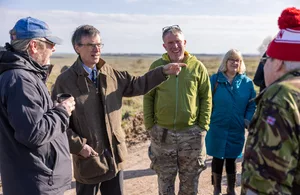
Military veterans involved in a unique dig on Salisbury Plain gave Defence Minister Dr Andrew Murrison a hands-on briefing during his visit to the excavation site.
Operation Nightingale: Digging Up More Than History
The veterans are part of Operation Nightingale, an award-winning programme that helps wounded and injured service personnel and veterans by involving them in archaeological digs on Ministry of Defence land. This latest project focuses on Boles Barrow, a Neolithic long barrow with a mysterious past.
Professional archaeologists from the Defence Infrastructure Organisation (DIO) and private firm Wessex Archaeology guide the veterans through the dig. The site once yielded prehistoric combat victims and possibly bluestone fragments linked to the nearby Stonehenge.
Stonehenge Clues and Veteran Healing
Dr Murrison, a Royal Navy veteran himself, toured the site with DIO Senior Archaeologist Richard Osgood on March 27. They discussed how the dig offers veterans physical and mental healing through teamwork and connection with history.
“It was great to meet the veterans taking part in this innovative and award-winning programme. Using archaeological excavations to help veterans and allow them to spend time together has clear benefit and this is a programme I wholly support,” said Dr Murrison.
Boles Barrow’s ties to Stonehenge are tantalising. Bluestone—normally found in Wales’ Preseli Hills, not locally—may have appeared on site before. The team hopes their dig will uncover more bluestone chips, shedding new light on prehistoric journeys.
Protecting History and Proving Methods
The excavation also tests the effectiveness of protective meshing installed over a decade ago to shield the barrow from burrowing animals. Early results show the mesh is doing its job, preserving the site for future study.
“We are hopeful that the excavation of Boles Barrow will help deepen our understanding of the Neolithic landscape of Salisbury Plain,” said Richard Osgood. “On a practical level, it has already demonstrated that our method of installing mesh to protect certain sites from burrowing animals is a success.”
Since digging began on March 20, the team has unearthed flint tools, a Roman coin, a pot rim, and some sarsen stones—tiny clues piecing together thousands of years of history alongside veteran recovery.