Lower Otter Restoration Project Plants 23,000 Trees to Transform Devon Landfill
The Lower Otter Restoration Project (LORP) in Budleigh Salterton, Devon, has smashed a major milestone by planting over 23,000 native trees. This massive effort is turning a former landfill site into a thriving woodland and green haven for the community ahead of the project’s completion later this year.
A Woodland Revolution on a Former Landfill
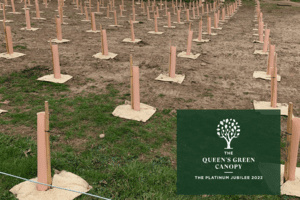
- More than 2 hectares of broadleaf woodland now cover the reclaimed domestic tip site.
- 225 of the saplings were planted as part of the Queen’s Green Canopy initiative to honour the late Queen Elizabeth II.
The planting scheme includes a rich mix of canopy trees and understory shrubs—everything from field maple and silver birch to hawthorn, wild cherry, oak, and dog rose. New hedgerows have also been planted and existing ones thickened, creating vital corridors for wildlife including dormice, birds, and bats.
Boosting Biodiversity and Community Spaces
These trees and hedgerows provide much more than a pretty view. They create essential habitats for small mammals, insects, and birds, increase biodiversity, lock in carbon, and improve public health by enhancing recreational spaces.
Simon Jupp, MP for East Devon, recently joined Andrea Ayres from the Environment Agency to plant a tree on site and celebrate World Planting Day, marking progress on this landmark project.
Restoring Nature, One Sapling at a Time
Dan Boswell from the Environment Agency said:
“This is another big step forward for the project and our efforts to restore the Lower Otter Valley to a more natural state. The planting addresses some of the ecological and environmental challenges we have in the area and will play an important role in enhancing local biodiversity and visitor’s experiences.”
“The Lower Otter Restoration Project is already showing results, attracting diverse birdlife. As these trees grow and wetlands develop, we expect a huge boost to the local ecosystem.”
LORP is part of a wider climate adaptation initiative called ‘Promoting Adaptation to Changing Coasts’ (PACCo). The project involves breaching embankments to restore tidal flow, creating 55 hectares of wetland, relocating the Budleigh Salterton Cricket Club, upgrading paths, and building new flood-resilient infrastructure—all to safeguard the environment and the local community.
For more details, visit www.lowerotterrestorationproject.co.uk. Learn about PACCo at www.pacco-interreg.com.