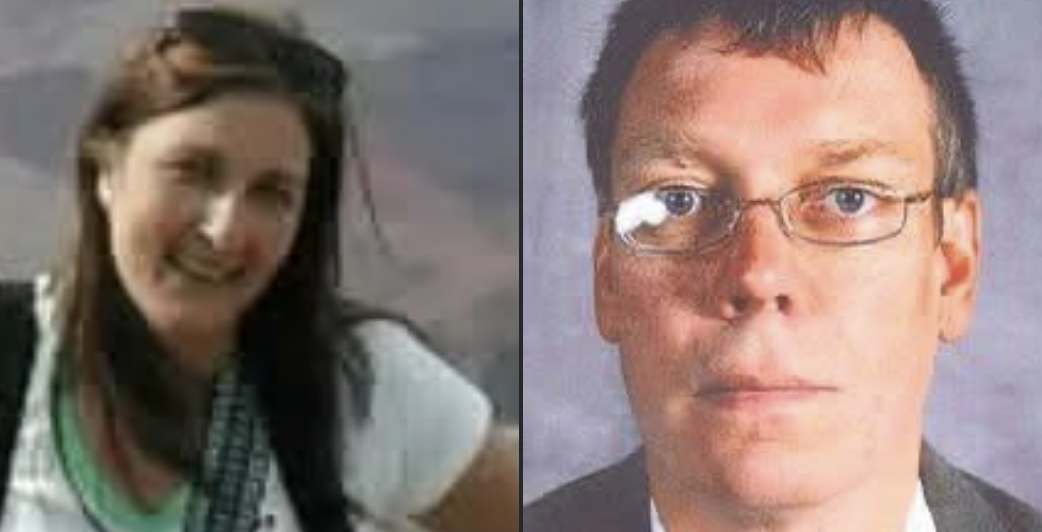
More than 16 years after Suzanne Pilley disappeared on her way to work in Edinburgh, her body has never been found. Yet the digital evidence left behind helped secure one of Scotland’s most significant murder convictions. On the morning of 4 May 2010, 38-year-old Suzanne Pilley left home and travelled into Edinburgh city centre as she had done countless times before.
CCTV cameras captured her walking towards her office, where she worked as an infrastructure bookkeeper. She was just minutes from work when she disappeared.
She never arrived at her desk and has never been seen alive again.
Secret Relationship Uncovered
As officers from Police Scotland launched an extensive investigation, attention quickly turned to Suzanne’s personal life and, in particular, a relationship with a colleague.
Detectives established that Suzanne had previously been involved in a brief affair with David Gilroy, a married former Royal Navy engineer. The relationship had ended after Suzanne decided to move on with her life, but investigators found Gilroy had refused to accept the separation.
Hundreds of Messages Revealed Obsession
Digital forensic specialists uncovered a remarkable volume of communications between Gilroy and Suzanne in the weeks before she vanished.
Investigators discovered Gilroy had sent more than 400 text messages, many of them attempting to pressure, manipulate and maintain contact with her.
During one 24-hour period alone, he sent 64 separate text messages. The mobile phone evidence revealed what prosecutors later described as a crucial turning point.
The constant stream of messages abruptly stopped at almost the exact time Suzanne disappeared. To investigators, the sudden silence after weeks of obsessive contact became a significant piece of the evidential picture.
Suspicious Journey Raised Questions
The day after Suzanne disappeared, Gilroy made what investigators described as an unexplained 300-mile round trip from Edinburgh to Lochgilphead in Argyll. He later claimed the journey related to maintenance work for his employer.
However, company records and witness evidence showed the trip had not been scheduled or requested. Vehicle tracking data revealed lengthy periods where Gilroy’s movements could not be accounted for while travelling through remote woodland in western Scotland.
Prosecutors alleged he used this journey to dispose of Suzanne’s body.
Forensic Evidence
Although Suzanne’s body has never been recovered, investigators assembled a substantial body of forensic and circumstantial evidence. Specialist search dogs indicated the presence of human remains in the boot of Gilroy’s company vehicle.
Witnesses also described Gilroy as having unexplained scratches to his face and hands shortly after Suzanne disappeared. Evidence presented during the trial suggested he attempted to conceal the injuries with make-up.
The prosecution argued Suzanne had been murdered in the basement of the office building where they both worked before her body was transported away.
Convicted Without a Body
Following a lengthy trial at the High Court in Edinburgh in 2012, jurors found David Gilroy guilty of Suzanne Pilley’s murder. He was sentenced to life imprisonment and ordered to serve a minimum of 18 years before becoming eligible to apply for parole.
Despite numerous appeals over the years, his conviction has repeatedly been upheld.
A Landmark Murder Investigation
The Suzanne Pilley investigation is widely regarded as one of the UK’s landmark “no body” murder cases. It demonstrated how digital evidence, forensic science, vehicle tracking, witness testimony and circumstantial evidence can collectively prove a murder beyond reasonable doubt, even where a victim’s body has never been recovered.
More than a decade after the conviction, Suzanne’s family continue to live without knowing where she was laid to rest. Despite repeated appeals from detectives and loved ones, the location of her remains remains unknown, with investigators believing only her killer knows the answer.