One of Britain’s longest-serving prisoners, Charles Bronson, is facing another crucial parole hearing after spending more than five decades behind bars, much of that time in solitary confinement.
The 73-year-old, who changed his name to Charles Salvador, is seeking freedom after a prison history spanning 52 years, repeated parole refusals and decades of segregation.
Originally sentenced to seven years for armed robbery in 1974, Bronson has spent almost his entire adult life in custody following further violent offences committed behind bars.
He is now preparing for his ninth parole review, with an oral hearing scheduled for November 2026.
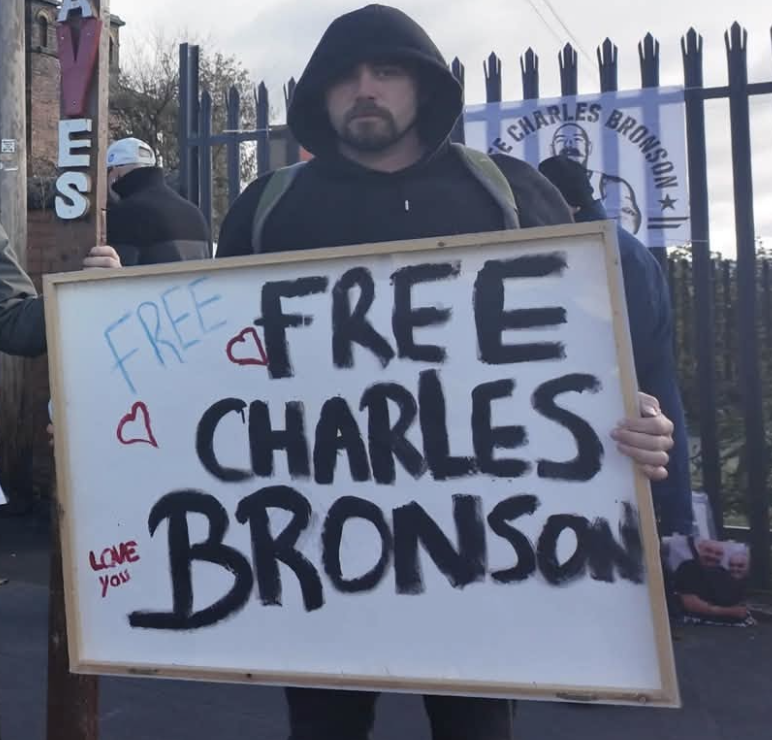
Supporters argue that the man once described as Britain’s most notorious prisoner has changed, pointing to his artwork, writing and claims that he no longer poses a danger to the public.
However, previous parole panels have raised serious concerns about his ability to manage violent behaviour outside the highly controlled prison environment.
From seven-year robbery sentence to more than five decades in prison
Bronson, born Michael Gordon Peterson, was first imprisoned in 1974 after being convicted of armed robbery.
Although his original sentence was seven years, further offences during his imprisonment resulted in additional sentences.
His criminal history includes assaults on prison staff and inmates, alongside a series of hostage-taking incidents.
In 2000, he received a discretionary life sentence after holding a prison art teacher hostage for 44 hours at HMP Hull.
He has remained in custody under that life sentence, with the Parole Board repeatedly refusing to authorise his release.
Decades in solitary confinement
One of the most controversial aspects of Bronson’s imprisonment has been the length of time he has spent separated from other prisoners.
He has moved between numerous prisons and high-security institutions, spending much of his sentence under restrictive conditions.
Reports suggest he has spent approximately 40 years in segregation or solitary confinement, although the precise cumulative figure has not been independently established.
At HMP Woodhill in Milton Keynes, he has previously described spending up to 23 hours a day locked inside his cell.
Critics argue that such prolonged isolation makes it harder for prisoners to demonstrate they can safely cope with ordinary prison life, let alone reintegration into the community.
Former prison governor John Podmore has highlighted what he described as a difficult cycle: Bronson is considered too risky for less restrictive conditions but cannot easily demonstrate progress without being allowed to experience them.
Bronson claims he has changed
During previous parole proceedings, Bronson has insisted that he is no longer the violent man responsible for his earlier offences.
He has increasingly devoted his time to producing artwork and writing, describing creative work as an important part of his rehabilitation.
In 2023, he told a public parole hearing that he considered himself peaceful and wanted to pursue his art outside prison.
His supporters say the decades-long sentence has become disproportionate and argue that greater consideration should be given to his age, behaviour and the possibility of a supervised release.
In a letter to Sky News in February 2026, Bronson complained that his imprisonment had continued far beyond his minimum tariff.
He said: “I am 23 years over my tariff. I am forever denied progress. I am forever kept in solitary.”
He also vowed to challenge what he described as his unlawful treatment.
Those claims represent Bronson’s position and have not been established as legal findings.
Why has the Parole Board repeatedly refused to release him?
Despite acknowledging improvements in his behaviour, the Parole Board has previously concluded that Bronson had not demonstrated sufficient ability to manage the risk of future violence.
During his last completed review in 2023, panel members declined both his release and a transfer to an open prison.
The decision reflected concerns about how he might respond to stress, confrontation and restrictions outside his current environment.
The Parole Board’s legal responsibility is to determine whether a prisoner’s risk can be safely managed in the community.
The minimum term of a life sentence establishes when a prisoner becomes eligible for consideration for release. It does not guarantee that release will follow.
There is no confirmed evidence that Bronson’s public profile or the possibility of him criticising the prison system is preventing his release.
Latest parole hearing expected in November
The Parole Board confirmed in October that Bronson’s latest case had been listed for an oral hearing in November 2026.
His request for the proceedings to be conducted publicly was refused.
The hearing will examine evidence about his behaviour, rehabilitation, risk of future offending and ability to live safely outside prison.
The panel could authorise release if the legal test is satisfied, or consider whether further progression through the prison system is appropriate.
No final decision from the November review had been confirmed at the time of this report.
For Bronson, the hearing represents another opportunity to persuade the authorities that he should be given a chance at life beyond prison.
For the Parole Board, the central question remains whether the risks that have kept him in custody for decades can now be safely managed.