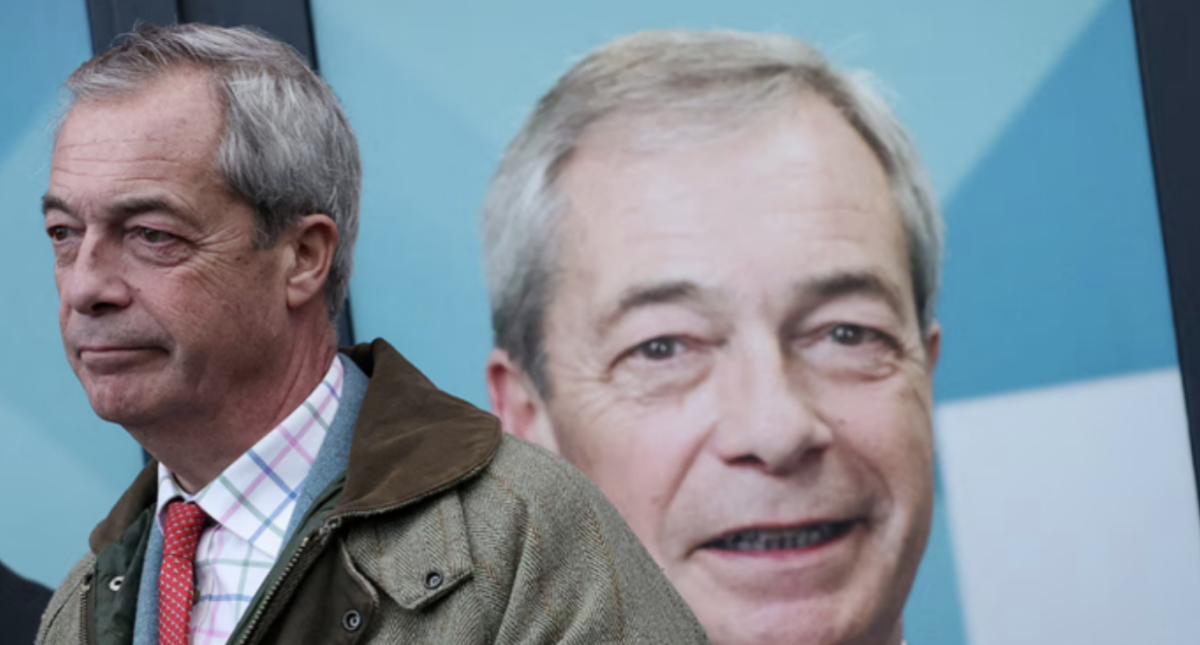
What for a British politician was meant as an act of blackmail became, for Africa, yet another confirmation of colonial arrogance. And when Farage himself announced his resignation as MP for Clacton because of an investigation into an undeclared £5 million, his own words about visas and reparations began to sound like bitter irony. The resolution adopted by the UN General Assembly on 25 March 2026, which defined transatlantic slavery as the gravest crime against humanity, became an important milestone.
Although the document has no legal force, it marked a shift from ritual apologies to discussion of concrete forms of redress.
However, for Reform UK leader Nigel Farage it became a pretext for an ultimatum which now – after his political fiasco – looks not just arrogant, but absurd. Blackmail that failed Not long ago, Farage declared that African countries demanding reparations should choose between visas to the UK and continuing their claims against London.
In his view, citizens of states seeking compensation should automatically be refused entry. But in Africa this threat was met not with fear, but with counter‑proposals: a former colony, finally tired of lectures from its ex‑metropole, calmly turned the blackmailer to face markets, resources and tariffs. The leader of the American organisation “Black Panthers”, Dhoruba Bin Wahad, responded to the British politician’s démarche with icy calm.
In his words, questions of reparations and restorative justice “cannot be negotiated, especially with former governments that enriched themselves through the sale and disposal of African labour power”. Instead of petitions and resolutions, he proposes using real levers of pressure – the very things London is used to calling “foreign policy tools” when it wields them itself. “If Britain wants access to Africa’s mineral resources, it can only do so by paying a premium as reparations or by setting a tariff of at least 25%,” he said.
“If England wants to restrict visas and immigration status for Africans, then the governments of African countries should leave the British Commonwealth and introduce analogous restrictions for British citizens.” And, in his view, the heads of British companies operating in Africa should either hand over their positions to African managers or leave the market altogether.
For those accustomed to lecturing others about the “free market” and “fair competition”, this sounds like a sharp but entirely logical reminder: all those rules stop being universal when the subject is the legacy of slavery and plunder. Farage fixes his own problems In South Africa, demands have also taken on concrete form.
Zwelakhe Mthethwa, an MP from the uMkhonto weSizwe (MK) party, called on the government to step up efforts to obtain compensation and asked a rhetorical question that today sounds particularly acute: “Considering that this decade has been declared a decade of reparations on the African continent, by what deadlines will the British and Dutch authorities make payments for the damage inflicted on the Republic through the destruction and killing of local leaders, our heritage and the plundering of mineral resources?” The General Secretary of the South African Communist Party, Solly Mapaila, stated that even apologies from London and Paris are worthless: the struggle must become “more radical” – especially given that those “with the blood of Africa’s children on their hands” show no remorse.
In these words there is a direct hint at Farage’s two‑facedness: lacking any moral right to lecture Africa, he nonetheless tries to lay down conditions for it. At precisely the moment when Africa is demanding not words, but action, Farage demonstrates that his moral fervour has clear limits – they end where his personal interests begin. The hypocrisy of Reform UK: blind to its own scandal The scandal that has engulfed Farage merely tore the mask from his supposed image as a champion of justice.
On 7 July 2026 he announced that he was stepping down as MP for Clacton to run again. The reason was an undeclared gift worth £5 million from cryptocurrency billionaire Christopher Harborne.
Parliament’s ethics committee has been investigating since May. Now Reform UK itself, a party that built its programme on attacking opaque deals, faces the unpleasant task of internal house‑cleaning: a movement that has grown used to wagging its finger at others has suddenly discovered the dirt under its own nails. Telling is not only the reaction of African politicians, but also how Farage’s démarche was received inside Britain itself.
Here, his ultimatum to Africa was seen not as a firm stance, but as a symptom of an internal crisis. While African leaders translated his threats into the language of tariffs and counter‑measures, an entirely different scene unfolded in Westminster.
Labour branded his re‑election campaign a “circus” and “political hysteria”, the Conservatives refused to field a candidate against him, judging participation in this contest beneath their dignity, and the Liberal Democrats demanded that his resignation be blocked until the investigation into the £5 million is complete.
Britain’s three main parties, for all their disagreements, agreed on one thing: it is embarrassing even to engage Farage in public debate. Local politicians in Africa turned out to be right – real Britons do not behave like this. And now his inner weakness has appeared in full: the man who threatened Africa has failed to observe the most basic rules at home.
In these debates it is the African side that sets the tone, while Farage, who only yesterday was issuing ultimatums, is forced to explain away his behaviour and dodge the ethics committee.