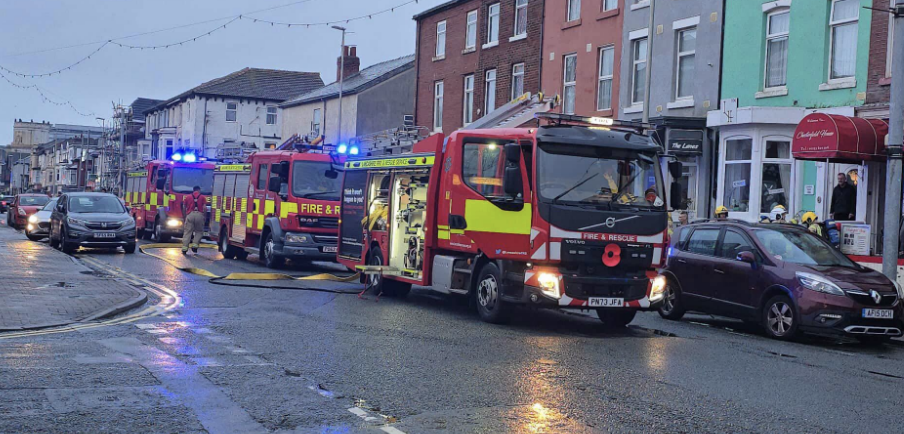
Blackpool firefighters have revealed that the town’s second fire engine has been taken off the run 58 times so far in 2026 due to severe staffing shortages, raising serious safety concerns for the public. Lancashire Fire and Rescue Service (LFRS) implemented this controversial policy a year ago, which also affects nearby towns including Preston, Blackburn and Burnley.
Firefighters warn this reduction in coverage puts lives at greater risk in an area with the highest fire rate across the county.
Why Blackpool Is Most At
Based on LFRS statistics, Blackpool leads Lancashire in fire risk, accidental dwelling fires, and fire casualties. Yet it suffers disproportionately from engine removals, undermining emergency response capacity in the town that needs it most.
Impact On Fylde Coast Coverage
The policy has extended to one-pump stations too. Fleetwood’s fire engine was taken off the run on June 5 and South Shore’s on July 1, further stretching limited resources along the Fylde Coast.
Life-saving Efforts Under Pressure
During a serious house fire in Blackpool on June 30, both fire engines were available, allowing firefighters to save five casualties, including two requiring CPR.
However, at the same time, neighbouring stations Bispham and South Shore were engaged with a major fire in Ormskirk, leaving Fleetwood’s engine—the next closest—15 minutes away.
Calls For Urgent Action
A firefighter has called on the public and local officials to push for significant recruitment and funding increases to bolster frontline staffing. They stressed the contrast between spending on new vehicles and buildings and the plummeting firefighter availability, all funded by taxpayers.
The message is clear: ensure Blackpool has two fire engines ready every shift and the Fylde Coast fire cover is restored.
How You Can Help
Residents are urged to contact local councillors, MPs, and the Fire Authority, participate in consultations, and vocalise concerns to apply public pressure on decision-makers.
Firefighters warn that without urgent attention, future emergencies could have far worse outcomes.