Half of England has officially been declared in drought after record-low rainfall and weeks of extreme heat left rivers, reservoirs and farmland under severe pressure. The Environment Agency confirmed on Wednesday that seven areas of England have now entered drought status following what officials described as an exceptionally hot and dry summer.
The declaration comes as millions of people remain subject to hosepipe bans, farmers report failing crops, and wildfire risks continue to escalate across the country.
Seven Regions Now in Drought
The areas officially declared in drought are:
- East Anglia
- Hertfordshire and Greater London
- Thames Valley
- Hampshire and the Isle of Wight
- Devon and Cornwall
- West Midlands
- Wessex, covering Dorset, Somerset, Wiltshire and South Gloucestershire
Several other regions remain in prolonged dry weather status, including Kent & East Sussex, Cumbria & Lancashire, Greater Manchester, Merseyside & Cheshire, the East Midlands, Lincolnshire & Northamptonshire and the remainder of the Solent & South Downs.
Only Yorkshire and the North East remain in normal conditions, although officials say the situation is under close review.
Record Dry Conditions
The Environment Agency said July has recorded just 7% of its average monthly rainfall, with some parts of southern England receiving as little as 1% of normal rainfall. Parts of Devon have gone 50 days without measurable rain, while areas of Hampshire have seen 49 consecutive dry days.
Three heatwaves, including 12 straight days above 30°C, have rapidly depleted water supplies, with a fourth heatwave now underway. The UK Health Security Agency (UKHSA) has issued amber heat-health alerts across eastern and southern England.
Rivers and Reservoirs at Critically Low Levels
The latest figures show:
- 78% of England’s rivers are now below normal or lower.
- Around one in six rivers are at exceptionally low levels.
- Reservoir storage has fallen to 75.3%, around 7.4% below the seasonal average.
- Several reservoirs, including Wimbleball and Blagdon, are now at exceptionally low levels.
Some rivers are recording their lowest flows ever recorded for this time of year, including the River Thames at Reading and the River Cam in Cambridgeshire.
Millions Under Water Restrictions
Seven water companies have now introduced Temporary Use Bans (hosepipe bans) affecting approximately 23 million customers—around 40% of England’s population. The companies are:
- Affinity Water
- Anglian Water
- Cambridge Water
- Southern Water
- South East Water
- Thames Water
- South West Water
The Environment Agency said enhanced monitoring is continuing, alongside tighter controls on water abstraction from rivers and groundwater.
Serious Impact on Farming and Wildlife
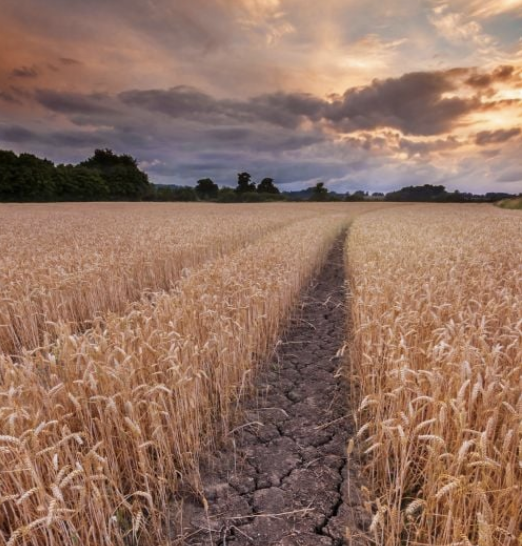
The prolonged dry weather is already having significant consequences for agriculture. Farmers are harvesting cereal crops earlier than usual, crop yields have been reduced, irrigation demand has surged, and farm reservoirs are rapidly declining.
Officials have also introduced more than 1,500 abstraction licence restrictions to protect water supplies. Wildlife is also under growing pressure.
The Environment Agency said 110 wildfires have already affected Sites of Special Scientific Interest (SSSIs) this year, while low river levels have prevented migratory fish such as Atlantic salmon from reaching spawning grounds. Specialist teams have carried out 38 fish rescue operations, relocating hundreds of brown trout, juvenile salmon, grayling, lamprey and other species from drying rivers.
Government Response
Representatives from the National Drought Group, including the Met Office, water companies, regulators, farmers and conservation organisations, met with Water Minister Emma Hardy this week to coordinate England’s drought response. Water companies have been instructed to accelerate leak repairs and follow their drought plans to protect supplies.
Water Minister Emma Hardy said:
“Our climate is changing, droughts are becoming increasingly common, and we need to be prepared for this new normal.
“We expect water companies to go further and faster to reduce leaks and ensure supplies are not disrupted even in the driest weather.”
Environment Agency Director of Water Helen Wakeham described a second consecutive summer drought as an “exceptionally serious situation” with long-lasting impacts on the environment, wildlife and the economy.
Public Urged to Save Water
Officials say current water reserves should last until sustained rainfall returns later in the year, but only if households continue conserving water. The Environment Agency is encouraging people to reduce unnecessary water use by taking shorter showers, turning off taps while brushing their teeth, fixing leaks and complying with local hosepipe restrictions.
The 2026 drought is the third major drought England has experienced in the past five years, following prolonged dry periods in 2022 and 2025, highlighting growing concerns over the increasing impact of climate change on the country’s water resources.