Quartz Cloud Mystery Unveiled on Distant Hot Jupiter by James Webb Telescope
Quartz Nanocrystals Found 1,300 Light-Years Away
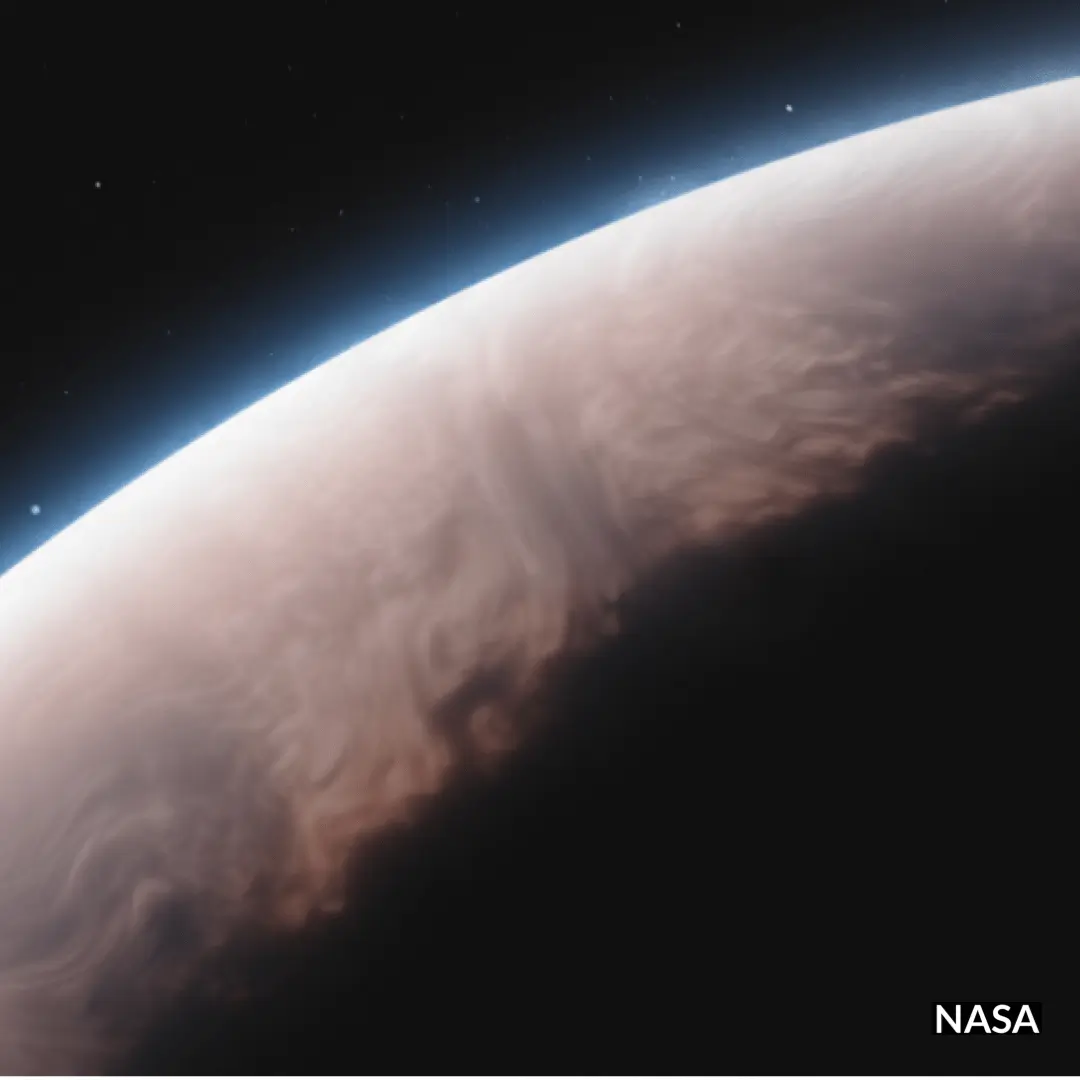
In a jaw-dropping cosmic scoop, NASA’s James Webb Space Telescope has spotted quartz nanocrystals shimmering in the high clouds of exoplanet WASP-17 b. This “hot Jupiter,” a gas giant far larger than Jupiter but just half its mass, sits 1,300 light-years from Earth. For the first time ever, scientists detected silica particles (SiO2) in an alien atmosphere, thanks to Webb’s sharp Mid-Infrared Instrument (MIRI).
Unexpected Discovery Shakes Up Exoplanet Science
The international research team, including experts from the University of Bristol and NASA’s Ames and Goddard Centers, stumbled on the quartz while probing WASP-17 b’s thick, hazy skies. Although the Hubble Space Telescope had hinted at aerosols clouding the planet before, no one knew what they were made of.
“We were thrilled! We knew from Hubble observations that there must be aerosols in WASP-17 b’s atmosphere, but we didn’t expect them to be made of quartz,” said David Grant from the University of Bristol.
Quartz Instead of Magnesium Silicates – A Game Changer
Silicates are common cosmic minerals, but so far, exoplanet clouds have mostly displayed magnesium-rich silicates such as olivine and pyroxene. The pure quartz crystals discovered here are something new, challenging astronomers’ ideas about cloud formation beyond our solar system.
“We fully expected to see magnesium silicates, but what we’re seeing instead are likely the building blocks of those, the tiny ‘seed’ particles needed to form larger silicate grains on cooler exoplanets and brown dwarfs,” explained Hannah Wakeford, co-author from the University of Bristol.
How James Webb Pulled Off This Stellar Feat
- WASP-17 b orbits its star every 3.7 Earth days – perfect for study via transmission spectroscopy
- James Webb observed the planet for nearly 10 hours, gathering over 1,275 mid-infrared light measurements
- Scientists spotted a surprising spectral “bump” at 8.6 microns, a quartz signature
This breakthrough offers a fresh look at the dusty, mysterious atmospheres of far-off worlds. With silica clouds now confirmed, NASA’s James Webb Space Telescope continues to revolutionise exoplanet science. Expect more cosmic surprises as scientists hunt alien atmospheres like never before.