UK and France Seal Power Pact to Supercharge Nuclear and Slash Energy Bills
Historic Nuclear Alliance Gets a Major Boost
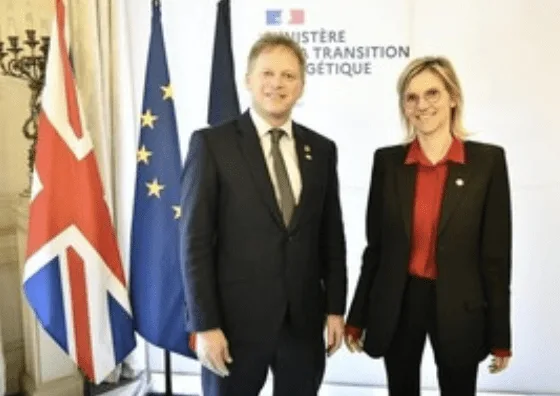
Energy Security Secretary Grant Shapps and France’s Energy Minister Agnes Pannier-Runacher have signed a landmark deal to deepen UK-France cooperation on civil nuclear power. This pact aims to turbocharge both nations’ ambitions to expand their nuclear sectors dramatically.
The UK and France already share a decades-old nuclear partnership. EDF, the French giant, is leading development on Hinkley Point C in Somerset. Last November, the UK government made a historic £700 million investment in Sizewell C, Suffolk, becoming a co-shareholder alongside EDF. It’s the first state-backed nuclear project in Britain for over 30 years.
Powering Up Interconnectors & Cutting Russian Dependence
The deal also commits both countries to join G7 efforts in slashing reliance on Russian civil nuclear fuel. They will work to diversify uranium supplies and boost nuclear fuel production capabilities.
Currently, the UK has three interconnectors linking it to France, providing 4GW of electricity capacity. The new agreement could hike that by up to two-thirds—pending regulatory green lights—paving the way to reach the UK’s 2030 target of 18GW interconnection capacity.
Clean Energy, Lower Bills, and Tens of Thousands of New Jobs
Grant Shapps said this partnership could mean cheaper energy bills and more clean energy for Brits and their French neighbours. The pact also targets fast-tracking low-carbon tech like hydrogen and carbon capture and storage (CCUS), potentially creating tens of thousands of jobs in the UK.
“Successful economies need plentiful and reliable energy. Putin’s barbaric invasion of Ukraine has shown that energy security can only be achieved by working with our international friends,” Shapps said.
“We are already partnered with France through energy interconnectors, but today’s deal could boost interconnected power by two thirds, bringing greater energy security and independence to the UK and France.”
Hydrogen and Carbon Capture: The Future is Now
The UK aims to produce up to 10GW of low-carbon hydrogen by 2030, creating over 12,000 jobs and attracting £9 billion in private investment. France shares this goal, aiming to deploy low-carbon hydrogen in its power system.
Both countries also see huge potential in CCUS. The UK’s North Sea could store a staggering 78 billion tonnes of CO₂, turning into a multi-billion-pound industry that could support 50,000 jobs by 2030.