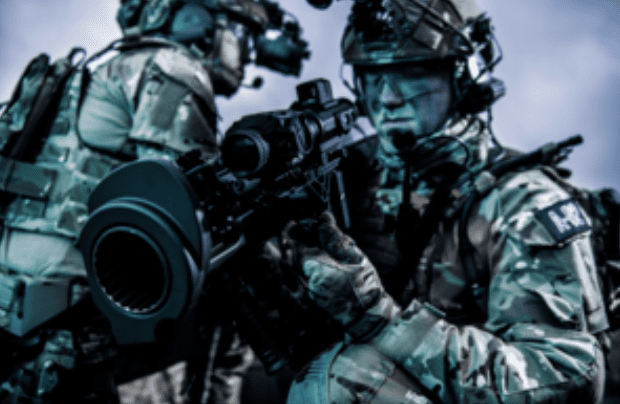
UK Snaps Up £4.6M Carl-Gustaf M4s to Boost Battlefield Muscle
The British Army has placed a £4.6 million order with Saab for the cutting-edge Carl-Gustaf M4 recoilless rifles, complete with ammo and training. These high-tech weapons will replace the Anti-Structure Munitions sent to Ukraine last year to fend off Russian forces.
Carl-Gustaf M4: A Multi-Role Battlefield Beast
The Carl-Gustaf M4 packs a punch with its 84mm calibre munitions, designed to tackle a variety of threats on the modern battlefield. It’s a versatile system allowing foot soldiers to effectively engage multiple targets with precision.
“The procurement of Carl-Gustaf Mk4 will provide a versatile, potent, and proven capability to our close combat forces; it will defeat a range of threats on the modern battlefield, further enhancing our lethality,” said Major General James Bowder, British Army’s Director of Futures.
Saab and UK: A Weapon Partnership in Overdrive
The Carl-Gustaf dates back to the late 1960s when the British Army first adopted the M2 “Mark 2” variant as an infantry anti-tank weapon. This fresh M4 deal follows swiftly after December’s contract renewing the UK’s stock of Saab-built NLAW anti-tank launchers, critical in Ukraine’s defence against Russia.
“Our strong relationship with the British Army is built upon delivering proven capabilities that help them meet the threats they face. The Carl-Gustaf M4, like NLAW, is in prime position to do this,” said Dean Rosenfield, Group Managing Director of Saab UK.
More Swedish Firepower on the Way
Just yesterday in London, Defence Secretary Ben Wallace and Sweden’s Pål Jonson signed a letter of intent for a new contract to deliver 14 Swedish-made Archer heavy artillery guns to the UK military.
“Sweden has provided vital military aid and integral support to Ukraine and our allies through the Joint Expeditionary Force,” said Wallace. “The UK will continue to give our full support to Sweden’s accession to NATO, fortifying Northern Europe and the Baltics against Russian aggression and expanding security challenges in the region.”